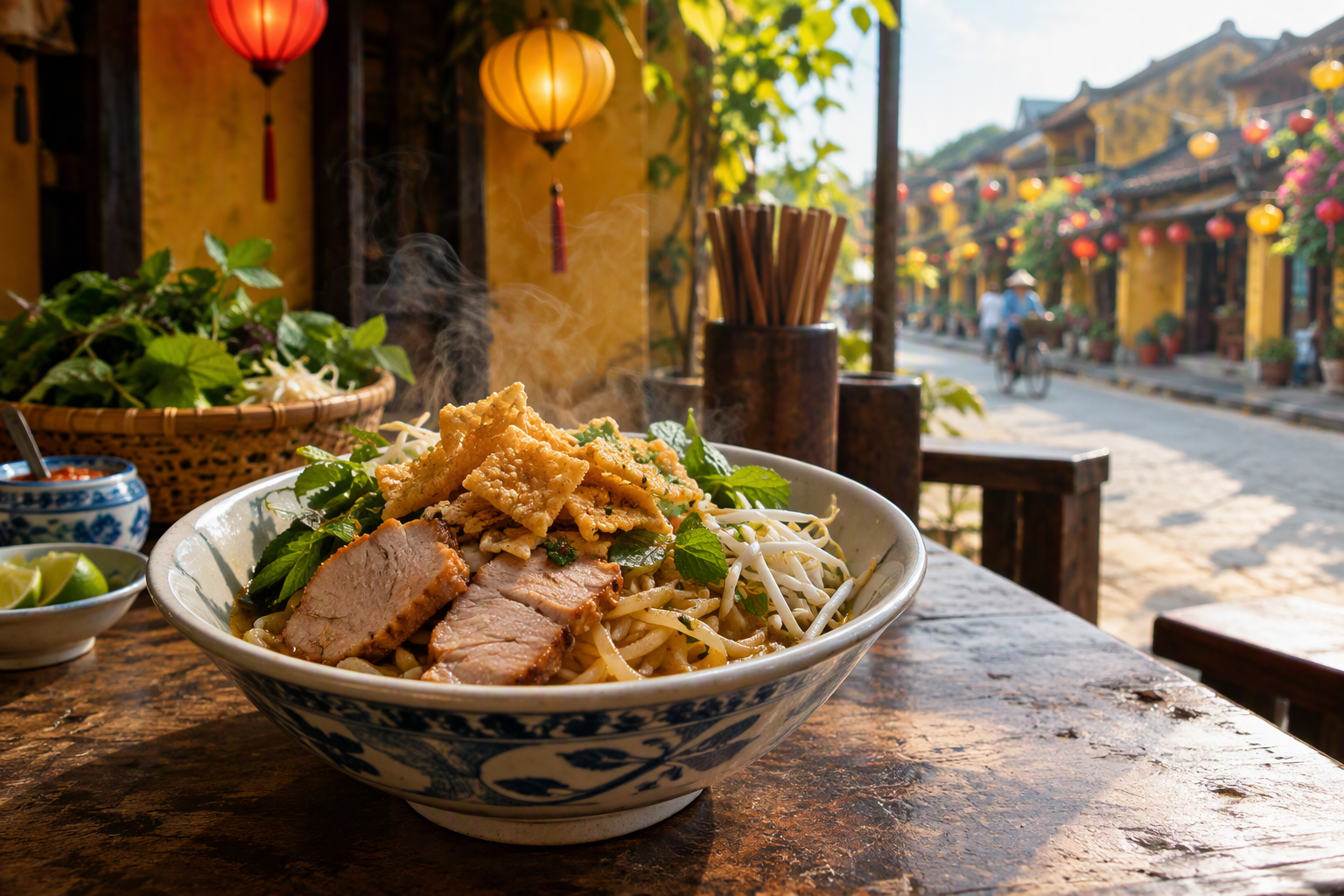
Hoi An food is one of the easiest reasons to visit Vietnam. The Old Town is small enough to walk in an afternoon. Its dishes are distinct from Hanoi, Hue, and Saigon. Many visitors come for the lanterns and stay for the food. The challenge is knowing which dishes are worth the stop.
This guide is for first-time visitors who want to eat well in Hoi An without spending the trip reading menus. It covers the dishes to order and how to spot a good stall. It also explains how to combine a food walk with a cooking class. For a wider view, our Vietnam regional food guide shows where Hoi An fits on the country’s food map. For more detail, see what to eat in Hoi An on Asia Eyes Travel. A second useful read is Hoi An travel guide for 2026 from C Vietnam Tours.
- Order cao lau: the Hoi An noodle dish, with pork, herbs, and crispy noodles. It is the one dish you cannot get outside the town in the same form.
- Try white rose dumplings: translucent rice-flour dumplings filled with shrimp and pork. Best eaten early, when the kitchen is fresh.
- Eat at the market: the central market has food stalls that serve local versions for a few dollars.
- Plan two food meals a day: the best dishes sell out in the morning. However, many stalls close by the afternoon.
Cao lau: the dish Hoi An is known for
Cao lau is a bowl of thick, chewy noodles with slices of roasted pork, greens, bean sprouts, and herbs. Cooks traditionally make the noodles with lye water and a specific local ingredient. Cooks finish them with crispy fried noodle pieces on top. The broth is lighter than a pho or bun bo. The flavour comes from the pork and the noodles.
Cao lau is most closely tied to Hoi An, and that is part of its appeal. Meanwhile, stalls near the central market and in the Old Town serve variations of it. Order it with a little chilli and a squeeze of lime. Eat it straight away, while the crispy noodles are still crunchy.
Hoi An food classic: white rose dumplings
White rose, or banh vac, is a Hoi An classic. The dumplings have a thin, translucent wrapper made from rice flour and a filling of shrimp and minced pork, often topped with fried shallots. They come with a dipping sauce that is sweet, salty, and sour. The wrapper is delicate, so eat them as soon as they leave the kitchen.
Order them as a starter or a light lunch. Many restaurants serve them in small portions, so you can try several dishes in one meal.
Mi quang and chicken rice
Mi quang is a dish from the wider Quang Nam region. It is a short serving of turmeric-coloured rice noodles with pork, shrimp, and herbs. Then the cook adds a little broth and tops the dish with crushed rice crackers. It is more filling than it looks.
Chicken rice, or com ga, is a simple dish of poached chicken, fragrant rice, and herbs. Hoi An’s version is often served with a light broth and pickled vegetables. It is a good lunch when you want something gentler than cao lau.
Banh mi and the Old Town
Banh mi is easy to find in Hoi An. Some of the best come from long-running bakeries near the Old Town. Ask for the house specialty, which may include pâté, grilled meats, or pickled vegetables. Eat it standing at a counter or on a plastic stool. The bread is crisp outside and soft inside. It is one of the cheapest meals in town.
Where to eat and how to choose
Look for stalls with a steady stream of local customers. A short menu that focuses on one or two dishes is a good sign, and so is a kitchen visible from the street. These usually serve the most consistent food. Be wary of menus with long lists of dishes from every region. Also avoid restaurants that stand outside calling people in.
In fact, the central market is the strongest place for local food. Stalls there open in the morning and early afternoon. Many serve cao lau at lower prices than restaurants in the Old Town. Bring small notes, because stallholders often have no change for large bills.
Cooking class or food walk
A cooking class is a good choice for travellers who want to understand how cooks make the dishes. Classes usually start with a market visit. Then they move to a kitchen to prepare two or three dishes. Check that the class includes the market and the full meal. Also check whether it runs in the morning or evening.
A guided food walk gives you a set of dishes across several stalls in one afternoon. It is useful if you have limited time or want a shortlist of places to return to. Confirm the number of stops and the portion sizes. Also ask whether the price covers drinks.
What to confirm before you eat out
- Ask for the price before you order, especially for seafood and anything priced by weight.
- Check whether dishes are spicy. Hoi An food is often mild, but some stalls add chilli on request.
- If you have dietary needs, tell the staff clearly. Most dishes use fish sauce.
- Carry small notes and expect cash at many stalls.
Who this suits, and who should plan differently
Hoi An’s food suits travellers who like trying small dishes and walking between stalls. It is a good match for couples and food-focused solo travellers. Travellers who prefer large restaurants with set menus may find the market stalls too casual. They should book a restaurant with a clear menu instead. If you are planning a longer stay in central Vietnam, our central Vietnam itinerary shows how Hoi An connects with Hue and Da Nang.
Frequently asked questions
What is the most famous dish in Hoi An?
Cao lau is the dish most closely tied to Hoi An. White rose dumplings and mi quang are also strong choices.
Where is the best place to eat in Hoi An?
The central market and small stalls with steady local customers are usually the best value. Restaurants in the Old Town are also good, especially for white rose and cao lau.
Is Hoi An food spicy?
Most dishes are mild. Chilli usually comes on the side, so you can add more if you like.
How many days should I stay in Hoi An for food?
Two to three days gives you time to try the main dishes, a market visit, and one cooking class or food walk without rushing.
CTour DMC Vietnam — planning team
We are a licensed Destination Management Company based in Vietnam, designing private journeys across Vietnam, Cambodia and Laos. This guide was written by the planners and local guides who run these trips on the ground, and is reviewed against current conditions before publication. More about our team · Ask us a question
Published 2 November 2026 · last reviewed 6 November 2026 · 1,121 words · 5 min read