The slow boat down the Mekong from Huay Xai to Luang Prabang is one of the best-known journeys in Southeast Asia. It is also one of the most misunderstood. Some travellers expect a scenic cruise and find a long, hard bench. Others book the fastest option and miss the landscape they came for. This guide explains what the trip is really like, how to plan it and how to make two days on the river enjoyable.
This guide is for first-time visitors who are travelling in northern Laos and want to know whether the boat is worth the time. For the wider country, see our Laos itinerary guide and Luang Prabang guide.
- Plan for two days. The usual route is a long first day, an overnight in Pak Beng and a shorter second day.
- Bring a cushion. The wooden benches are hard, and comfort makes a big difference.
- Pick the boat with care. Safety and seating vary, so ask before you pay.
- Enjoy the landscape, not the speed. The river is the point of the trip.
1. Understand what the slow boat is
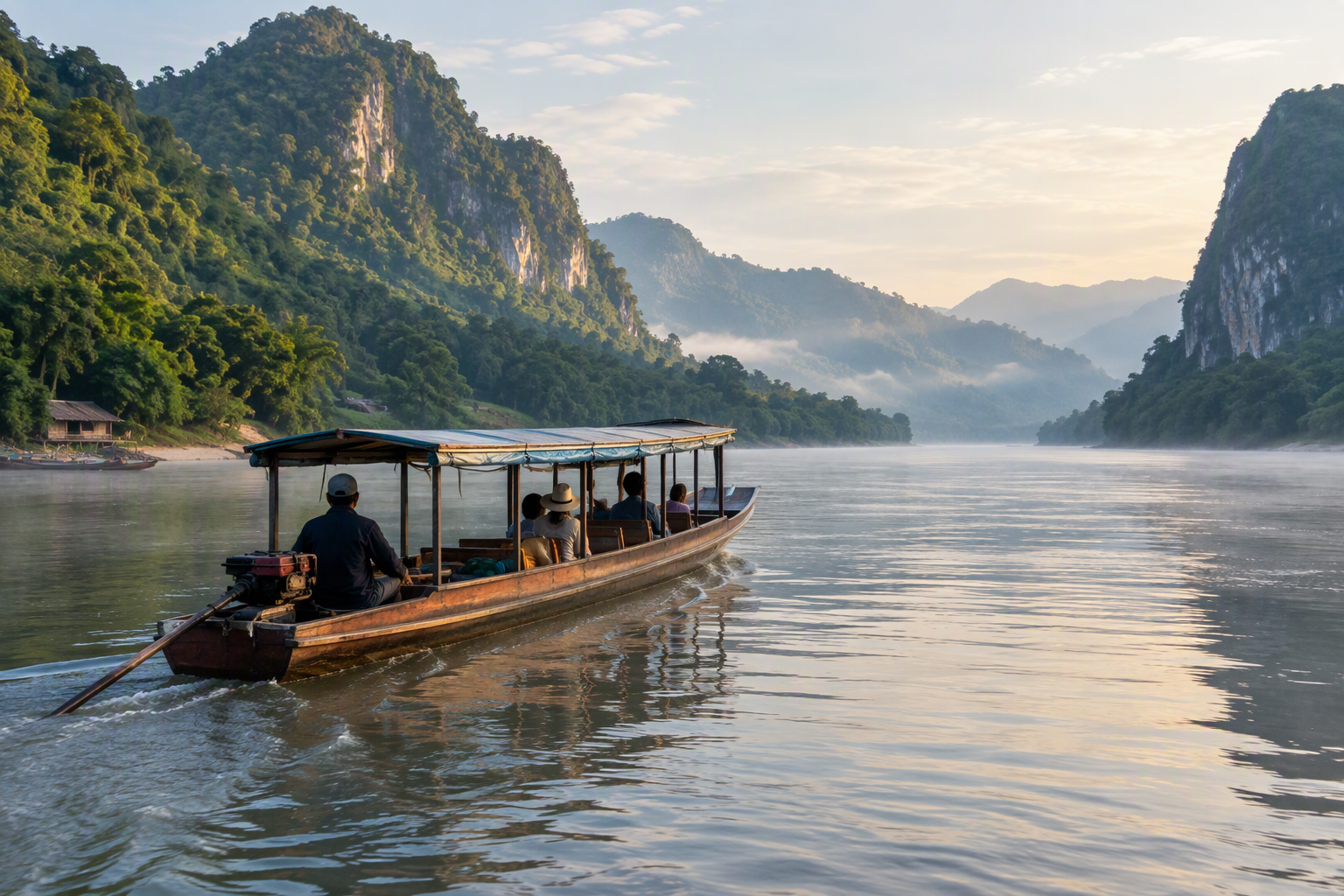
The slow boat is a long, narrow wooden or metal boat with a covered roof and rows of benches. It carries passengers and cargo up and down the Mekong between the Thai border town of Huay Xai and Luang Prabang. The journey is slow because the river is shallow and winding in many places, and the boats are not built for speed.
Most travellers take the boat over two days, with an overnight stop in Pak Beng. Some companies run it in a single long day, but that is a much more tiring trip. Check the route and timing before you book.
2. Compare the slow boat with the speedboat
A speedboat cuts the journey to a single day, usually around six to seven hours depending on the boat and river level. It is faster and more cramped, and the seats are often uncomfortable for long periods. Speedboats have a stronger safety concern on the river, so ask about the boat, life jackets and the driver’s experience before you book.
If you have limited time, a speedboat or a flight may suit you better. If you want to see the river at a slower pace, the slow boat is the better choice.
3. Choose the right boat and seat
Boats vary in age, comfort and capacity. Ask how many passengers the boat carries, whether there are cushions and how far you will sit from the engine. Seats near the front or middle often give better views and less noise. Arrive early to pick a good spot, since the boat fills quickly.
Ask what safety equipment is on board, including life jackets, and whether the boat has covered seating if the weather turns.
4. Plan the overnight in Pak Beng
Pak Beng is a small riverside town that exists largely for the boat trip. It has guesthouses, a few restaurants and a short walk up the hill for views of the river. It is basic, so keep your expectations modest. Book a room in advance during peak season, since availability can be limited.
Use the evening to rest, eat a simple meal and walk the town. The next morning’s boat leaves early, so set an alarm.
5. Pack for a long day on the water
Bring a cushion or a folded towel for the bench, sunscreen, a hat and a light layer for cooler mornings and evenings. Pack water and snacks, since food on the boat is limited. A dry bag helps protect your phone and documents from spray and sudden rain. Keep a small bag with you during the day rather than storing everything in the hold.
6. Watch the river and the weather
The river level changes with the seasons. In the dry season, the water can be low and the boats may need to slow down or stop at sandbars. In the wet season, the current is stronger and some boats are cancelled. Check the schedule the day before you travel, and allow some flexibility in your plans in case of delays.
7. Enjoy the view and the people
The best part of the boat trip is the landscape. Limestone hills, forested banks, fishing villages and small farms pass slowly by. You may see children swimming, water buffalo on the banks and fishermen working in shallow water. Keep your camera ready, but also spend time simply watching. The journey is about the pace, and the boat gives you time to notice it.
8. Manage money, food and small purchases
Lao kip is the local currency, and US dollars are widely accepted, though you will often get a better rate in kip. Carry small notes for snacks and drinks on the boat, since you may not be able to pay by card. Food is available on some boats and at stops, but do not rely on it. Eat a proper meal before you leave and bring your own snacks.
Our guide to money in Vietnam covers general cash habits in the region, which apply similarly in Laos.
9. Pick the right time to travel
The dry season, roughly November to April, is the most comfortable time for the boat, with clearer skies and easier conditions. The wet season brings green hills and fuller rivers, but more disruption and rougher water. Shoulder months are often the sweet spot, with good weather and fewer crowds.
10. Arrange the trip in advance
Book your boat seat a few days before you travel, especially in peak season. Ask the operator what is included, whether the overnight accommodation is part of the ticket and how the transfer from Huay Xai works. If you are travelling with a tour, confirm the boat, the seat allocation and the overnight room in writing.
11. Combine the boat with the rest of northern Laos
The boat ends in Luang Prabang, which is the natural base for a few days of temples, markets and waterfalls. Our Vang Vieng guide covers a different part of the country, and the Laos itinerary shows how to fit the boat into a 4, 7 or 12-day trip. If you are planning a route that also includes Vietnam, our northern Vietnam itinerary helps you compare distances.
12. Get help planning your river trip
If you want the slow boat built into a wider Laos route, tell us your dates, your pace and how much comfort you want on the river. We can suggest the right boat option, the overnight plan and the transfers before and after.
Frequently asked questions
Is the slow boat worth it?
For travellers who want to see the Mekong landscape at a slow pace, yes. If you are short on time or prefer comfort, a speedboat or a flight may suit you better.
How long does the slow boat take?
Most travellers take two days, with an overnight in Pak Beng. Some companies run a single long day, which is much more tiring.
Is the boat safe?
Boats vary. Ask about life jackets, the boat’s condition and the operator’s record before you book, and choose a reputable company.
Can I pay by card?
Often not, especially on the boat. Carry cash in kip and US dollars for tickets, food and small purchases.
What should I bring?
A cushion, sun protection, water, snacks, a light layer and a dry bag. Keep your valuables with you during the day.
CTour DMC Vietnam — planning team
We are a licensed Destination Management Company based in Vietnam, designing private journeys across Vietnam, Cambodia and Laos. This guide was written by the planners and local guides who run these trips on the ground, and is reviewed against current conditions before publication. More about our team · Ask us a question
Published 29 October 2026 · 1,233 words · 6 min read