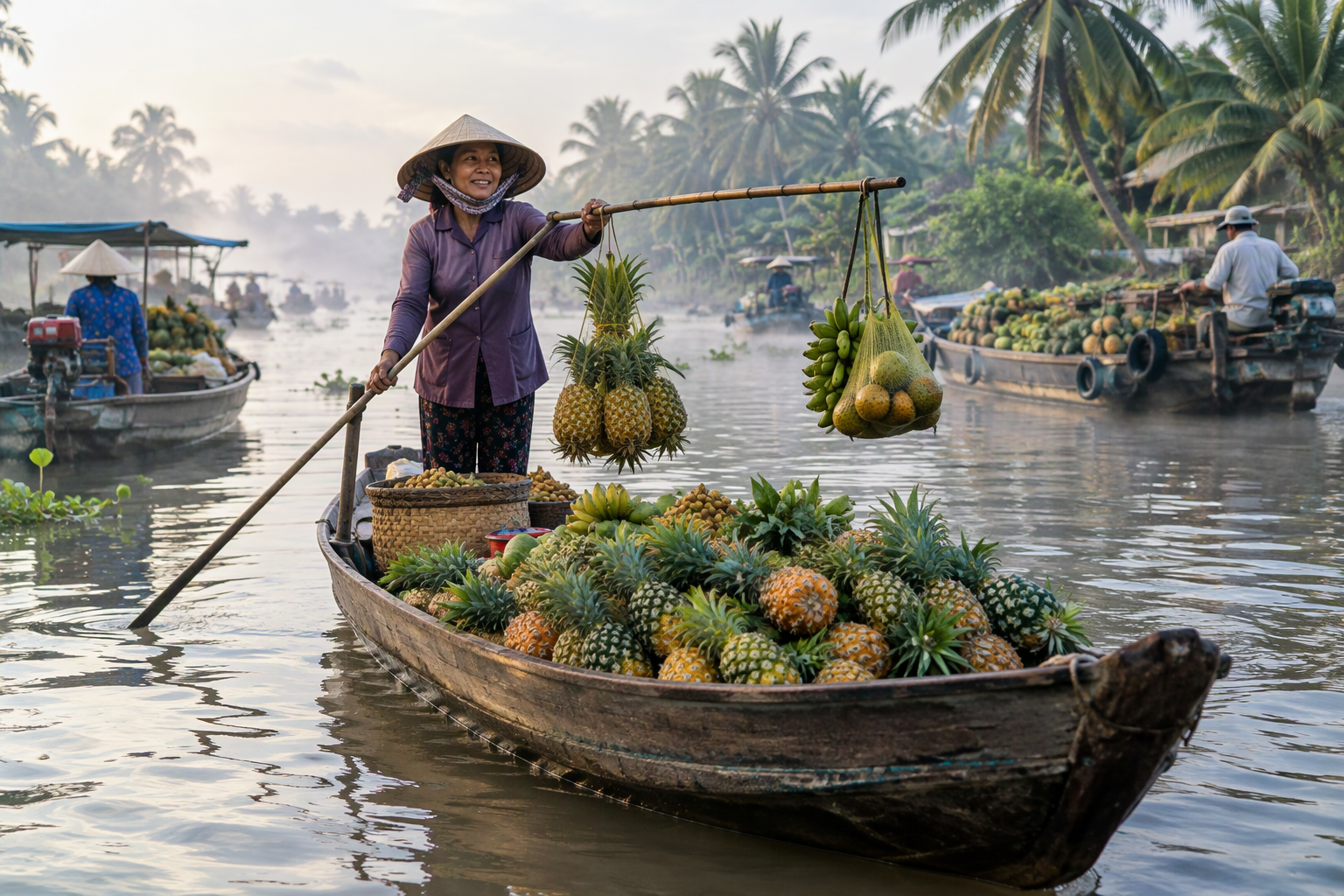
The Mekong Delta floating market is one of the most memorable sights in southern Vietnam. Long wooden boats loaded with pineapples, watermelons, sweet potatoes and coconuts gather on the river at dawn. Vendors call across the water, hang their produce from long bamboo poles and trade with each other as the sun rises. It is busy, colourful and very different from a land-based market.
This guide explains where the floating market is, when to visit, how to get there, what to buy and how to visit respectfully. It is written for first-time visitors, and it also helps travellers who want to plan a Mekong trip around the market.
What a floating market is
A floating market is a wholesale and retail market that works on water. Boats carry fruit, vegetables, fish and household goods. Sellers hold up a sample of their produce on a pole so buyers can see what is on offer. Trade is quick, and the boats move around each other with skill.
Many floating markets began as a way for farming families to sell their harvest without travelling far. Over time, they became a major tourist attraction. The best markets still serve local people, and that is what makes them special.
Cai Rang: the most famous market
The Cai Rang floating market is the most famous in the delta. It sits on the Hau River near Can Tho, the largest city in the region. The market is busiest in the early morning, usually between about six and nine o’clock. By mid-morning, many boats have left, and the atmosphere changes.
Visit Cai Rang by long-tail or wooden boat, which you can book from Can Tho or from a nearby town. You will pass houses on stilts, orchards and fishing nets along the way. The journey is part of the experience, so do not rush it.
You can read more about the market in our guide to the Cai Rang floating market. For a wider view of the region, see the Mekong Delta travel guide.
When to go
Go in the early morning, ideally before seven. Light is soft, the air is cool and the boats are at their busiest. The market is also less crowded at this time, which makes photos easier.
Seasons shape the delta in two clear ways. In the wet months, the river rises and the banks turn a deeper green, so the scene can look richer. The dry season has lower water levels and clearer skies. Both are good, so choose the season that fits your wider plan.
How to get there
Most visitors reach the market from Ho Chi Minh City, Can Tho or a tour base in the delta. From Ho Chi Minh City, a private car to Can Tho takes around three to four hours, depending on traffic. Many travellers stay overnight in Can Tho so they can leave early for the market.
If you are travelling by public bus, plan extra time. Schedules change, and buses can be slow. A private driver or a guided tour is easier if you want a fixed start time for the boat ride.
What to buy and what to try
The market sells fresh fruit, including mango, dragon fruit and rambutan. Ask vendors for a taste before you buy, because many are happy to let you try. Pineapples and watermelons are popular, and coconuts are cut open on the spot so you can drink the water.
Breakfast is often served on the boats. Try banh cuon, steamed rice rolls, or a bowl of noodle soup. Local coffee is strong and sweet, and it goes well with the cool morning air. Pay in small notes, and expect the price to be fair but not fixed.
Bargaining and etiquette
Bargaining is normal, but keep it friendly. Vendors are working, and they may be tired after a long night. Smile, be patient and accept a no without fuss. If you want to buy a large amount, ask for a price before you agree to anything.
Respect the boats and the people on them. Ask before you photograph a vendor, and keep a respectful distance from family boats. Do not climb onto the boats or reach across them for a better view.
Photography tips
Use a zoom lens if you have one. It helps you capture the vendors and their produce without getting too close to the boats. Shoot from a moving boat with a fast shutter speed, because the water and the vendors are constantly moving.
Look for the reflections in the water and the colours of the fruit. The contrast between green leaves, orange fruit and brown wooden boats makes strong images. Early light gives warm tones, so arrive before sunrise if you can.
Combining the market with a delta trip
The market works well as the start of a delta day. After the boat ride, visit a local orchard to taste tropical fruit, or watch a rice noodle workshop. You can also visit a riverside village and see how families weave mats or make coconut candy.
Many travellers add a visit to a floating village or a canal cruise in the afternoon. The delta is flat and slow, so a relaxed day with time for lunch and rest is a good plan.
Other floating markets in the delta
Cai Rang is the best known, but it is not the only market on the water. Cai Be, in Tien Giang province, is another popular stop. It is smaller and easier to reach from Ho Chi Minh City, so many one-day tours include it. The boats here sell fruit, vegetables and snacks, and the atmosphere is relaxed. If you want a shorter trip, Cai Be can be a good choice.
Smaller markets also appear along side canals and at river junctions. They are less crowded and more local in feel. Boats may be selling just a few types of produce, and the trading can be quieter. These markets are a useful reminder that the river is still a working highway for many families in the delta.
Reaching the market from Ho Chi Minh City
Most visitors go by road. A car or minibus takes you south-west through rice fields, fruit orchards and small towns. The drive to Can Tho usually takes several hours, depending on traffic. Many tour operators combine the road journey with a stop at a fruit garden or a riverside village, which makes the day less tiring.
If you prefer to move at your own pace, hire a private driver for the day. You can set your own start time, which helps you reach the market early. Early morning is the best time, because the boats are busiest before the sun gets high. Ask your driver to wait at the pier, and agree on the route before you leave.
Boats, guides and fair pricing
Boat rides at the market are usually arranged in small groups. Ask about the total price before you step on board, and confirm whether it covers the whole trip or only one stop. Prices are not published, so the fare is quoted on request. A good guide will explain what you are seeing and help you talk to the vendors.
Pick a boat with a clear shade cover and life jackets. Sit low and keep your weight centred. The river current can be strong near the main junctions, so listen to your boatman and follow his instructions. Many boats also stop at a small workshop or a fruit orchard, which gives you a chance to taste local products.
Food on the water
The market is a good place to try delta fruit. Depending on the season, you may find mango, dragon fruit, rambutan, longan and jackfruit. Ask the vendor to cut a sample for you before you buy. Many vendors also sell fresh coconut, sugar cane juice and small rice cakes.
For a meal, look for a riverside restaurant near the market. Fish dishes are common, and so are simple noodle soups and spring rolls. Delta cooking often uses fresh herbs, so ask for extra greens if you like them. Lunch on the river is slower than lunch in a city, and that is part of the charm.
What to buy and how to bargain
Fruit is the most common purchase, but you may also see handmade baskets, woven hats and dried fish. Buy a small amount first, so you can judge the quality. Vendors expect some bargaining, but keep it friendly. A smile and a calm tone work better than a hard push. If you are not sure of the price, ask a guide or a local friend.
Be careful with heavy fruit on a long trip. Mangoes and durian can be messy in a small bag. If you plan to fly home, check the rules for taking fresh produce across borders. Some fruit cannot be carried into other countries.
Photography and respect
The market is a busy place, and the boats are working vessels. Ask before you photograph a vendor or a family on a boat. Many people are happy to pose, but some prefer not to be photographed. Keep your camera strap secure, and avoid leaning far over the side of the boat.
Early morning and late afternoon give the softest light. The mist on the river can make a beautiful background, but it also means the air is damp. Keep a lens cloth in your bag, and protect your camera from spray.
Tips for a smooth day
Wear sun protection, a hat and shoes you can get wet. Bring water, because the heat builds quickly once the sun is up. Take small notes for tips and drinks. Keep a copy of your tour details, and save the driver’s number in your phone. Plan to be back in the city by early evening if you have a long journey ahead.
The floating market is one of the most memorable parts of a delta trip. With a little planning, it can be relaxed, colourful and easy to enjoy.
Planning your visit around the water
The river level changes with the seasons, so the market can look quite different from month to month. In the drier months, the water is lower and the boats sit closer to the banks. In the wetter months, the river is wider and fuller. Both seasons have their charm, and neither is wrong. Choose the period that matches your interests and your tolerance for heat and rain.
If your schedule is flexible, aim for a weekday. Weekends often bring more domestic visitors, and the boats can be busier. A quiet morning on a weekday gives you more space and a more relaxed pace.
Deciding whether to stay overnight? Mekong Delta: Day Trip or Overnight Stay? weighs the options, and Cu Chi Tunnels: Half-Day or Mekong Delta Combo? shows how the delta fits with another half-day trip.
Plan your Mekong Delta day
If you want a private boat ride, a guided market visit or a full Mekong route, our team can arrange it. We can match the timing to your schedule and build a comfortable day around the market. Tours and private trips are quoted on request, so you will know the full cost before you book.
Call +84 913 833 980, or visit our office at 343/68 Phan Xich Long Street, Cau Kieu Ward, Ho Chi Minh City. We can plan the route from the city or from another base in the south.
CTour DMC Vietnam — planning team
We are a licensed Destination Management Company based in Vietnam, designing private journeys across Vietnam, Cambodia and Laos. This guide was written by the planners and local guides who run these trips on the ground, and is reviewed against current conditions before publication. More about our team · Ask us a question
Published 12 November 2026 · 1,906 words · 9 min read