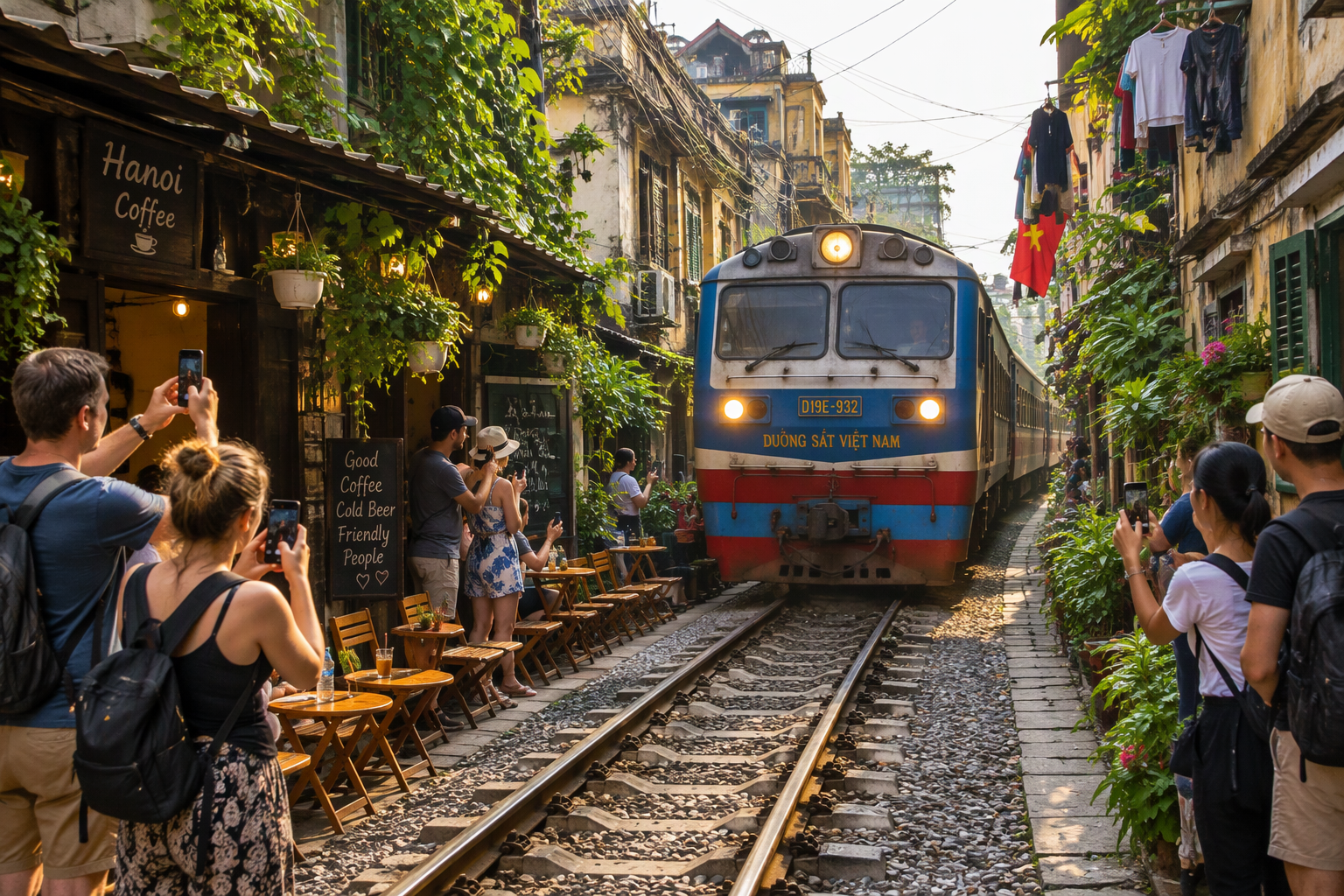
Train Street is one of the most photographed places in Hanoi. A narrow railway track runs through a dense residential neighbourhood, and houses, cafes and small shops sit only a few steps from the rails. When a train passes, people lean out of the way, phones come out and the whole street seems to hold its breath. It is an exciting sight, but it is also a place that needs care and respect.
This guide explains what Train Street is, how to find it, when trains pass, how to stay safe and how to visit without disturbing the people who live there. It is written for first-time visitors, and it also helps travellers who want to plan a short visit as part of a wider Hanoi trip.
What Train Street is
Train Street is a section of the railway line in the old quarter of Hanoi. The track runs through the Long Bien area, and local families have lived beside it for generations. Their homes and small businesses sit so close to the rails that the train seems to pass through the middle of the street.
Over time, the street became popular with visitors. Cafes set out plastic chairs along the track, and some shops sell drinks and snacks to people waiting for the train. This has changed the area, but the daily life of the residents remains the centre of the place.
When trains pass
Trains run several times a day, but timetables change. The schedule can shift with the season, with maintenance work and with local rules. Because of this, do not rely on a fixed time from an old guide. Ask your hotel or a local guide for the current timetable before you go.
As a general rule, the best time to visit is in the late afternoon. Trains often pass at this time, and the light is soft for photos. Plan to arrive about an hour before the time you want to see a train, so you have time to find a spot and check the area.
How to get there
Train Street is in the Hanoi old quarter. Most visitors reach it by taxi, ride-hailing app or on foot from the Hoan Kiem Lake area. If you walk, follow the main streets and listen for the bells and horns of the train, which can help you find the track.
Traffic in the old quarter is heavy, and the streets are narrow. Allow extra time for the journey, especially in the evening. If you take a motorbike taxi, agree on the fare before you set off, and wear a helmet.
Safety first
Train Street is a working railway. Trains are large and fast, and they can not stop quickly. Never stand on the track, even briefly. Stay behind the marked lines, and move off the rails when you hear the horn or see the train approaching.
Watch children and pets, because they may run onto the track. Keep bags and phones close, and avoid walking while looking only at a screen. If you are unsure about a spot, ask a local or a staff member at a cafe before you stand there.
Also, respect the cafes and residents. Some businesses ask visitors to order a drink if they sit on their chairs. This is a fair request, and it helps the people who work there. Do not block doorways, and do not enter private homes without permission.
How to visit respectfully
Remember that Train Street is a neighbourhood, not a stage. People hang laundry, cook meals and talk with neighbours here. Keep your voice down, especially in the early morning and late evening. If you want a photo of a resident, ask first and accept a no without fuss.
Avoid climbing onto walls, roofs or parked motorbikes for a better view. These actions can damage property and put you at risk. A position at street level is often the best view anyway, because you can see the train, the people and the houses together.
Photography tips
Use a wide lens or your phone’s standard camera, so you can capture the train, the track and the houses in one frame. Stand a few metres back from the rails. Focus on the people nearby as well as the train, because they tell the story of the place.
For a sharper photo, use a fast shutter speed. Trains move quickly, and a slow shutter can blur the carriages. If you are filming, hold your camera steady and keep both hands on the device. Avoid stepping into the track to get a better angle.
What to do around Train Street
Train Street is close to other parts of the old quarter, so you can combine it with a walk through the streets. Visit a local cafe for egg coffee, try a bowl of pho in a family stall or explore the lanes around Hoan Kiem Lake. Our guide to Hanoi Train Street visits gives more detail on the area, and the Hanoi city tours guide shows how the neighbourhood fits into a full day in the capital.
If you enjoy food, plan a street food stop nearby. Hanoi’s old quarter is full of small stalls, and many of them serve local dishes at low prices. Ask a guide for recommendations, because the best stalls are often hidden in side lanes.
Tips for a smooth visit
Wear comfortable shoes, because the area can be uneven. Carry a small bottle of water and a light jacket for the evening. Bring some cash for drinks and small snacks, since not every stall takes cards.
If you want a quiet experience, visit on a weekday morning. The streets are calmer, and the residents are more relaxed. If you want energy and a fuller atmosphere, go in the late afternoon, when the cafes are busy and the light is warm.
Plan a Hanoi day that works
Train Street is best as one stop in a wider plan. Start the day at the Temple of Literature, walk through the old quarter for lunch and visit Train Street in the late afternoon. Finish with a dinner in a local restaurant, and then take a short walk around the lake.
If you have less time, choose one main activity each day. For example, combine Train Street with a food walk, or pair it with a half-day tour of the city. The key is to leave space for rest, because the old quarter is busy and tiring.
A brief history of the railway in Hanoi
The railway through the old quarter was built during the French colonial period, when Hanoi was becoming a major rail hub. The line connected the capital with the north and carried goods, passengers and workers. Over the decades, the city grew around the tracks, and many houses were built close to the rails.
Today, the line is still in use, but trains move more slowly through the busy neighbourhoods. The street is a reminder of how the city has grown up around its transport system. Knowing this background makes the visit more meaningful, because you see a place that was shaped by work and everyday movement.
What to expect from a visit
Most visitors spend between thirty minutes and an hour near the tracks. In that time, you can watch the cafe staff prepare drinks, see children playing near the doorways and wait for the train. The atmosphere is relaxed, but the arrival of a train changes everything in seconds. Cafes clear their tables, people step back and the whole street moves together.
Do not expect a silent or private experience. The area is busy, especially in the late afternoon and on weekends. If you want more space, consider a weekday morning visit, when the cafes are quieter and the residents are going about their routine.
Choosing a cafe
Several cafes sit close to the track, and each has its own view. Some offer a seat right beside the rails, while others are set back a little. Think about what you want. A seat close to the track gives you a dramatic view, but it can be cramped and noisy. A seat further back is calmer and easier for families.
Order a drink, even if you only stay for a short time. Egg coffee and iced lemon tea are popular choices. Ask the staff which seat is safest for your group, especially if you have children or older travellers with you.
Photography and video etiquette
Many people come here only for photos, but the residents are not models. Look up from your phone to notice the mood of the street. If you film a train, keep the camera pointed at the track and the scene, not at people’s private spaces. Avoid zooming into windows or doorways where families are sitting.
Some travellers want to capture close-up shots of the train as it passes. This is possible from a safe distance, but it is not worth the risk. Stay where the staff and the cafe owners tell you to stand, and never step onto the rails for a better angle.
Children, older travellers and accessibility
The street is narrow and uneven in places, so it may be hard for people with limited mobility. Plan for steps, parked motorbikes and small gaps between tables. Ask your guide or your hotel for advice on the best route and the most suitable cafe.
Children should hold an adult’s hand near the track. Explain the danger of the train before you arrive, and agree on a meeting point if you are separated. Keep an eye on strollers and bags, because the crowds can shift quickly when a train approaches.
Other neighbourhood stops nearby
Walk a short distance from the track to find local life. Small shops sell fruit, snacks and household goods, and many family kitchens serve simple meals. You will find that the neighbourhood has a rhythm of its own, away from the cameras. Ask a local host for a recommendation, or follow the smell of grilled meat and herbs.
If you have time, visit a nearby temple or a quiet park. The contrast between the busy old quarter and the calm green spaces makes the day feel full. Plan your route so you can return to the track in the late afternoon.
Need help planning a Hanoi visit?
If you want us to arrange a private city tour, a food walk or transport around Hanoi, our team can help. We will plan the route, timing and pick-up points around your schedule. Prices are quoted on request, and we will confirm all details in advance.
Contact us at +84 913 833 980, or visit our office at 343/68 Phan Xich Long Street, Cau Kieu Ward, Ho Chi Minh City. We can help you plan trips across the country, from Hanoi to the south.
For more ideas near the Old Quarter, read Things to Do in Hanoi: Old Quarter, Lakes and Museums, then pair your visit with Hanoi Street Food Guide: What & Where to Eat for an easy day of walking and eating.
CTour DMC Vietnam — planning team
We are a licensed Destination Management Company based in Vietnam, designing private journeys across Vietnam, Cambodia and Laos. This guide was written by the planners and local guides who run these trips on the ground, and is reviewed against current conditions before publication. More about our team · Ask us a question
Published 12 November 2026 · 1,843 words · 8 min read