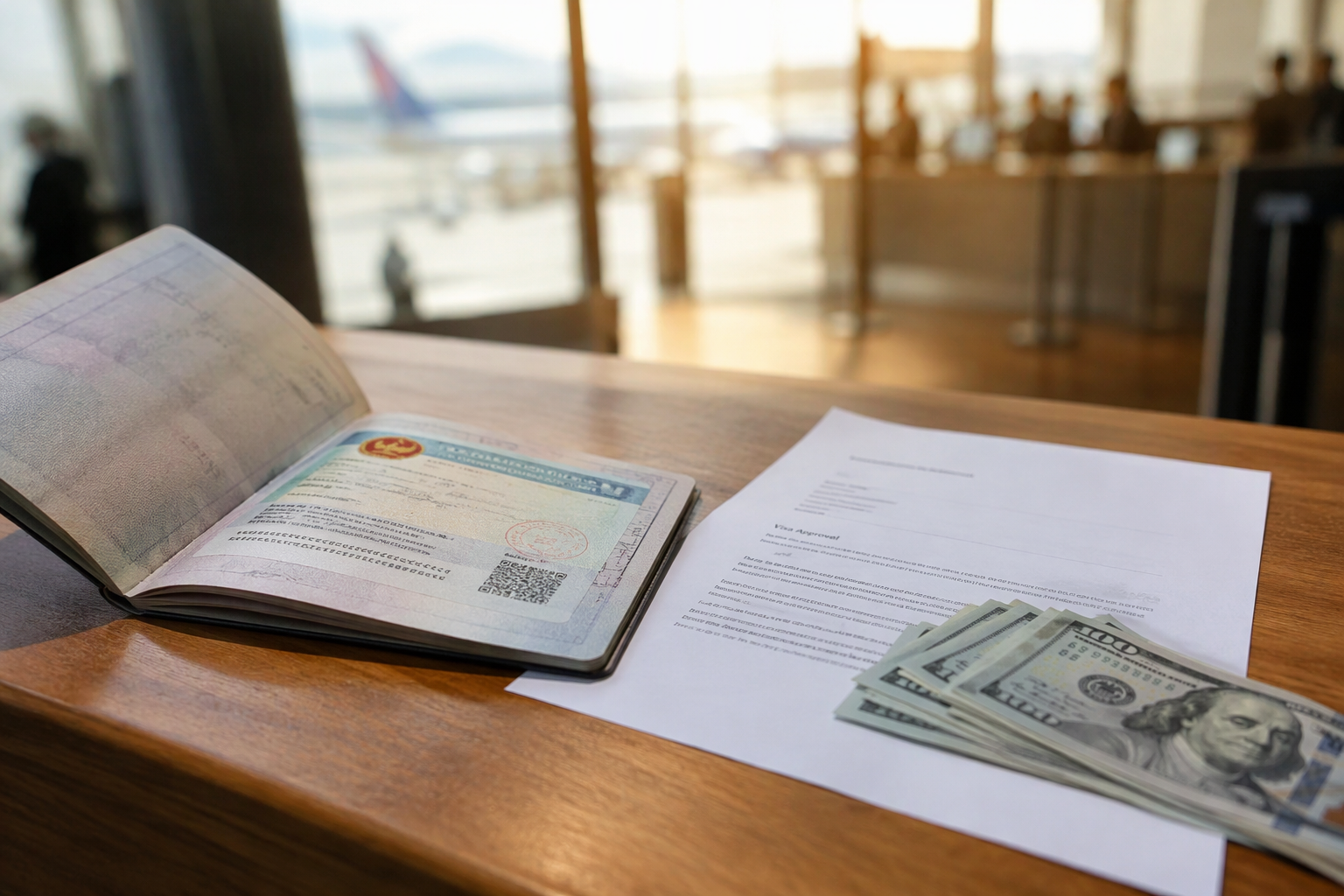
A Vietnam visa on arrival is a pre-approved visa that you collect at the airport when you land. It is a practical option for travellers who need a visa but want to avoid visiting an embassy first. This guide explains how the process works, what you need to bring, what fees to expect, and where travellers often run into trouble.
Vietnam visa on arrival is not a stamp you get at the counter with no preparation. You first apply online for an approval letter, then you show that letter at the airport. Once you understand the two steps, the process is simple.
- Apply online first: you receive an approval letter by email before you fly.
- Bring the printed letter: airlines may ask for it at check-in.
- Pay the stamping fee at the airport: it is paid in cash, in US dollars.
- Check the fees before you go: the amounts change, so confirm them with an official source.
How the Vietnam visa on arrival process works
First, you submit an application form with your passport details, travel dates, and the entry and exit airports. Then the service provider sends you an approval letter, usually within a few working days. Next, you print the letter and carry it with your passport.
At the airport, you go to the visa counter before immigration. You hand over your approval letter, one passport photo, and the stamping fee. Then the officer places a visa sticker or stamp in your passport. Finally, you join the immigration line with the visa in hand.
Because of this two-step process, plan ahead. Apply at least a week before your flight, so there is time to fix any errors in the letter.
Fees and what to bring
The total cost has two parts. The first is the fee for the approval letter, which is paid online. The second is the stamping fee, which is paid at the airport. Single-entry and multiple-entry visas have different fees, and the amounts are set by the government and may change. Therefore, check the current figures before you travel.
Bring the following items:
- A passport with at least six months of validity and at least one blank page
- The printed approval letter
- One recent passport-size photo, in case the officer asks for it
- Cash in US dollars for the stamping fee, in clean, undamaged notes
Also, keep a copy of your flight booking and hotel details. Immigration officers sometimes ask where you will stay.
Where travellers get stuck
Most problems come from small mistakes on the application. A name that does not match the passport, a wrong date, or a missing airport code can cause delays. Therefore, check every letter line by line as soon as it arrives.
Cash is another common issue. Officers do not accept damaged notes, and some fees must be paid in exact amounts. Carry a few small bills so you can pay without a problem.
Some airlines check visa status before boarding. If the airline cannot see proof of approval, you may not be allowed to fly. Show the printed letter at check-in, not just on your phone.
Visa on arrival or e-visa: which is better?
The e-visa is a fully electronic option. You apply online, pay online, and receive a visa file to print. It avoids the airport counter, which makes it simpler for some travellers. However, the e-visa has its own entry rules, and it cannot be extended from inside Vietnam. Check the current rules for your nationality before you choose.
Visa on arrival can be a good fit for travellers who want a longer stay or who need an entry route that is not available as an e-visa. It can also suit people who arrive by air at major airports. Also, it is useful for groups who want one approval process for the whole party.
Tips for a smooth arrival
Land early in the day if you can. Queues at the visa counter are often shorter in the morning. Also, keep your passport and letter in one easy-to-reach place, not in your checked luggage.
If you travel with a tour, ask your operator to confirm the approval letter before departure. A good operator will check the dates, the name spelling, and the entry airport. This simple step prevents most problems at the border.
For a wider view of entry options, read our 2026 Vietnam visa entry guide. It compares the main routes and explains which one suits your trip.
Who should choose visa on arrival
Visa on arrival suits travellers who fly into Vietnam and want to avoid an embassy visit. It also works well for people who apply late, because the approval letter can arrive in a few working days. However, it is not the right choice for everyone. If you plan to enter by land at a border crossing, you should check the rules for that route first, because the process can differ.
Also, consider how many times you will enter the country. A single-entry visa covers one trip. A multiple-entry visa suits travellers who plan to leave for a short trip, such as Cambodia or Laos, and then return to Vietnam. Choose the type before you apply, because changing it later can add time and cost.
Step by step at the airport
Start by finding the visa counter before you join the immigration queue. Airports usually sign it clearly after customs. Then hand over your approval letter, your passport, one passport photo, and the stamping fee in US dollars. The officer checks your details against the letter and then places the visa in your passport.
Next, keep your passport and the stamped visa together. Move to the immigration counter, where an officer checks your passport and stamps your entry. Therefore, you should not put the passport away until the entry stamp is in place. Once you clear immigration, collect your bags and go through customs as usual.
In practice, the whole process can take anywhere from twenty minutes to over an hour. Queues vary by time of day and by flight arrivals. Early morning and mid-afternoon are often quieter, but this is not guaranteed. Plan for a longer wait on busy holiday weekends.
Common mistakes that cause delays
Several small errors cause most problems. The name on the letter must match the passport exactly, including the order of the words and any middle names. A wrong date of birth or a wrong passport number can stop the process. Check every line as soon as the letter arrives, and ask the provider to correct any error before you fly.
Another common mistake is the entry airport. If your letter names one airport and you land at another, the officer may refuse the visa. Confirm your flight number and airport on the letter. Then, if your plans change, contact your provider early.
Finally, bring the right cash. Bills must be crisp and undamaged, and officers may refuse notes with tears, marks, or heavy folds. Exchange your money before you travel, and keep the amount in small notes so you can pay exactly.
What to do if the letter is wrong
If you spot an error after you arrive, stay calm and speak to the visa officer at the counter. Explain the problem, show your passport and flight details, and ask what they recommend. In some cases, the officer can correct the entry. In others, you may need to contact the provider, and that can take extra time.
Therefore, the best solution is prevention. Check the letter twice, save a PDF copy on your phone, and keep the printed copy with your passport. These simple steps give you a backup if the paperwork goes missing.
Visa on arrival and your travel plans
Once your visa is stamped, plan the first day with care. Book a transfer from the airport in advance, especially if you land late at night. Many travellers use a pre-arranged car, which avoids the queues at the taxi stand. Also, check whether your hotel expects a late arrival, so the room is not released.
If you plan to travel between Vietnam and a neighbouring country, check your exit and re-entry rules before you leave. A multiple-entry visa gives you more flexibility, but the exact conditions still apply. Read the letter carefully, and confirm the dates before you cross any border.
Final checklist
Before you fly, confirm your approval letter, passport validity, cash for fees, and flight details. Then plan your first night and your transport from the airport. With the right preparation, the visa counter takes only a short time, and you can start your trip without stress.
CTour DMC Vietnam — planning team
We are a licensed Destination Management Company based in Vietnam, designing private journeys across Vietnam, Cambodia and Laos. This guide was written by the planners and local guides who run these trips on the ground, and is reviewed against current conditions before publication. More about our team · Ask us a question
Published 4 November 2026 · 1,436 words · 7 min read