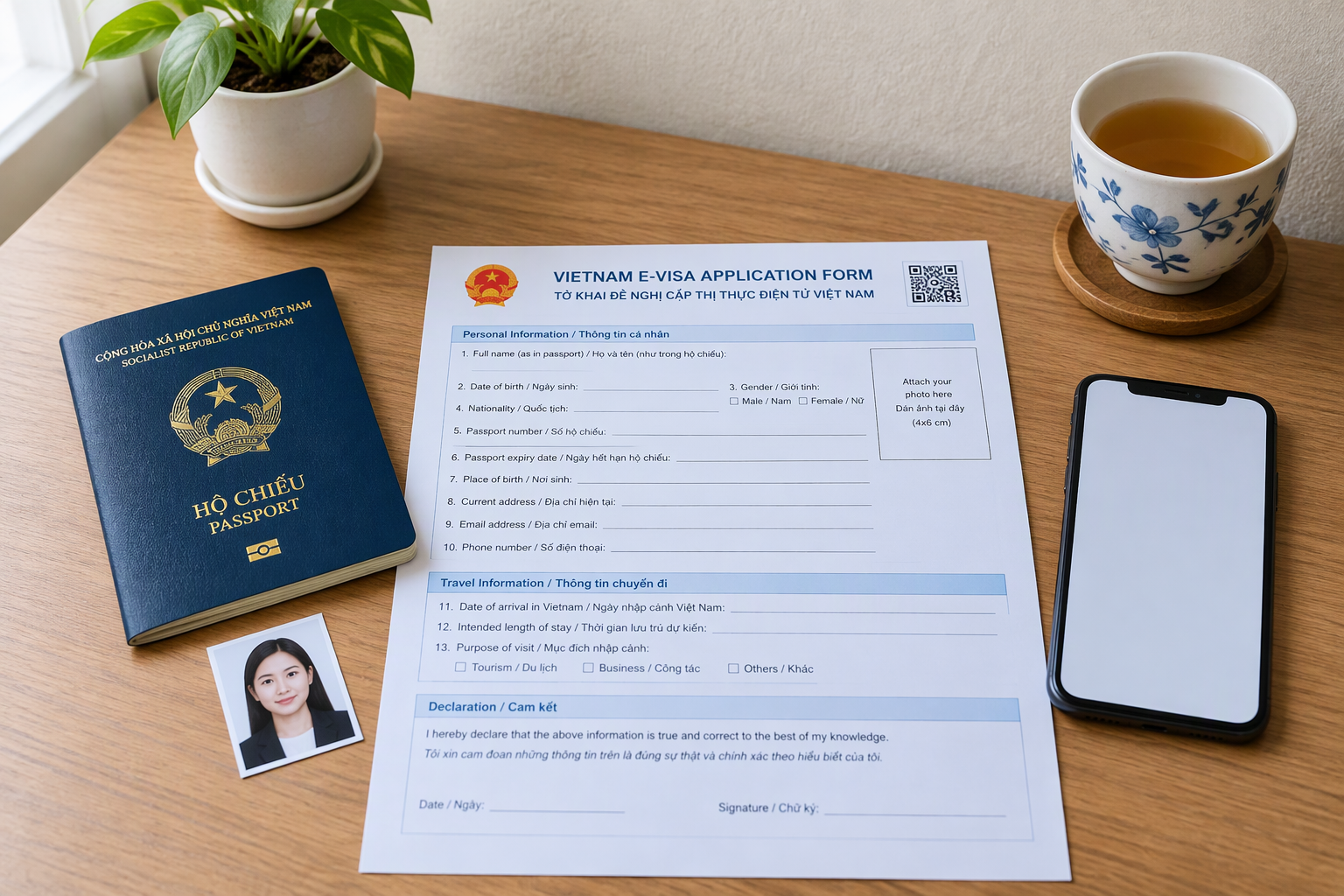
The Vietnam e-visa lets many travellers enter the country without visiting an embassy. You apply online, receive an approval letter by email and show it at the airport, seaport or land border. For most visitors, the process is simple, but small mistakes can delay your trip. This guide explains how the e-visa works, who can use it, how to apply, what documents you need, how long the process takes and what to check before you travel.
It is written for first-time visitors, and it also helps travellers who have applied before and want a refresher. You will find a clear checklist, common mistakes to avoid and tips for your arrival day.
What the e-visa is
The e-visa is an electronic entry permit issued by Vietnamese immigration. Once approved, it allows you to enter through the designated entry points stated on the approval. The e-visa is different from a visa on arrival, which requires an approval letter and a stamp on arrival at the airport. Both options exist, and the right one depends on your nationality, your length of stay and your travel plans.
Entry rules change from time to time, so always check the latest official information before you apply. Immigration policy can differ by nationality, and some travellers may be exempt from a visa for short stays.
Who can apply
Many nationalities are eligible for the e-visa. Eligibility depends on your passport and your purpose of travel. Tourism, business and family visits are common reasons. Your passport must be valid for at least six months from your date of entry, and it should have blank pages for the stamps. Check the rules for your nationality before you pay any fee.
Visitors from some countries may qualify for a visa exemption for short trips. Check whether your country is on the list, and confirm the length of stay allowed. Our Vietnam visa exemption policy guide explains the general rules, but always verify with the official source.
Documents you will need
Prepare a clear digital photo that meets the size and background rules. Have your passport details ready, including the number, the expiry date and the issuing country. You will also need your planned arrival and departure dates, your entry point and your contact email address. Keep a scan of your passport photo page and a copy of your flight itinerary, in case the immigration officer asks for them.
Make sure the name on your application matches your passport exactly. Small differences, such as a missing middle name or a different spelling, can cause problems at the airport.
How to apply step by step
Start by visiting the official Vietnamese immigration e-visa portal, and do not use unofficial sites that charge extra fees for a simple form. Choose the type of visa you need, select the number of entries and enter your personal details. Upload your photo and passport scan, then review everything carefully before you submit.
Pay the government fee using the payment method shown on the portal. Fees are set by the authorities and may change, so check the current amount before you pay. Save your confirmation, and watch your email for the approval letter. Print the letter or keep a digital copy on your phone.
How long processing takes
Processing usually takes a few working days, but it can be quicker or slower depending on the season and the volume of applications. Apply well ahead of your trip. A margin of at least one to two weeks is sensible, especially during public holidays and peak travel months.
If your plans change, check whether you can update your application or whether you need to apply again. Do not wait until the last minute to fix a mistake.
Arriving with your approval
Bring your approval letter, passport and the completed arrival and departure card if it is still required. At immigration, the officer will check your details against your passport and the approval. Keep your answers simple and clear. If you are asked about your purpose of travel, give a straightforward answer that matches your application.
Check that your entry point matches the one on your approval letter. If you plan to enter by land or by sea, confirm the route in advance. Mismatched entry points are a common reason for delays.
Common mistakes to avoid
The first mistake is using an unofficial website that charges high fees for a simple service. Always check the address carefully before you enter your details. The second is entering a wrong date or a wrong passport number. Read each field twice. The third is forgetting to print or save the approval letter. Some airlines may ask to see it before boarding.
Finally, do not assume that every traveller needs the same document. Your nationality, your stay and your entry route all matter. A quick check of the rules at the start will save time and stress.
Tips for a smooth trip
Keep your passport, approval letter and a copy of your accommodation booking together in a secure folder. Carry a small amount of cash in Vietnamese dong for taxis and small purchases. Check your travel insurance, and make sure it covers the activities you plan. Save the contact details of your hotel or tour operator in your phone.
If you plan a longer trip with several cities, think about the route at the start. Our 10-day Vietnam highlights tour from Hanoi shows how a longer itinerary can fit within a typical visa period.
Who needs a visa for Vietnam
Visa rules depend on your nationality, the purpose of your trip and the length of your stay. Some travellers qualify for visa exemption under certain conditions, while others need an approved visa before they arrive. Check the rules that apply to your passport before you buy any service. Government rules can change, so confirm the details on the official portal close to your travel date.
If you are unsure, start with a simple question: does my country have a current exemption, or do I need an electronic visa? The answer decides the next step, and it saves you from paying for the wrong document.
Checking your passport
Your passport needs enough validity to cover your whole trip, and it should have blank pages for the entry stamp. Many travellers are refused at the airport because their passport has less validity than they expected. Look at the expiry date on the photo page, and count the months from your planned exit date. Scan the passport photo page and keep a digital copy in your email, in case you need it on the road.
Make sure your name on the application matches your passport exactly. Small differences, such as a missing middle name or a swapped letter, can cause delays at immigration.
Electronic visas and the official portal
The official electronic visa system is the place to apply for an approved e-visa. Beware of websites that look official but charge extra fees or ask for unnecessary information. Read the portal’s own instructions, and enter every detail carefully. Check the validity dates, the number of entries and the entry points listed on your approval letter before you travel.
Print a copy of the approval letter, and carry it with your passport. Some airlines and border staff may ask for proof of approval, even if you have it on your phone.
Choosing your entry point
An e-visa is valid only for approved entry points, which are usually international airports, some seaports and certain land borders. Check the list before you plan your route. If you plan to arrive by land from Cambodia or China, confirm that the border crossing is on the approved list. A wrong entry point can cause problems at the border, even if your visa is otherwise valid.
Keep your departure date in mind as well. An approved e-visa has a set period of validity, and staying beyond it can lead to fines and other problems when you leave.
Common mistakes to avoid
The first mistake is applying too late. Do it well before your flight, so that a delay does not cost you your trip. The second is entering the wrong passport number or date of birth. The third is ignoring the conditions on the approval letter. Read the letter carefully, and keep a note of anything that is different from what you expected.
Finally, do not rely on rumours from other travellers. Rules change, and what worked for a friend may not apply to you. The official portal and your embassy are the most reliable sources.
Preparing for your arrival
When you reach immigration, have your passport, approval letter and any required forms ready. Keep a pen in your bag for the arrival card, and answer questions honestly and briefly. Officers are usually busy, so have your documents in order and stand in the correct queue.
If you are travelling with a tour, ask your guide to check the paperwork with you before you fly. A short review at home can save a lot of stress at the border. Our Vietnam visa exemption policy page sets out the general rules, and our 10-day Vietnam highlights tour from Hanoi shows how a visa-ready trip can be planned around the main cities.
Keeping copies and records
Save a digital copy of your approval letter, your passport and your flight details. Store them in your email or a cloud folder, and keep a printed set in your hand luggage. If your phone runs out of battery at the border, a paper copy can make the process much smoother.
Also keep your hotel booking for the first night. Some officers ask for proof of where you will stay, so have the address ready in both English and Vietnamese if you can.
Keeping your plans flexible
Visa rules can change, and your travel plans may change too. Build a little flexibility into your itinerary, especially if you plan to enter by land or to move between cities on a tight schedule. Leave a buffer day between your arrival and your first booked tour, so a small delay does not spoil the rest of your trip.
If you are travelling with a group, make sure everyone has checked their paperwork. A single missing document can hold up the whole party at immigration.
For wider entry rules, read Vietnam Visa & Entry Rules 2026: What to Know. If you are comparing options, Vietnam Visa on Arrival: Fees, Steps and Mistakes explains the alternative and the steps it involves.
Plan your Vietnam entry with us
If you want help with the planning side of your trip, including visa timing, city routes and tours, our team can advise you. We will help you match the trip to your dates and your interests. Tours and services are quoted on request, so you will know the full cost before you book.
Contact us at +84 913 833 980, or visit our office at 343/68 Phan Xich Long Street, Cau Kieu Ward, Ho Chi Minh City. Tell us your nationality and your travel dates, and we will explain the options for your trip.
CTour DMC Vietnam — planning team
We are a licensed Destination Management Company based in Vietnam, designing private journeys across Vietnam, Cambodia and Laos. This guide was written by the planners and local guides who run these trips on the ground, and is reviewed against current conditions before publication. More about our team · Ask us a question
Published 12 November 2026 · 1,842 words · 8 min read