The short answer
- Give Phnom Penh a real stop: One full day is possible, but two nights make arrivals and difficult history easier to handle.
- Choose the tone of your day: The National Museum and Royal Palace are not substitutes for the city’s memorial sites.
- Visit memorials with care: Read the site guidance, allow emotional space and keep cameras secondary.
- Leave room for ordinary life: A market, neighbourhood meal and riverside walk belong in the picture too.
- Check the actual route: Airport, bus, border and Siem Reap transfers all change your usable time.
Phnom Penh is often handed one sentence in a Cambodia itinerary: see the palace, see the memorials, leave for Angkor. That is a lot to ask of one sentence. Cambodia’s capital is a working city, not an introduction slide before the temples.
Its riverside is social, its traffic needs patience, and its museums demand different kinds of attention. A visitor can spend the morning looking at Khmer sculpture and the afternoon confronting the violence of the Khmer Rouge period. Those experiences should not be sold as interchangeable “highlights”.
For a first visit, build a route that respects both history and the people living here now. This guide gives you a sensible order, what to ask before booking and permission to slow down. There is no prize for covering the city in one breath.
First decide what you want to understand
Do you want a first look at Cambodian art and contemporary street life? Do you want time for the difficult history of the Khmer Rouge period? Those aims can sit in the same trip, but not necessarily in the same rushed afternoon. Decide what matters before buying a bundle of tickets.
One full day can introduce the city if your arrival and departure are separate. Two nights often provide that day without turning a transfer into sightseeing. If the memorial sites are important to you, allow enough time to read, listen and take a pause afterwards. An exhausted visit does nobody justice.
Our Vietnam and Cambodia itinerary places Phnom Penh within a wider journey. The decision is not simply whether the capital can fit. It is whether the stop has enough space to be more than a connection between Ho Chi Minh City and Siem Reap.
Begin at the river, not on a timetable
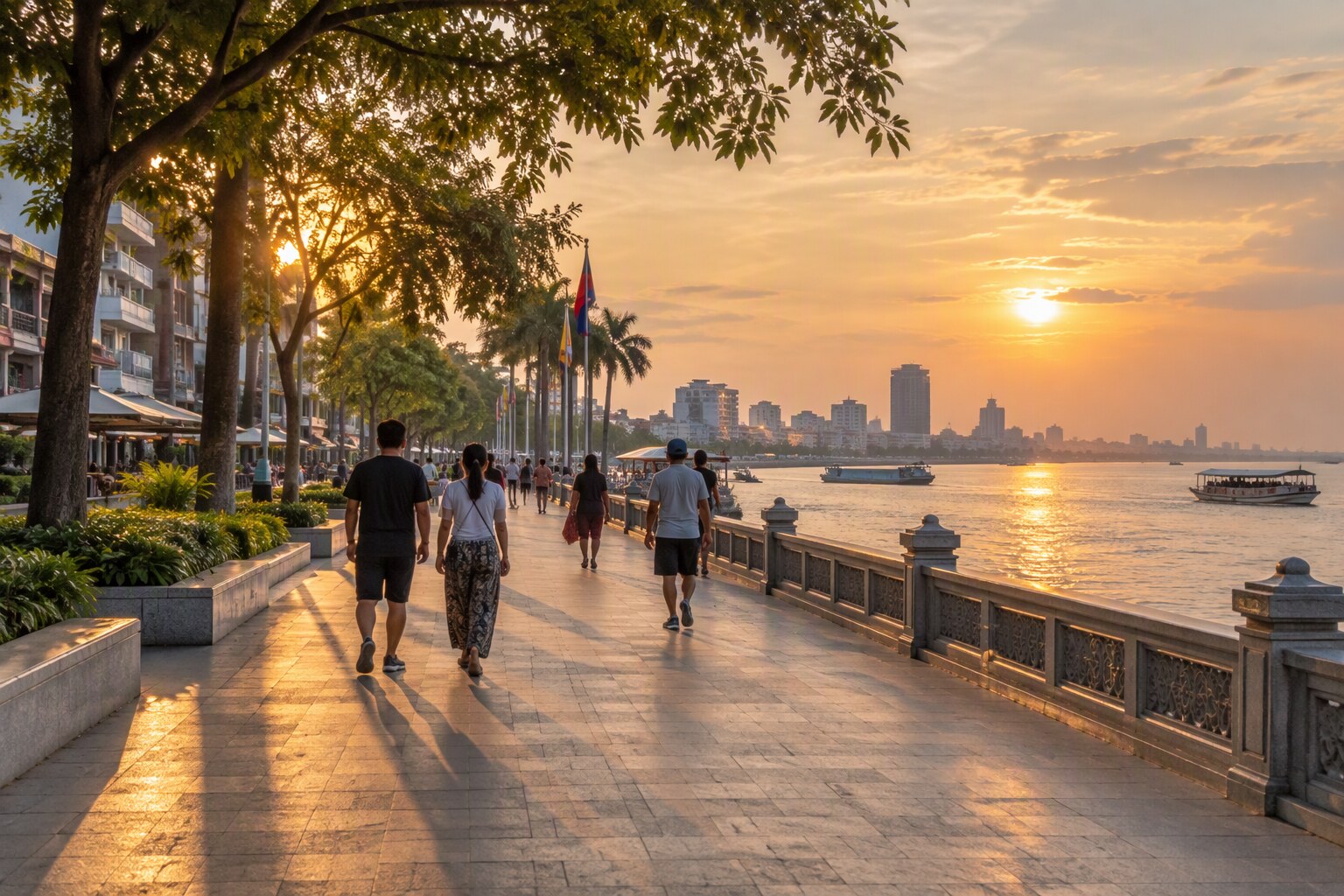
After arriving, take a short walk by the river if the weather and your energy allow. Sisowath Quay is a useful first reference point: you can orient yourself, notice the city moving and choose a nearby meal. That is a better opening than stepping straight from a long transfer into a dense historical tour.
Keep an eye on crossings and moving traffic. Phnom Penh is not a theme park with a pedestrian route painted through every junction. Use a suitable vehicle for longer hops and agree where the driver will meet you afterwards. A map can make two stops look close while ignoring heat and road conditions.
The riverside does not tell the whole story, of course. It gives you a place to start without pretending the city exists only for visitors. Watch the evening return to its normal pace. Then ask what you would like to understand tomorrow, rather than filling every available square in a schedule.
Royal Palace: look, but check what is open
The Royal Palace and Silver Pagoda are part of the capital’s historic core. They make sense in a first visit, particularly with a guide who can explain the buildings and ceremonial setting. However, the palace is not an ordinary museum with every room permanently open for tourists.
Confirm visiting arrangements for your actual date and dress modestly. Rules may apply to particular areas, photography and entry. Follow the staff’s directions rather than using somebody else’s photos as proof that you can enter a space. A working royal and religious setting deserves more care than that.
Pair the palace with another nearby cultural visit if time suits you. Do not automatically attach the memorial sites to the same morning just because a vehicle can reach them. The emotional shift is considerable. A thoughtful plan has room to change gears.
National Museum: meet Khmer art on its own terms
The National Museum of Cambodia is next to the palace area and houses major collections of Khmer cultural material. Give the objects time and context. A sculpture is more than a preview of what you hope to photograph at Angkor later. Ask what period and tradition you are looking at.
The museum’s visitor information says photography is not permitted inside the galleries, while the exterior and courtyard may be photographed. Observe the rule even if another visitor does not. The official page also offers guided tours; confirm availability for your visit instead of assuming a guide will be waiting at every moment.
Anyone travelling onwards to Siem Reap can use this visit to ask better questions at the temples. Our Angkor stay-length guide helps protect time there. Phnom Penh’s museum is not a replacement for Angkor; it is a chance to see Cambodian art beyond the familiar temple photograph.
Lunch should be a break, not a box to tick
Eat somewhere convenient after the morning’s visits. Ask what the kitchen is known for, and tell your guide about allergies or dietary needs before ordering. Do not expect one restaurant to represent the whole country. It is lunch, not a national referendum on Cambodian cooking.
If you plan to visit Tuol Sleng later, choose a quiet enough break to reset your attention. Heavy subjects are not improved by an aggressive clock. You may also prefer to place the memorial visit on a separate day. Tell your planner honestly what kind of pacing works for you.
Try a neighbourhood café or a local meal without turning every interaction into a content opportunity. People working around you have their own day. Listening, ordering politely and paying attention to your guide’s explanation are more useful than declaring a dish “authentic” after one bite.
Tuol Sleng: allow the museum to set the tone
Tuol Sleng Genocide Museum preserves the site of S-21, an interrogation and detention centre under the Khmer Rouge. Its own visitor guidance asks for solemn and respectful behaviour. Read that guidance before you arrive. This is a memorial to people, not a set for dramatic self-portraits.
The museum offers guides and audio guidance. Choose the level of explanation that lets you engage without rushing. Its visitor page also warns that the exhibits may not be appropriate for children aged 14 and younger. Families should discuss that recommendation rather than treating it as a minor ticket detail.
Follow the rules on dress, access and phone use within exhibition buildings. Personal photography is permitted under the museum’s stated conditions, but permission is not an obligation to take photographs. If you are unsure whether a picture feels respectful, put the phone away and keep reading.
Choeung Ek is a separate visit, not an extra stop
Choeung Ek, outside the central city, is a memorial associated with the Khmer Rouge period and the prisoners of S-21. It deserves its own time and transport. Do not list it after a market and before a sunset drink as though all three require the same kind of attention.
Ask your planner about the current visitor arrangements, guide or audio options, and travel time from your accommodation. Check what the site asks of visitors on the day. Walk where directed, speak quietly and avoid treating preserved evidence as scenery for posed photographs.
Some travellers choose both Tuol Sleng and Choeung Ek to understand their connected history. Others may decide one carefully considered visit is enough for their trip. Neither choice should be made by a salesperson who wants to squeeze more stops into a brochure. Make the decision with proper context.
After a memorial visit, do less
Leave an open period after a difficult visit. A quiet meal, an unhurried ride or a rest at the hotel may be what you need. Avoid building an itinerary that asks you to move from testimonies of atrocity straight into an obligatory upbeat performance.
Do not ask a guide to share personal or family trauma for the sake of a stronger story. If they offer context, listen with respect. If they keep the explanation focused on the site, that is their choice. Responsible guiding does not require emotional labour on demand.
If you are travelling with others, check how they feel before continuing. One person may want to talk; another may need quiet. Allow both. A city with a painful history is also a living place, and thoughtful travel makes space for each truth without using one to erase the other.
Markets and neighbourhood streets bring you back to the present
Central Market and Tuol Tompoung, often called the Russian Market, offer different kinds of browsing. Ask what you want to buy before choosing one. Some travellers want a market walk and a snack; others are looking for textiles or everyday goods. Neither market is a compulsory stop.
Ask before photographing a vendor closely. Confirm a price before committing, and do not haggle for sport over a modest item. Keep bags close and leave space for shoppers. A market is at its best when you remember it is working for the people who use it every day.
Wat Phnom offers another change of setting, with a small religious site and surrounding greenery. Dress appropriately and respect worshippers. If your day already feels full, skip it. A successful first visit is not measured by how many places you can add after the museum closes.
Evening Phnom Penh is not a consolation prize
Return to the riverside or choose a neighbourhood dinner after you have had time to rest. The city becomes easier to read when you stop trying to extract a landmark from every hour. This is where an extra night helps: you can see everyday life without turning a serious museum day into a race.
Pick a place that suits your group rather than assuming one riverfront strip will deliver the entire city. Ask about walking distance and the ride back. Traffic and weather may change your plans, particularly when a shower arrives. Keep the evening simple if you have an early onward transfer.
There is room for humour and pleasure in Phnom Penh. Just keep the tone appropriate to the moment. A lively supper is not disrespectful because you visited a memorial earlier; pretending that the memorial was an entertaining attraction would be.
Transport, accommodation and a realistic city day
Choose a base that fits your route. A riverside hotel may make evening walks convenient; another neighbourhood may better suit quieter nights or meetings with a guide. Ask about street noise, pickup access and the actual transfer to the first stop. A central address alone does not answer those questions.
Use a driver or booked ride for scattered sights and the trip to Choeung Ek. Agree on the fare or included service before setting off, and keep the name of your hotel available. Walk compact areas when crossings, heat and mobility needs make it sensible. You do not have to prove your independence by walking every road.
Check the current airport and land arrival arrangements for your travel date. Operators and infrastructure change; a journey time copied from an old travel blog may not match your arrival point. Leave a proper buffer before any timed museum visit, especially after a border crossing.
Coming from Vietnam or going to Siem Reap?
Phnom Penh can sit between southern Vietnam and Siem Reap, but the borders and transport modes deserve planning of their own. Our southern Vietnam itinerary helps you decide how much time to leave before crossing. Do not assume a Mekong Delta excursion is automatically a through-ticket to Cambodia; see our Mekong Delta stay guide for that separate choice.
For route ideas on the Vietnam side, this southern Vietnam overview from C Vietnam Tours provides context before Phnom Penh. It is not a live border timetable. Confirm entry rules, operator arrangements and journey time for your passports and travel date.
Onward to Siem Reap, leave space for arrival rather than booking a temple outing immediately after a long road journey. Our Vietnam or Cambodia comparison looks at the countries’ different travel rhythms. Phnom Penh should be a destination you understand, not just the gap between two famous names.
Plan a thoughtful Phnom Penh visit with CTour
Tell CTour whether your priority is Khmer art, a careful memorial visit, the city’s present-day life or a combination. Share your arrival and onward transport details, too. We can build a route that gives serious sites the time they need and leaves room to eat, rest and ask questions.
A useful proposal should identify the actual sites, guide time, admissions and transfers. Ask what can change if an area closes or the weather affects walking. If children are travelling, discuss the museum’s age guidance beforehand. No thoughtful planner should surprise a family with distressing exhibits.
Phnom Penh rewards curiosity without demanding a checklist. Give the city time to speak in more than one register: art, daily routines, recent history and life beside the river. That is a more honest first visit than a hurried collection of photographs.
Frequently asked questions
How long should I stay in Phnom Penh?
One full day can give you an introduction. Two nights usually protect that day from arrival and departure transfers. Add more time if you want separate cultural and memorial visits at an unhurried pace.
Should I visit Tuol Sleng and Choeung Ek on the same day?
You can, with enough time and a suitable vehicle, but the experience is emotionally demanding. Consider separate visits or a substantial quiet break, and do not treat either site as a quick photo stop.
Is Tuol Sleng suitable for children?
The museum says its exhibits may not be appropriate for visitors aged 14 and younger. Parents should review that guidance and choose what is right for their children before booking.
Can I take photographs inside the National Museum?
Its published visitor rules do not permit photography inside the galleries. Photography of the exterior and courtyard is allowed under the stated guidance. Check current rules at the entrance.
Do I need a guide for Phnom Penh?
Not for every walk. A thoughtful guide can add context at cultural and historical sites, help with transport and answer sensitive questions without forcing a rigid all-day circuit.
What should I wear at memorials and religious sites?
Choose modest clothing and follow each site’s rules. Tuol Sleng explicitly asks visitors to cover arms and legs appropriately. Ask about requirements at other sites before setting out.
Is the riverside a good place to stay?
It can be convenient for walks and some central sights, but noise and pickup access vary. Compare the actual hotel and your planned visits rather than relying only on a map pin.
Can I combine Phnom Penh with southern Vietnam?
Yes, but confirm the relevant entry requirements, border route and transport for your date. Leave enough time on both sides; a local Mekong outing is not necessarily a cross-border service.
CTour DMC Vietnam — planning team
We are a licensed Destination Management Company based in Vietnam, designing private journeys across Vietnam, Cambodia and Laos. This guide was written by the planners and local guides who run these trips on the ground, and is reviewed against current conditions before publication. More about our team · Ask us a question
Published 21 October 2026 · 2,536 words · 12 min read