The short answer
- Go while the market is working: Arrive in the morning, but check the local rhythm rather than chasing a universal opening hour.
- Eat one good breakfast: A busy food stall is better than a frantic ten-dish checklist.
- Buy with a little grace: Ask the price, handle produce only when invited, and pay for what you order.
- Ask before photographing people: A working vendor is not a free portrait studio.
- Keep your visit small: Stay out of delivery lanes and leave room for the people who actually shop here.
At a Vietnam morning market, the first sound is rarely a tour guide giving a speech. It is a motorbike easing past a produce basket, a bowl meeting a spoon, or someone asking a price while already thinking about lunch. By the time you have found your camera, the market has been at work for hours.
That is why a market visit can be a highlight, and why it can go wrong so quickly. Come to look, taste and learn, not to turn somebody else’s workplace into your private theatre. The difference is smaller than you think: a little space, a clear question and a real purchase.
This is a local-minded guide to breakfast, browsing and behaving decently in Vietnam’s everyday markets. It is not a promise that every market sells the same dish or starts at the same hour. The best plan leaves enough room for the place in front of you.
A market is not an attraction with a gift shop
People buy ingredients here because they need dinner, not because a visitor needs a photograph of dinner’s ingredients. Fish arrives, herbs get sorted, breakfast is served and stock disappears. Every market has its own pace. Some lanes feel lively at daybreak; another section may be just getting ready.
That makes your first job simple: notice how the space works. Where are deliveries moving? Which stalls have a queue? Where can you pause without becoming a human traffic cone? Step aside before opening a map. It sounds dull, but it is the difference between joining a scene and blocking it.
Vietnam Tourism points travellers towards the food around early markets, where vendors feed workers and locals on their way to the day. The food is part of the working rhythm. You can enjoy it without pretending the market exists for your amusement.
The best arrival time is before your appetite gets bossy
Go in the morning with a flexible window, not a stopwatch. A food stall may be busy early and quiet later; a produce section may change character as deliveries end. Ask your accommodation or guide when the particular market you want to see is active. Do not assume one national opening time.
Have a small breakfast before you go if you are travelling with children or anyone who needs food promptly. Then treat a market meal as a discovery, not an emergency. Hunger makes bad decisions seem thrilling. It also makes a slow queue feel like a personal insult.
Dress for a working space: comfortable shoes, a bag that stays close to you and clothing you do not mind brushing against damp pavement. Our Vietnam packing guide covers the wider trip. Leave bulky luggage at the hotel; a busy aisle has enough to negotiate without your suitcase conducting a second parade.
First, walk one loop without buying anything
Take a short look around before choosing a stall. You will learn where prepared food is served, which passages are mainly for produce and where shoppers are moving quickly. This is observation, not a reconnaissance mission to find the cheapest possible coriander.
Look at how locals order and pay at that particular counter. At many food stalls you order, eat and settle up afterwards, but do not treat that as a law for every vendor. A smile and a brief question can clear up uncertainty. If seating is limited, wait for an invitation rather than claiming someone’s place.
A local guide can make unfamiliar ingredients intelligible without interrupting every seller. Ask your guide to translate the names of herbs, preparation methods and dishes. That is more useful than being led straight to a staged photo stop where nobody buys food.
Breakfast: order a bowl, not a food marathon
A good market morning can centre on one dish. Maybe it is a noodle bowl, rice preparation or something cooked fresh at a stall near the market. The point is not to eat a supposedly definitive “Vietnamese breakfast”. It does not exist as one nationwide plate.
Ask what the stall serves today. Point politely if language is a barrier, confirm the portion and any additions, then let the cook work. Do not demand a complicated redesign of a dish during the busiest rush. If you have an allergy, however, ask clearly before ordering; convenience never outranks safety.
Vietnam Tourism advises eating when local food stalls are active, particularly around breakfast. That does not guarantee every busy stall suits your dietary needs. Our Hanoi street-food guide offers more ideas for building a food outing around a few worthwhile stops, not a competitive eating event.
Ask what is in the bowl before declaring it vegetarian
A vegetable topping does not prove the broth is vegetarian. Fish sauce, shrimp, meat stock or shared cooking equipment may matter to you. Explain your needs in simple terms, ideally with a translation card. Ask about the broth and condiments as well as the visible ingredients.
If the answer is uncertain, choose another stall. That is not a judgement on the cook. A busy vendor may not have time to audit every ingredient for a visitor, and a guide should not guess on their behalf. People with severe allergies should make a plan before arriving.
Carry drinking water you trust and clean your hands before eating. Choose food that appears freshly prepared and served hot when that suits your health needs. No travel writer can promise a particular stall is risk-free. Sensible hygiene and honest questions are more useful than a blanket list of forbidden foods.
The produce aisle is a lesson in ordinary cooking
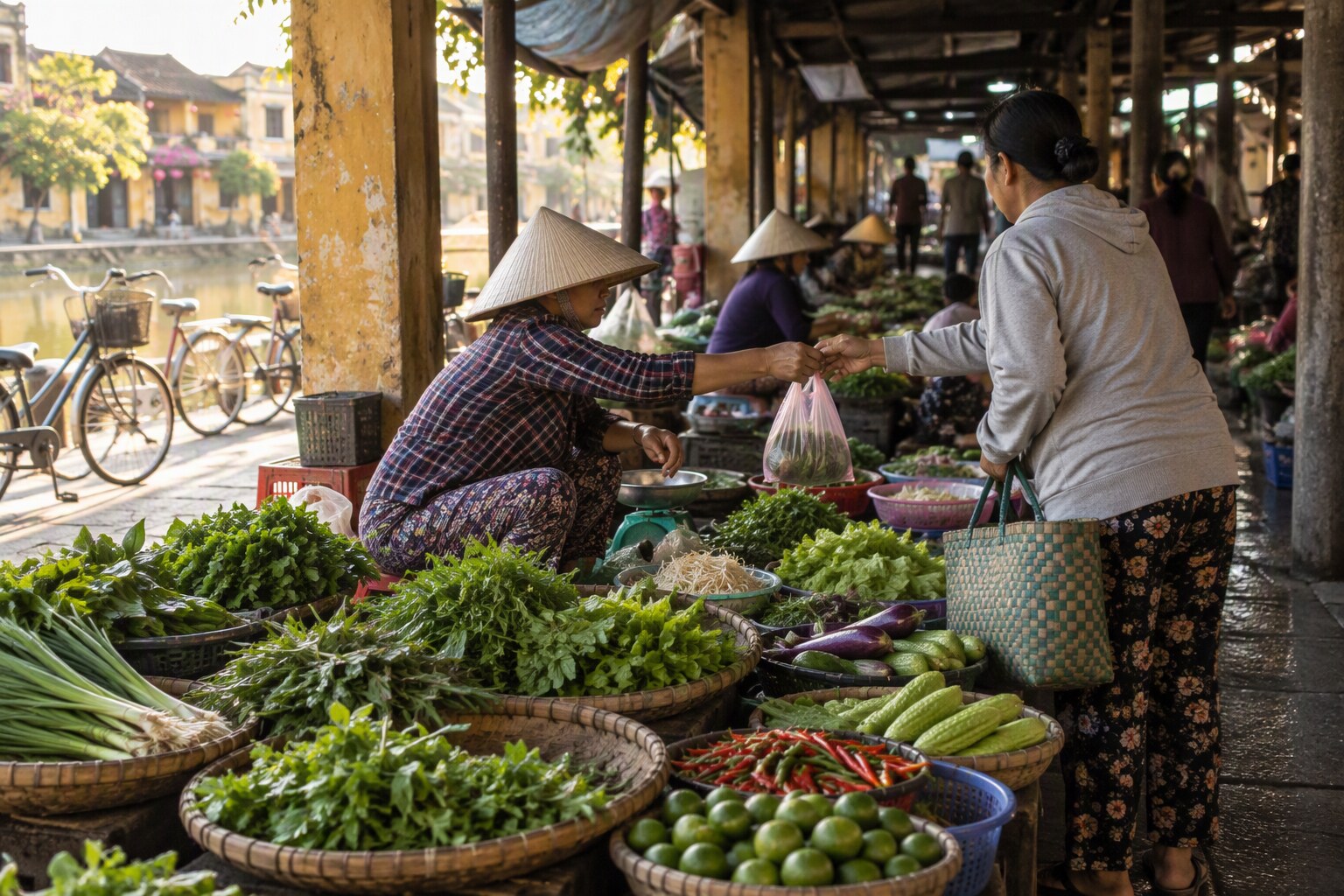
Look for the small details: bundles of herbs, fruit in different stages of ripeness, vegetables selected for a family meal. Ask the name of one unfamiliar ingredient. One good question can teach you more than photographing thirty stalls whose names you never learn.
Do not squeeze fruit to test it unless the seller invites you. If you want to buy a small amount, indicate the quantity and let the vendor select or weigh it. Shopping habits vary by item and market. The person selling it knows the local routine better than your online bargain guide.
Many travellers enjoy Hoi An’s food culture by pairing a market visit with a cooking lesson. Vietnam Tourism features a Hoi An cook who uses a market walk to explain herbs, fruit and how dishes come together. That works when the host has a real reason to buy and teach, not just a route through strangers’ faces.
How to ask a price without staging a negotiation
Cash is useful for modest purchases, and small denominations make paying easier. Confirm the price or portion before accepting an item. Vietnam Tourism notes that gentle negotiation is common in some casual shopping areas, particularly those used to visitors. That is permission to ask, not an instruction to haggle over every breakfast bowl.
First learn what is being sold: a piece, a bunch, a bowl or a measured weight. If the price is not right for you, thank the seller and move on. Do not perform outrage for an audience. A few coins saved at the cost of someone’s patience are not an impressive travel story.
For a fuller explanation of notes, cash and tipping, see our Vietnam money guide. Keep payment separate from photography: buying a lime does not automatically buy the right to a close-up portrait of the person who sold it.
A photograph needs a person’s permission
Wide scenes may capture the feel of a market, but a close photograph of a vendor or shopper is different. Vietnam Tourism’s etiquette advice says to ask before photographing people. Make that your default, especially when somebody is working, eating or caring for a child.
If the answer is no, put the camera away. If the answer is yes, take a few pictures and move on. Do not rearrange produce, interrupt an order or keep shooting until the person stops smiling. A phone lens does not grant priority over the next customer.
Be careful with images of children. Parents may not want their child photographed or posted online. When in doubt, leave people out of the frame and focus on a detail, a bowl or the flow of the street. A good memory does not need a stranger’s face to certify it.
Hoi An, Hanoi or somewhere smaller?
Hoi An makes an approachable example because food, market visits and cooking lessons can fit into the same morning. But do not come expecting every stall to offer the same menu on every visit. Our Hoi An stay-length guide helps you leave room for a food morning without sacrificing the rest of your stay.
Hanoi has a different scale. Vietnam Tourism describes the capital’s markets as active trading spaces, including Long Bien’s wholesale trade. That does not make a wholesale market the best first stop for every visitor. If you want an easy breakfast and a gentle walk, ask for a nearby local market suited to that purpose.
In a smaller town, you may find fewer obvious visitor services and more reason to go with someone who speaks the local language. Choose a market based on what you want to learn and how you will behave there. Famous is not always better, and “untouched” is a poor way to describe someone’s workplace.
Should you take a market tour or wander alone?
Wander independently if you are happy to observe, buy breakfast and respect boundaries without a running commentary. It costs little time to take one loop, eat, then leave before the busiest lanes become uncomfortable. Ask your hotel for directions and check the route back.
A guide earns their place when they translate ingredients, explain buying habits and help you choose suitable food. A cooking class can turn the purchases into a meal you actually prepare. This Hoi An cooking-class and market guide explains what to check about the host, menu and dietary arrangements.
Ask whether the guide has a relationship with vendors, whether tasting is included and how much actual cooking you do. A market tour should not be an excuse to fill a group’s phones with portraits while buying nothing. If a class starts with a market visit, the visit should make the lesson better.
Bring children, but give them a job
Markets can be absorbing for children: colours, sounds, snacks and things to count. They can also be hot, crowded and full of moving vehicles. Keep young children close, agree on a meeting point for older ones, and make the visit shorter than your own appetite for browsing.
Give each child one small mission: find three kinds of herbs with a guide, choose a fruit to try, or notice how a dish is assembled. Ask a seller before a child touches food or equipment. The aim is curiosity with boundaries, not a scavenger hunt through working stalls.
Our Vietnam travel-style guide explores how a route changes with your companions. With a family, a relaxed breakfast and a short market walk may be the right amount. There is no prize for staying until everybody is exhausted.
Leave when the market has told you enough
After breakfast, another look at the produce and one conversation, you may be done. That is perfectly fine. A market does not need to occupy a full half-day to feel memorable. Often the best ending is to thank the people you bought from and let them return to work.
Take rubbish with you or use the bin provided. Keep walkways clear when leaving, especially if morning deliveries are still underway. A traveller’s good manners are not measured by how many Vietnamese words they know, although a simple thank you helps. They show up in the space you leave behind.
If the weather is poor or the area is unusually crowded, shorten the visit. There is always another food experience elsewhere on your route. The market should remain a useful place for local shoppers long after your morning has turned into an anecdote.
Make a real food morning with CTour
Tell CTour what you actually want from a market visit: breakfast, ingredients, a cooking lesson or a better sense of daily life. Tell us about allergies, children and your comfort with busy spaces too. We can choose a suitable market and host rather than fitting everyone into the same photo opportunity.
A good plan names the meeting place, food arrangements, guide time and whether tastings or a class are included. It should also leave room for the market’s own rhythm. We will not promise that one stall, one dish or one smiling vendor will be waiting on cue.
Come hungry enough to enjoy breakfast, patient enough to ask, and curious enough to listen. Leave the market with one useful story you can tell accurately. That is a better souvenir than fifty photographs of somebody else’s shopping.
Frequently asked questions
What time should I visit a Vietnam morning market?
Go while the market and nearby breakfast stalls are active. Hours vary by place and section, so ask locally rather than relying on a single nationwide rule or an old online timetable.
Can I eat breakfast inside or near the market?
Often, yes. Look for an active stall, ask what is served and confirm the portion and price. If you have dietary restrictions, explain them before ordering.
Should I bargain for food?
Do not assume every price is negotiable. Ask clearly about the portion and price. Gentle bargaining may suit some shopping situations, but a breakfast bowl is not a stage for a bargaining performance.
Is it acceptable to photograph vendors?
Ask before taking a close portrait, and respect a refusal. Do not block a stall or photograph children without parental permission. Wide scenes still need care when people are identifiable.
Do I need cash at a market?
Cash in manageable denominations is practical for small purchases. Payment methods vary by vendor. Confirm the price, keep your money secure and do not assume every stall takes cards.
Can vegetarians or people with allergies eat market food?
They can often find options, but ingredients need checking. Ask about broth, sauces and shared equipment. For a serious allergy, plan ahead and do not rely on guesses or a dish’s appearance.
Is a guided market visit worth it?
Yes, if the guide explains ingredients, translates questions and connects the visit to real cooking or food. You can also enjoy a respectful short visit independently.
Which market should I choose first?
Choose one that fits your route and interests, not just the most famous name. Ask your accommodation or planner for a breakfast-friendly local market where you can visit without disrupting trade.
CTour DMC Vietnam — planning team
We are a licensed Destination Management Company based in Vietnam, designing private journeys across Vietnam, Cambodia and Laos. This guide was written by the planners and local guides who run these trips on the ground, and is reviewed against current conditions before publication. More about our team · Ask us a question
Published 21 October 2026 · 2,546 words · 12 min read