The short answer
- Pack for three climates, not one. Hanoi in January can be 12°C and grey while Ho Chi Minh City is 33°C. The north has a real winter; the south never does.
- Light, breathable layers beat everything else. Linen and cotton for the heat, one warm fleece or light down jacket for the north between November and March.
- Bring a packable rain jacket in any month. Every region has a wet season, and they do not happen at the same time.
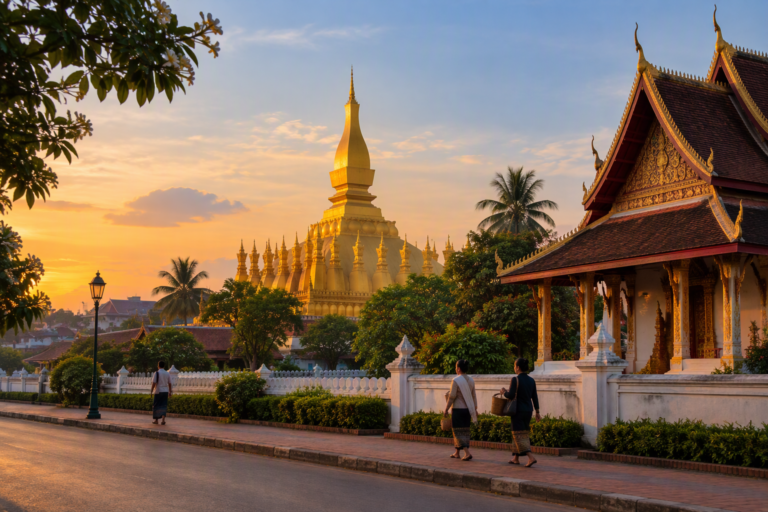
- Cover shoulders and knees for temples and pagodas. A light scarf or sarong in your day bag solves it everywhere.
- Comfortable walking shoes plus sandals you can wade in are the only footwear most trips need. Leave the heels at home.
- Bring your own prescriptions, sunscreen you trust and insect repellent. Almost everything else is cheaper to buy here.
- Pack light. Laundry is fast and cheap, domestic flights have strict baggage limits, and Hoi An tailors will make you clothes in 24 hours.
We are a Vietnamese tour operator, and the packing question is one we answer for almost every client in the fortnight before they fly. The honest answer is that most people overpack for Vietnam and still forget the two or three things that matter. The country is long — 1,650 kilometres from the Chinese border to the Mekong — and the climate changes completely along it, so the right list depends on where you go and when. Here is the version we send clients.
First, understand the three climates
Vietnam is not one weather system, and that is the single most important packing fact.
The north — Hanoi, Ha Long Bay, Ninh Binh, Sapa, Ha Giang — has four genuine seasons. Summer from May to September is hot, humid and wet. Winter from December to February is cool and often grey, around 12–20°C in Hanoi and close to freezing at night in Sapa and Ha Giang. Spring and autumn are the comfortable shoulders.
The centre — Hue, Da Nang, Hoi An — is hot and dry from roughly February to August, then takes heavy rain and occasional typhoons from September to December. Winter here is mild, not cold.
The south — Ho Chi Minh City, the Mekong Delta, Phu Quoc — is hot all year, typically 28–35°C, with a dry season from December to April and short, heavy afternoon downpours from May to November.
A typical two-week trip from Hanoi to Ho Chi Minh City can therefore cross two or three of these in a fortnight. In January, you need a jacket for Hanoi and shorts for Saigon in the same suitcase. Our month-by-month guide to when to visit Vietnam sets out exactly what each region is doing in each month, and it is worth reading before you finalise the list.
Clothing: the core list
For a two-week trip, this is what we would pack ourselves.
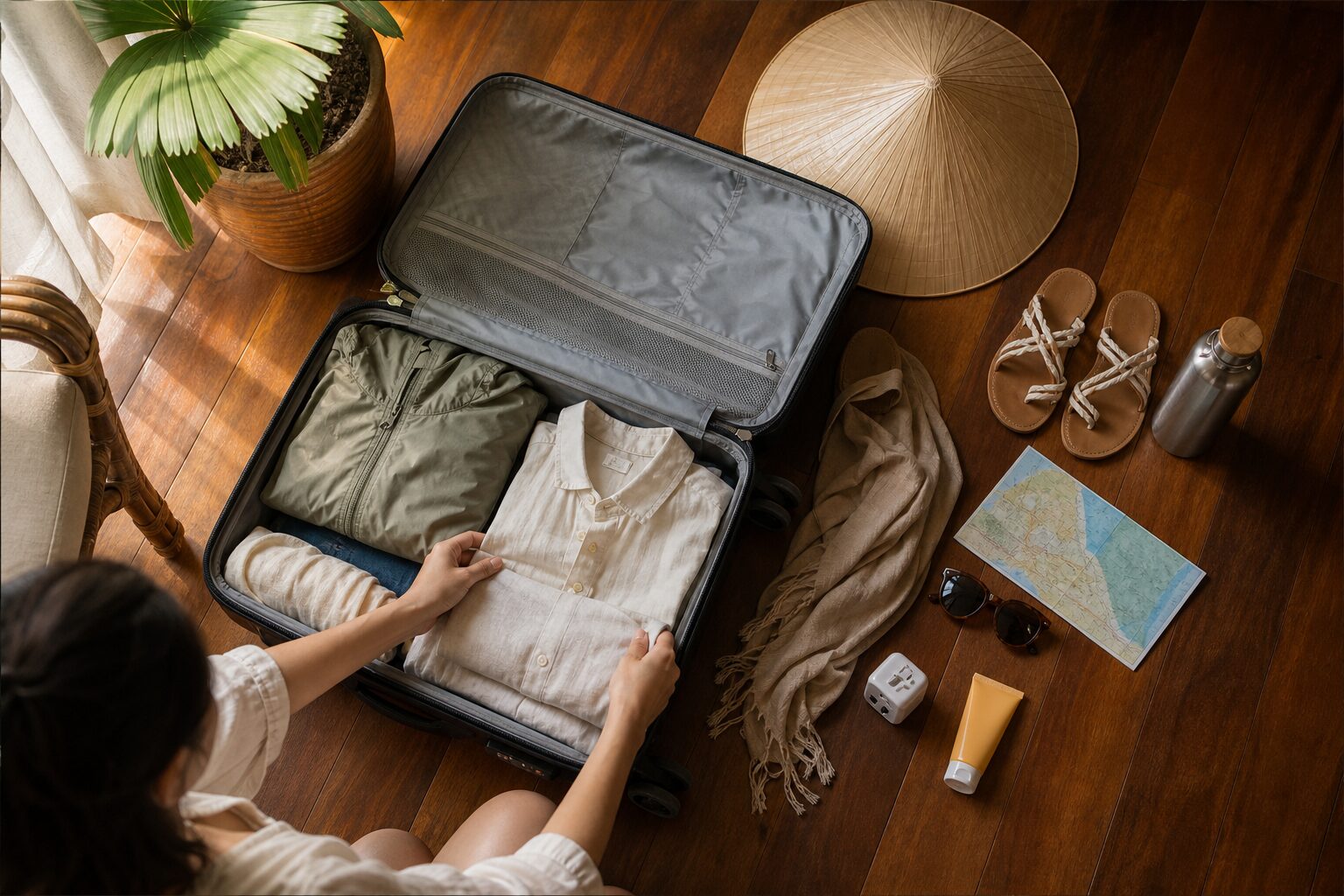
- Five to seven light tops in linen, cotton or a quick-dry technical fabric. Avoid heavy polyester — in 90 percent humidity it is miserable.
- Two pairs of light trousers or long skirts, which double as temple clothing and protect against mosquitoes in the evenings.
- Two pairs of shorts for the south and the beach. Knee-length is more practical than very short, because it covers you for more places.
- One long-sleeved light shirt for sun protection on boats, bikes and trekking days.
- One packable rain jacket, in any season. A cheap plastic poncho bought here works too, but a proper jacket is nicer on a motorbike or a cruise deck.
- One warm layer — a fleece or a light down jacket — for the north from November to March, for Sapa and Ha Giang at any time of year, and for air-conditioned buses, trains and flights.
- Swimwear, plus a cover-up for walking from the beach to a cafe.
- A light scarf or sarong, the most useful item on this list: temple cover-up, sun shade, train blanket and beach towel in one.
- One smarter outfit if you plan a good restaurant or a luxury cruise dinner. Smart casual is the ceiling; nobody expects a jacket and tie.
Colour is worth a thought. Light, neutral colours stay cooler in the sun. Very dark clothing shows sweat less but absorbs heat. White linen looks lovely in Hoi An and gets dirty in about forty minutes on a motorbike, which is fine as long as you expect it.
Footwear: two pairs is enough
Vietnam is a walking country — old quarters, temple complexes, market lanes and rice-terrace paths — and footwear is where we see the most avoidable discomfort.
Comfortable, broken-in walking shoes or trainers are the main pair. Breathable is better than waterproof in most of the country. If your trip includes trekking in Sapa or Ha Giang, bring trail shoes with real grip; the paths between villages are clay and become slippery after rain. The Sapa travel guide on our sister site describes the terrain on the main trekking routes.
A pair of sturdy sandals or water shoes is the second. You will wade into a cave at Phong Nha, step off a sampan in Ninh Binh, kayak in Lan Ha Bay and walk through a flooded Hoi An street in October. Flip-flops are fine for the beach and hotel; they are not fine for a muddy riverbank.
Shoes come off constantly here — at temples, homestays, some shops and many homes — so anything that slips on and off easily earns its place. Leave heels and anything precious at home; pavements in the cities are broken, crowded and used as motorbike parking.
Dressing for temples, pagodas and the mausoleum
Vietnam is relaxed about clothing in daily life, but religious and state sites have rules, and they are enforced.
At pagodas, temples and the Imperial City in Hue, shoulders and knees should be covered. A scarf over a vest top and trousers or a skirt to the knee is all it takes. At the Ho Chi Minh Mausoleum in Hanoi, the rules are stricter and actively checked: no shorts, no short skirts, no sleeveless tops, hats removed, and quiet behaviour in the queue.
If your trip continues to Cambodia, the upper level of Angkor Wat and several other temples turn away visitors with uncovered shoulders or knees, so the same scarf earns its place there too. We cover the Angkor side in our guide to how many days to spend at Angkor, and how the two countries fit together in our honest comparison of Vietnam and Cambodia.
Outside these places, wear what is comfortable. Beachwear belongs at the beach, and very revealing clothing in a rural village will get looks, but in the cities nobody minds shorts and a T-shirt.
Packing by region and season
North, November to March. Add a proper warm layer, a long-sleeved base layer and closed shoes. Hanoi winters are damp and buildings are rarely heated, so it feels colder indoors than the thermometer suggests. For Sapa or Ha Giang in December and January, pack a warm hat, gloves and a down jacket — night temperatures can approach zero. The Ha Giang travel guide on our sister site covers the conditions on the loop.
North, April to October. Heat and rain. Light clothes, a rain jacket, sandals and a small umbrella that also works for sun. For a Ha Long Bay cruise, add a light layer for the deck in the evening and swimwear for kayaking.
Centre, February to August. Hot, dry and bright. Prioritise sun protection: hat, sunglasses, high-factor sunscreen and long sleeves for the middle of the day. This is beach season in Da Nang and Hoi An.
Centre, September to December. Rain, sometimes for days, and the possibility of flooding in Hoi An and Hue. A good rain jacket, quick-dry clothes, sandals and a dry bag for your phone. Bring one warmer layer for Hue, which can feel cool and wet in November and December. The Hoi An travel guide and Hue travel guide on our sister site go into each town in detail.
South, all year. Hot. Light clothes, sun protection and a rain jacket for May to November. Air conditioning in Ho Chi Minh City restaurants, shopping centres and buses is aggressive, so keep a light layer in your day bag. For the Mekong Delta, add insect repellent and closed shoes or sandals with a strap for getting in and out of boats — see the Mekong Delta travel guide for what a typical day on the water involves.
Health and toiletries: bring these from home
Pharmacies in Vietnamese cities are everywhere and well stocked, but a few things are worth bringing.
- Prescription medicines for the whole trip plus a few days, in original packaging, with a copy of the prescription. Specific brands can be hard to find, and some medicines common elsewhere are sold under different names.
- Sunscreen you trust. It is sold everywhere, but high-factor international brands cost more than at home and many local products contain whitening agents.
- Insect repellent with DEET or picaridin for the evenings, the Mekong Delta, the mountains and the islands. Dengue is present in Vietnam and there is no simple vaccine for most travellers, so avoiding bites is the main protection.
- A small first-aid kit: plasters, blister patches, antiseptic, rehydration salts, antihistamines and something for an upset stomach. It is rarely needed and very welcome when it is.
- Hand sanitiser and a pack of tissues. Public toilets outside hotels and restaurants often have no paper.
- Contact lens solution and spare glasses if you need them; both are available in the cities but not elsewhere.
For vaccinations, see a travel health clinic six to eight weeks before departure; they will advise based on your route and history. If you have specific health considerations, our guide to travelling in Vietnam as an older traveller covers hospitals, pacing and medication in more detail.
Tech, documents and money
- Passport with at least six months’ validity and two blank pages, plus a printed copy of your e-visa or entry approval. Our Vietnam visa and entry guide explains current rules.
- Photocopies or photos of your passport, visa, insurance and bookings, stored separately from the originals and in the cloud.
- Travel insurance details, including the emergency number, on paper as well as on your phone.
- Two bank cards from different banks, kept in different places, and a small amount of US dollars as a backup. Our guide to money in Vietnam covers cash, cards, ATMs and tipping.
- A universal plug adapter. Vietnam runs on 220 volts with sockets that take flat two-pin and round two-pin plugs; most phone and laptop chargers handle the voltage.
- A power bank for long days of maps and photographs. Keep it in hand luggage — airlines forbid power banks in checked bags.
- An unlocked phone so you can use a local SIM or eSIM. Our Vietnam SIM card and eSIM guide explains which network to pick.
- A small dry bag for your phone and passport on boats, kayaks and in the wet season.
What not to bring
Overpacking is the most common mistake we see, and it costs people more than they think.
Too many clothes. Hotel and street laundry is fast and cheap — often a dollar or two per kilogram, returned the same or next day. Pack for a week and wash.
A very large suitcase. Domestic flights on budget carriers have tight checked-baggage limits, often 20 kilograms or less depending on the fare, and an Old Quarter hotel may be down a lane too narrow for a car. Ha Long Bay cruises and train sleeper cabins have limited luggage space. A medium suitcase or a large backpack is the comfortable maximum.
Expensive jewellery and valuables. Vietnam is safe, but bag snatching from motorbikes happens in the big cities, and there is no reason to give anyone the opportunity. Our guide to whether Vietnam is safe covers the realistic risks.
Drones, without checking first. Flying a drone in Vietnam legally requires a permit, and customs can hold drones at the airport. Tell us in advance if you plan to bring one.
A hairdryer. Almost every hotel above budget level has one.
What to buy in Vietnam instead
Plenty of things are cheaper, better or more fun to buy here.
Clothes in Hoi An. The town’s tailors can make shirts, dresses, suits and coats to measure in 24 to 48 hours. If you plan to shop there, leave space in your bag rather than packing a full wardrobe.
A conical hat, rain poncho, flip-flops and a cheap umbrella are sold on every street for a few dollars.
Basic toiletries — shampoo, toothpaste, deodorant — from any convenience store or supermarket.
A light jacket or fleece for Sapa, if you forget one. The shops in Sapa town sell warm layers at reasonable prices.
Coffee, tea, lacquerware, silk and ceramics to take home, so leave a little room in the suitcase on the way out.
Packing for specific trips
Ha Long Bay or Lan Ha Bay cruise. Swimwear, a light layer for the evening deck, sandals, sunscreen, a hat and a small overnight bag. Most cruise operators let you leave the main suitcase with the car or at the pier, which is far easier than carrying it aboard.
Overnight train. A light layer for the air conditioning, a toothbrush and toiletries in a small bag, earplugs, an eye mask and snacks. The Vietnam train travel guide on our sister site describes the sleeper cabins.
Trekking in the north. Trail shoes, a rain jacket, a warm layer, a hat, a small backpack, a water bottle and blister patches. Homestays provide bedding but not always towels.
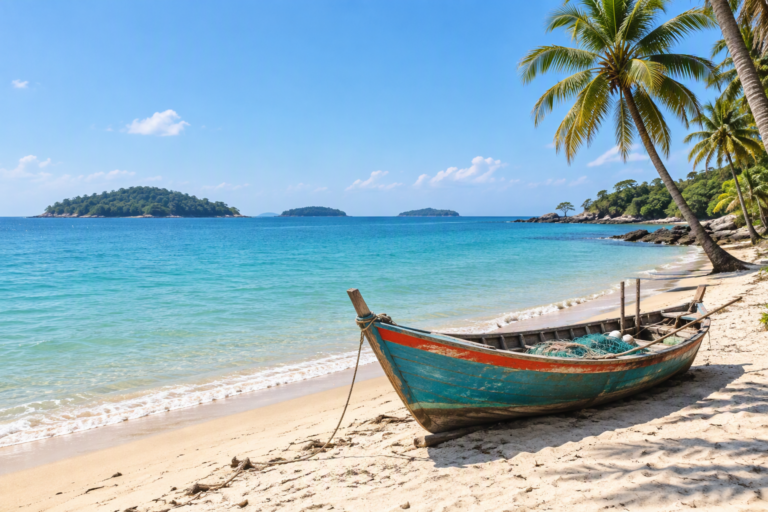
Beach time. Swimwear, a cover-up, reef-friendly sunscreen and sunglasses. For where and when, see our guide to the best beaches in Vietnam.
Travelling with children. Familiar snacks, their own medicines, sun suits and hats, and a light pushchair only if your route is mostly cities with pavements. Our guide to Vietnam with kids or on honeymoon has more.
How this works on a trip we run
On a private trip with us, you will get a short packing note tailored to your exact route and dates a few days before you fly — what the weather will realistically be in each place, which day needs walking shoes, which day needs temple clothing and when you can leave the main suitcase in the car. Our drivers carry bottled water, so you do not need to load up, and your guide will tell you the evening before if the next day needs a rain jacket or a warm layer.
If you are still deciding the route itself, our guide to how many days you need in Vietnam is the best place to start. When you are ready, tell us your dates or message us on WhatsApp and we will send a day-by-day draft within 24 hours.
Frequently asked questions
What should I wear in Vietnam?
Light, breathable clothing in linen or cotton for most of the year, with one warm layer for the north between November and March and for the mountains at any time. Cover shoulders and knees at temples, pagodas and the Ho Chi Minh Mausoleum. Shorts and T-shirts are fine in the cities and at the beach. A light scarf or sarong is the most useful single item you can pack.
Do I need a jacket for Vietnam?
Yes, in two ways. A packable rain jacket is useful in any month because every region has a wet season at a different time. A warm fleece or light down jacket is necessary for Hanoi and the north from November to March, and for Sapa and Ha Giang all year, where nights can approach freezing in winter. In the south, a light layer is useful only for strong air conditioning.
What shoes should I bring to Vietnam?
Two pairs cover most trips: comfortable, broken-in walking shoes or trainers, and sturdy sandals or water shoes you can wade in on boats, in caves and through wet-season puddles. Add trail shoes with good grip if you plan to trek in Sapa or Ha Giang. Shoes that slip on and off easily are helpful because you remove them at temples and homestays.
What is the dress code for temples in Vietnam?
Cover your shoulders and knees at pagodas, temples and the Imperial City in Hue, and remove your shoes where others do. The Ho Chi Minh Mausoleum in Hanoi is stricter and actively enforced: no shorts, short skirts or sleeveless tops, and hats off. Carrying a light scarf or sarong in your day bag covers you everywhere, including at Angkor if your trip continues to Cambodia.
Can I buy toiletries and medicine in Vietnam?
Yes. Basic toiletries are sold in every convenience store and supermarket, and pharmacies in the cities are well stocked and inexpensive. Bring your own prescription medicines for the whole trip in original packaging, plus sunscreen and insect repellent you trust, since international brands cost more here and some local sunscreens contain whitening agents.
How much luggage should I bring to Vietnam?
Less than you think. A medium suitcase or a large backpack is the comfortable maximum. Domestic budget flights often limit checked bags to 20 kilograms or less, Old Quarter hotels may be down narrow lanes, and cruise cabins and train sleepers have limited space. Laundry is fast and cheap almost everywhere, so pack for about a week and wash as you go.
What plug adapter do I need for Vietnam?
Vietnam uses 220 volts at 50Hz, with sockets that usually accept both flat two-pin and round two-pin plugs. A universal travel adapter covers everything. Most modern phone, camera and laptop chargers handle 220 volts automatically; check the label on older appliances such as hair straighteners before plugging them in.
Should I bring insect repellent to Vietnam?
Yes. Mosquitoes are present across the country, particularly at dusk, in the Mekong Delta, the mountains and on the islands, and dengue fever occurs in Vietnam. Bring a repellent with DEET or picaridin, wear long sleeves and trousers in the evenings, and choose accommodation with screens or air conditioning. A travel health clinic can advise on any vaccinations for your route.
CTour DMC Vietnam — planning team
We are a licensed Destination Management Company based in Vietnam, designing private journeys across Vietnam, Cambodia and Laos. This guide was written by the planners and local guides who run these trips on the ground, and is reviewed against current conditions before publication. More about our team · Ask us a question
Published 1 October 2026 · 3,031 words · 14 min read