The short answer
- Flying time: about 8–9 hours direct from the east coast, 7 hours from Perth — shorter than flying to Europe by a long way.
- Time difference: Vietnam is 3 hours behind Sydney and Melbourne in winter, 4 hours in daylight saving. Almost no jet lag.
- Direct routes: Sydney, Melbourne, Brisbane and Perth all have non-stop services to Ho Chi Minh City or Hanoi.
- Best months for Australians: March to May and September to November suit the whole country best.
- Cost: roughly A$2,200–3,400 per person for a good two-week private tour, land only, two sharing.
- Sweet spot for leave: 10–12 days on the ground, which is two working weeks plus the weekends either side.
Vietnam has quietly become one of the easiest overseas trips an Australian can take. It is closer than most people assume, the time difference is small enough to ignore, and the money goes considerably further than it does in Japan or Western Europe. We work with Australian clients constantly, and the questions are consistent enough to be worth answering in one place.
This is written from our end, in Vietnam, as the company that runs the trips on the ground rather than an agency reselling them. So the flight advice is general, and the itinerary advice is specific.
Getting there: the flight picture
The route map has improved sharply in the last few years, and most Australians now have a non-stop option.
Sydney and Melbourne have the most choice, with non-stop services to both Ho Chi Minh City and Hanoi, typically 8 to 9.5 hours. Brisbane has non-stop flights to Ho Chi Minh City. Perth is the shortest hop of all at around 7 hours. From Adelaide, Canberra, Darwin and Hobart you will connect, usually through Sydney, Melbourne or Singapore.
Two practical notes that matter more than the airline you choose. First, many services arrive in Vietnam late in the evening or very early in the morning — worth knowing before you book a first-night hotel you will barely use. Second, arriving into one city and departing from the other is almost always the better plan. Flying into Hanoi and out of Ho Chi Minh City, or the reverse, saves a full day of backtracking. Open-jaw tickets rarely cost more.
Check whether your fare includes a domestic Vietnamese sector before you buy it separately. When we build a trip we include internal flights in the quote, so tell us what you have already booked before we start.
The jet lag question
There essentially is not one. Vietnam runs on UTC+7, which is three hours behind Sydney and Melbourne during Australian winter and four hours during daylight saving. Brisbane is three hours ahead year-round. Perth is just one hour ahead.
This is genuinely one of the strongest arguments for Vietnam over a European trip. You land, you sleep normally that night, and day one is a real day rather than a write-off. It also means a shorter trip is worth taking — a nine-day Vietnam holiday gives you nine usable days, which nine days in Italy does not.
When to go, mapped to Australian holidays
Vietnam is over 1,600 kilometres long and has three separate climates, so there is no single best month. But some periods suit Australian leave patterns better than others.
April school holidays — very good. Late March to May is arguably the best window for the whole country at once: dry in the north, warm in the centre before the summer heat, and comfortable in the south. If you can travel then, do.
June–July school holidays — workable with planning. This is Vietnamese summer: hot everywhere, wet in the south, but excellent on the central beaches around Da Nang, Hoi An and Nha Trang. It is also peak domestic travel season, so book earlier than you think you need to. A beach-weighted itinerary works well here; a heavy northern trekking itinerary does not.
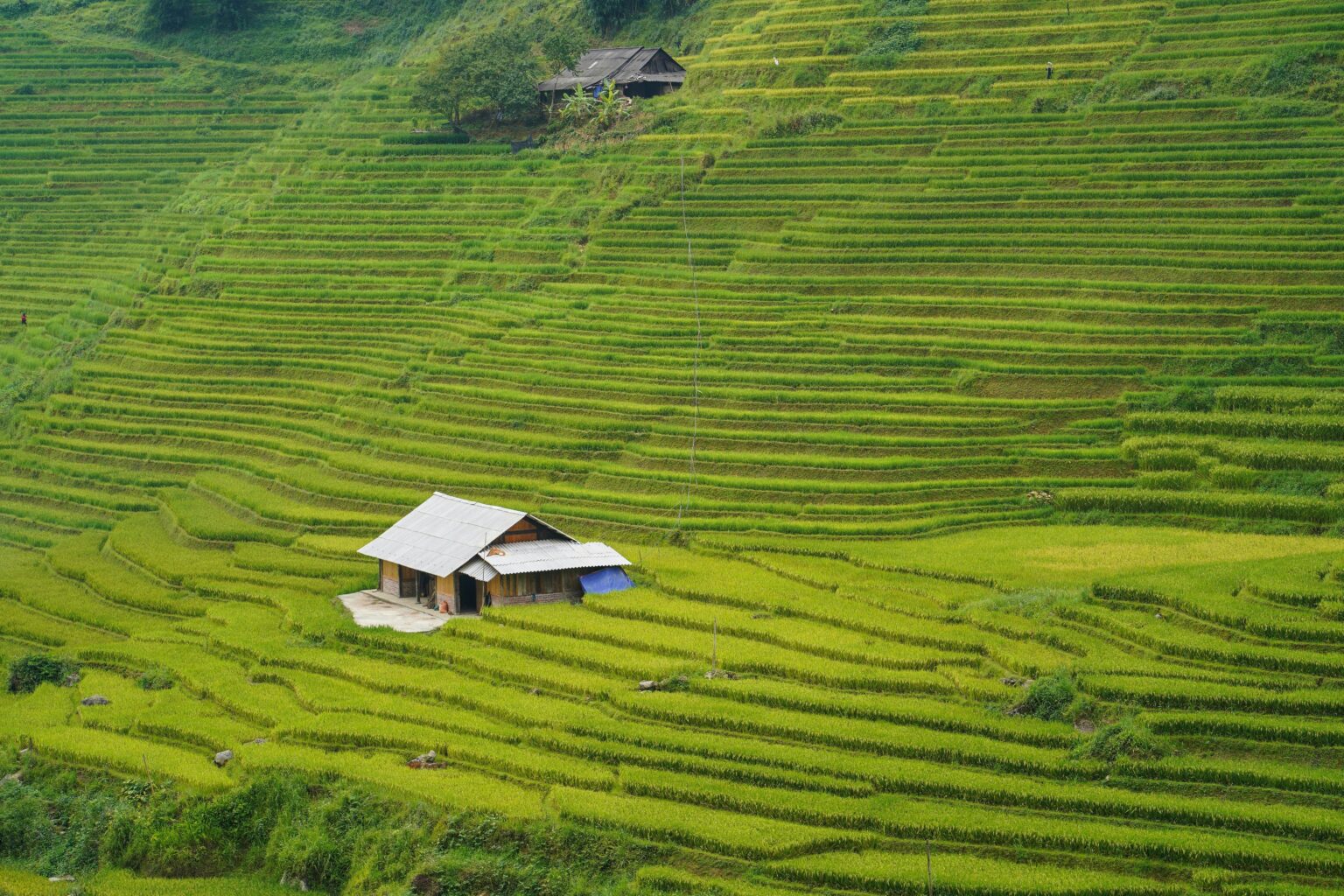
September–October — excellent. Our favourite months. The north is clear and cool, the rice terraces are gold, crowds are thin and rates are lower. If your leave is flexible, this is the one to aim for.
Christmas and January — good weather, high prices. The north is cool and dry, the south is perfect, and every hotel in the country charges a surcharge. Book many months ahead.
Tet — avoid unless you want the experience itself. Vietnamese Lunar New Year falls in late January or February. The country largely closes for several days, transport is packed, and many small businesses shut. It is fascinating and it is also not a relaxing holiday.
Our month-by-month weather guide goes region by region, and there is a fuller seasonal breakdown of the north in this guide to the best time to visit northern Vietnam.
How long do you need?
This is where Australians have an advantage and often waste it. Because the flight is short, people book seven days and then try to cover the whole country. It does not work.
7–8 days: pick one region. The north from Hanoi, including Halong Bay and Ninh Binh, is the strongest single-region week. Our 5-day trip from Hanoi and 8-day itinerary both fit here.
10–12 days: the sweet spot, and what we would push most Australians toward. Two working weeks plus weekends gets you north and centre comfortably, or north and south with one domestic flight. Our 11-day route covers the country without feeling rushed.
14–16 days: the whole country plus a proper beach stay at the end, which is how a lot of Australian families build it. See the 15-day trip with beach.
18 days or more: Vietnam plus Cambodia or Laos. The regional add-ons are close and cheap to reach once you are already here — see how to combine Vietnam and Cambodia.
If you are still deciding, how many days you actually need in Vietnam is the honest version, written before anyone tries to sell you a longer trip.
What it costs in Australian dollars
Rough 2026 figures, per person, two people sharing, land arrangements only. Convert at whatever the rate is when you read this, but these are the brackets we quote in.
- Mid-range private tour, 14 days: A$2,200–3,400 per person.
- Upper mid-range, 14 days: A$3,400–5,000 per person.
- Luxury, 14 days: A$5,400–10,000+ per person.
- Return flights: A$800–1,600 depending on city and season.
- Spending money on the ground: A$40–70 per person per day covers meals not included, drinks and incidentals comfortably.
The honest comparison most Australians care about: a fortnight in Vietnam at a four-star level generally costs less than a fortnight in Bali at the same level once you account for what is included, and considerably less than Japan or Europe. What you are paying for here is the private vehicle, the guides and the domestic flights — the country itself is cheap. Our full cost breakdown shows where each dollar goes.
Visas and entry for Australian passports
Australian passport holders need a visa for Vietnam. The e-visa is the normal route: applied for online before you fly, usually issued within a few working days, valid for a single or multiple entry stay. Apply at least two weeks out and do not leave it to the airport.
Two things worth checking that catch people: your passport needs six months’ validity beyond your arrival date, and if you are adding Cambodia or Laos you will need separate entry permissions for those. We flag all of this when we build an itinerary, but the application itself is yours to lodge. The current rules are in our Vietnam visa and entry guide for 2026.
Routes that work well for Australian trips
Three shapes come up again and again, and each solves a particular problem.
North to south, one way, 12–14 days. Fly into Hanoi, out of Ho Chi Minh City. Halong Bay, Hue, Hoi An, Saigon and the Mekong Delta, with two domestic flights. No backtracking, and it reads as one continuous journey. This is the most-booked shape we run.
North plus beach, 10–12 days. Hanoi, Halong or Lan Ha Bay, Ninh Binh, then fly to Da Nang for four or five nights near Hoi An. Half touring, half swimming. Popular with couples and with families who do not want to be in a car every day.
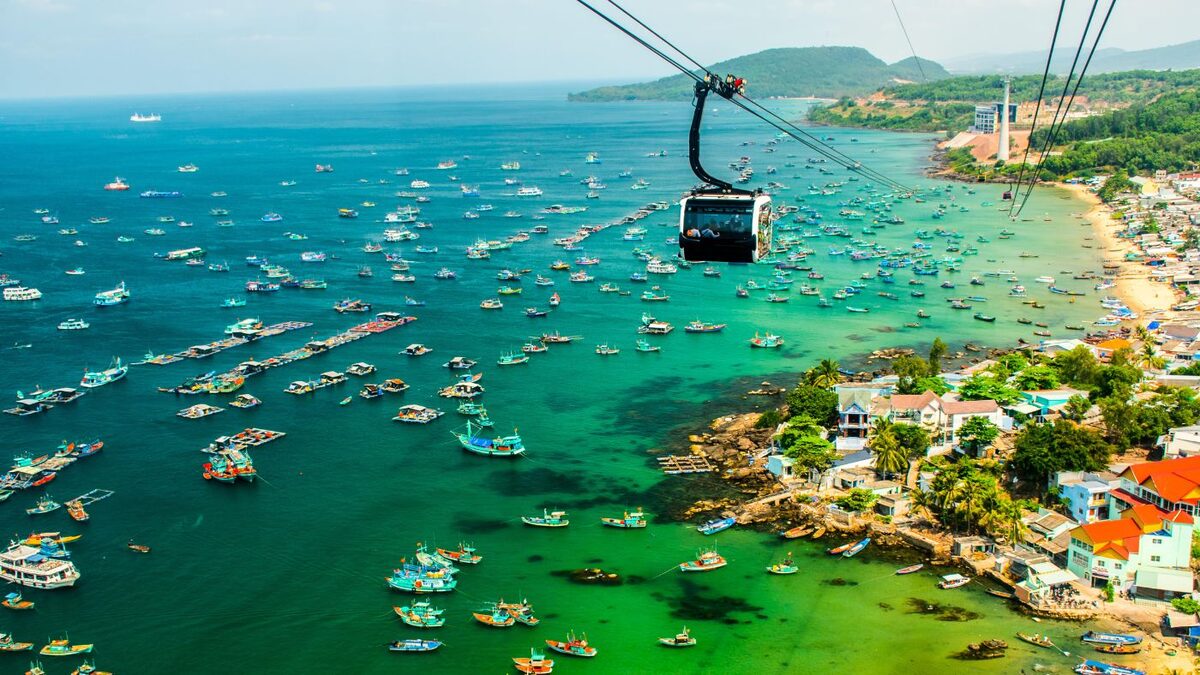
Whole country plus island, 15–17 days. The full north-to-south route, then Phu Quoc or Con Dao at the end. The beach section is also the answer to the classic problem of a long flight home with tired children. Getting to the island is straightforward — this guide to reaching Phu Quoc covers the flights and ferries, and Con Dao is the quieter alternative.
For detail on each region before you commit, our regional guides are the fastest read: the north in 7, 10 or 14 days, central Vietnam in 4 to 7 days, and the south including the Mekong and Phu Quoc.
Travelling with children
Vietnam is a straightforward country to bring children to, and a large share of our Australian bookings are families. The practical advantages: short flight, negligible jet lag, excellent and cheap food that most children will eat, very warm attitudes toward kids, and good medical facilities in the major cities.
The things to plan around: distances in the north are longer than the map suggests, so keep driving days short; the heat in June and July is real, so build in pool afternoons; and street crossing in Hanoi and Saigon takes some getting used to. A private trip is materially easier than a group tour with children, mainly because you can stop when you need to. Our guide to Vietnam with kids sets out the pacing, and if you are weighing the two styles, private versus group tours covers the trade-offs.
Practical things Australians ask about
- Power: Vietnam uses 220V with two-pin plugs. Your Australian plug will not fit; bring an adapter.
- Money: Vietnamese dong. Cards work in cities and hotels; carry cash for markets, small restaurants and rural areas.
- Phone: a local eSIM costs a few dollars for the whole trip and works better than roaming.
- Water: drink bottled or filtered. Ice in established restaurants is fine.
- Tipping: not obligatory, but customary for guides and drivers on a private trip.
- Insurance: take it. Medical evacuation cover matters more than the trip-cancellation part.
- Trains: a scenic option for the Hue–Da Nang stretch in particular — see this guide to Vietnamese trains.
Booking from Australia: how it works with us
We are based in Ho Chi Minh City, which means a few things worth knowing. The time difference works in your favour: send an enquiry at the end of your working day and there is usually a reply waiting when you wake up. Being on the ground also means we contract hotels and guides directly rather than through an intermediary, which is where the price advantage over an Australian-based agency comes from.
What we need to quote properly: your dates or the month you are targeting, how many of you and what rooms, which cities you have flights into and out of if already booked, and a budget range per person. That last one is not a trap — it is what makes the first draft buildable instead of a guess.
You can reach us any time on WhatsApp, or use the contact form and we will come back with a draft itinerary rather than a brochure.
Frequently asked questions
How long is the flight from Australia to Vietnam?
About 8 to 9.5 hours non-stop from Sydney or Melbourne, roughly 8 hours from Brisbane, and around 7 hours from Perth. From Adelaide, Canberra, Darwin or Hobart you will connect, which typically adds two to four hours to the total journey.
Do Australians need a visa for Vietnam?
Yes. The e-visa applied for online before departure is the standard route for Australian passport holders and is usually issued within a few working days. Make sure your passport has at least six months’ validity beyond your arrival date, and apply at least two weeks before you fly.
When is the best time for Australians to visit Vietnam?
Late March to May and September to November suit the whole country best, and the September to November window lines up well with spring leave. The April school holidays are excellent. June and July are hot and wet in the south but very good on the central beaches, so they work if you weight the itinerary toward Da Nang and Hoi An.
How much does a Vietnam trip cost from Australia?
Budget roughly A$2,200–3,400 per person for a good two-week private tour at mid-range level, two sharing, land only, plus A$800–1,600 for return flights and A$40–70 a day in spending money. Upper mid-range runs A$3,400–5,000 and luxury starts around A$5,400.
Is Vietnam cheaper than Bali for a family holiday?
Comparable on accommodation, cheaper on food and activities, and more expensive on internal transport if you are covering multiple regions. Where Vietnam wins clearly is variety — mountains, cities, history and beaches in one trip. Where Bali wins is simplicity if all you want is one resort and a pool.
Is there much jet lag travelling from Australia to Vietnam?
Almost none. Vietnam is three hours behind Sydney and Melbourne during Australian winter and four hours during daylight saving, one hour behind Perth. Most clients sleep normally the first night and lose no days at either end, which is a real advantage over a European trip of similar length.
Can you book domestic Vietnamese flights for us?
Yes, and we would rather do it. Internal sectors are included in our quotes and we hold them alongside the hotels, so if a flight moves we rearrange the day rather than you discovering the problem at the airport. Tell us which international flights you have already booked before we build the itinerary.
Is Vietnam safe for Australian travellers?
Yes, including for families and solo women travellers. Petty theft in the big cities is the main practical risk, as anywhere. Traffic is the real thing to respect, particularly crossing roads in Hanoi and Ho Chi Minh City. On a private trip your guide handles most of the situations where tourists come unstuck.
CTour DMC Vietnam — planning team
We are a licensed Destination Management Company based in Vietnam, designing private journeys across Vietnam, Cambodia and Laos since 2010. This guide was written by the planners and local guides who run these trips on the ground, and is reviewed against current conditions before publication. More about our team · Ask us a question
Published 19 September 2026 · 2,421 words · 11 min read