The short answer
- Choose one full day: Focus on the Imperial City, one royal tomb and a proper Hue meal.
- Choose two full days: Add another tomb, the riverside and a slower look at neighbourhood life.
- Protect arrival time: A late train or road transfer does not count as a full sightseeing day.
- Check conditions: Heat, heavy rain and site access can change the sensible order.
- Keep moving south: Allow daylight for the Hai Van coastal journey when continuing to Da Nang.
Hue in one or two days is a question of depth, not a race to collect tombs. The former imperial capital rewards time with its buildings, food and riverside pace. However, a crowded timetable can turn its strongest sights into hurried photo stops.
One full day gives you a useful introduction if your wider Vietnam journey is tight. Two full days let you spread the major visits and pay closer attention. Neither option should count an arrival evening as a complete day in town.
At CTour, we plan Hue around arrival and departure times first. Then we decide which sites deserve a guide, where to pause and how to reach the next city. Here is a practical choice between one day and two.
What one full day in Hue can actually hold
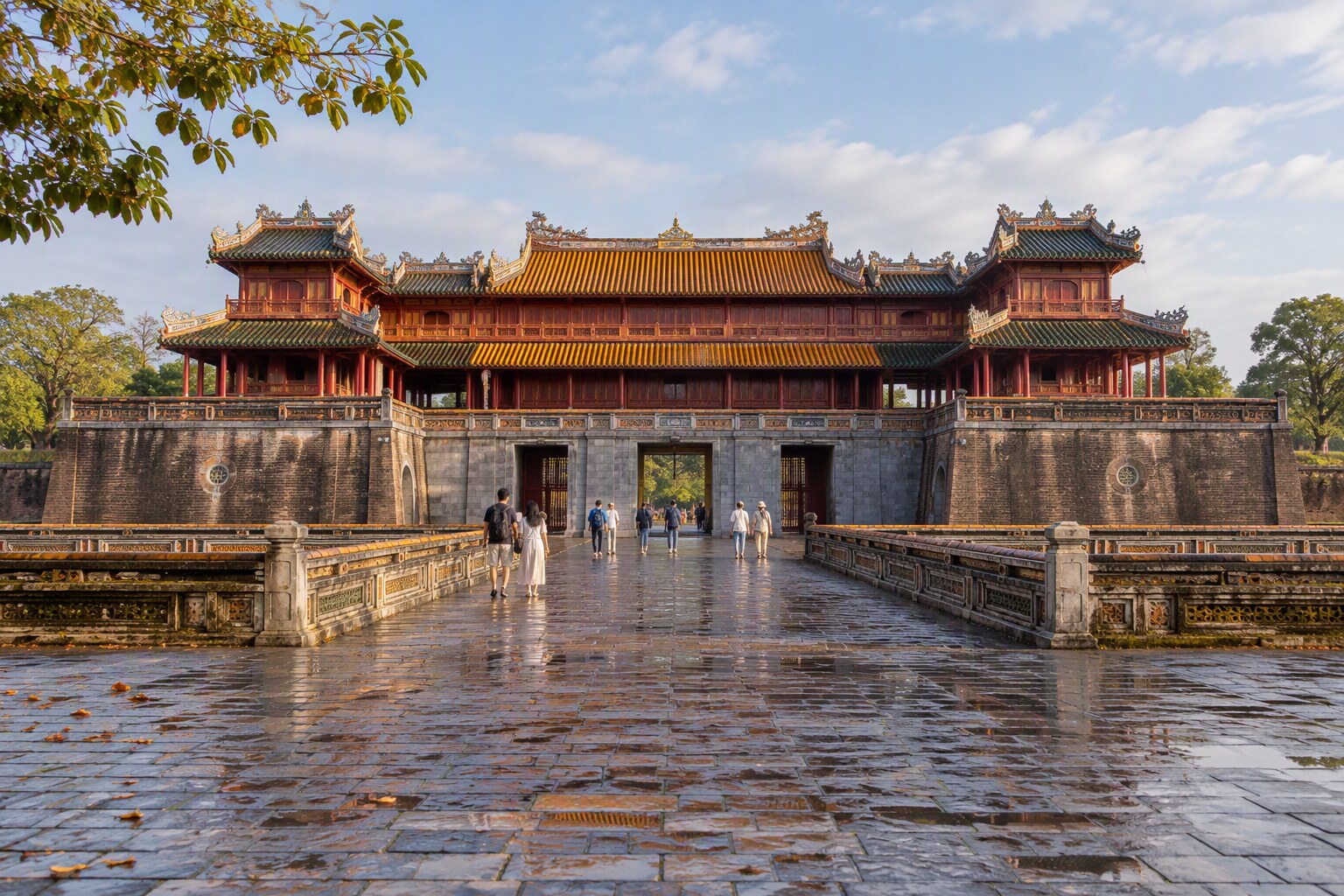
Begin with the Imperial City while your energy is fresh. Allow enough time to understand its courtyards, gates and surviving buildings. Afterwards, take a proper lunch break. Then visit one royal tomb if the weather and transport arrangements still suit the group.
This is already a substantial day. The citadel is not a single room, and the tombs sit outside the central walking area. Therefore, do not add three tombs simply because a vehicle can connect them on a map. Travel, entry and rest all use time.
Our central Vietnam itinerary explains how Hue fits with Da Nang and Hoi An. If you have only a brief stop, choose the part of Hue that matters most. A focused visit often leaves a clearer impression than an overfilled checklist.
When two full days are worth the extra night
Choose two days if imperial history is a main reason for your trip. The extra time lets you divide the citadel and outer monuments between separate outings. Furthermore, you can explore food and the river without treating them as leftovers after a long sightseeing day.
A second day also adds flexibility. You can shift an outdoor visit if the weather changes or spend longer with a guide at a site that interests you. However, two days are not an invitation to visit every tomb. Pick a few places and give each a purpose.
For a slower traveller, a second night may improve the whole central Vietnam route. You avoid arriving, touring and leaving in quick succession. Meanwhile, families can return to the hotel between visits. That pause may matter more than another attraction ticket.
Day one morning: understand the Imperial City
Start at the citadel complex rather than saving it for a tired final hour. The grounds include ceremonial spaces and areas shaped by loss and restoration. Consequently, a knowledgeable guide can help explain both what survives and what no longer stands.
Check the current entrance, ticket options and opening arrangements before travel. Restoration work or events may affect particular spaces. Do not promise access to every building from an old photograph. Also wear comfortable shoes and carry water for the open courtyards.
Allow time for questions instead of following the quickest line between famous gates. A short stop for shade can help in hot weather. Therefore, build the morning around a meaningful visit, not a fixed minute-by-minute target that leaves no room to look around.
Day one lunch: give Hue food its own space
Hue is not just a monument stop. The national tourism site highlights local dishes such as banh beo and banh khoai, alongside visits to Dong Ba Market. However, a market visit and a seated meal serve different purposes. Choose one or both according to your interest and the weather.
For lunch, tell your guide about allergies or dietary needs before choosing a kitchen. Do not assume a dish is suitable from its name alone. Shrimp, fish sauce and shared preparation areas can matter to some travellers. Ask direct questions where ingredients are important.
Take a real break before the afternoon. A sit-down meal gives your feet and attention a reset after the citadel. Meanwhile, avoid adding a cooking class to a one-day plan unless food is your main priority. A class deserves enough time to enjoy it properly.
Day one afternoon: pick one royal tomb
The tombs of Tu Duc, Minh Mang and Khai Dinh offer different architectural settings. Vietnam’s tourism site names all three as major Hue visits. However, choosing one can be better than rushing through several. Ask what each visit involves before deciding which suits your interests.
Tu Duc offers a landscape of pavilions and water, while Khai Dinh creates a contrasting hillside impression. Minh Mang appeals to visitors interested in formal composition and gardens. These are broad planning distinctions, not promises about which individual structures will be open on your date.
Arrange a vehicle for the tomb visit. The sites are not all within a comfortable central-city walk. Therefore, a driver and guide should agree on the pickup point, visit length and return plan. If heavy rain affects the outing, keep a suitable alternative rather than forcing the route.
Day one evening: finish by the river, not in transit
After a full heritage day, a quiet walk near the Perfume River can be enough. You can notice the bridge, river traffic and evening street life without another admission schedule. However, conditions vary with the weather. Do not turn a wet, tiring evening into an obligatory outdoor excursion.
If a performance interests you, ask for a confirmed programme and venue. Different music or boat experiences may have different inclusions and standards. Therefore, check the actual duration, seating and transfer arrangements before buying. A vague promise of an authentic evening is not useful.
Travellers leaving early the next day should protect sleep and pack before dinner. A relaxed meal may be the best finish. Conversely, those staying another night can keep the evening flexible and explore without worrying about an immediate onward journey.
Day two morning: compare a second tomb or a pagoda
Use the extra day to follow your strongest interest. A second tomb can help you compare different approaches to imperial design. Alternatively, visit Thien Mu Pagoda for a different cultural setting beside the river. These are alternatives, not mandatory stops in a fixed circuit.
Check respectful clothing and behaviour at religious sites. Keep voices low and follow on-site photography rules. Furthermore, remember that a pagoda serves worshippers, not just visitors. A brief, considerate visit can be more valuable than a long stop that disrupts the space.
If you choose another tomb, avoid repeating the pace of day one. Arrange a later lunch or a shorter afternoon. Two days in Hue should feel less compressed, not simply contain twice as many tickets and transfers.
Day two afternoon: add a neighbourhood or a rest
Hue has useful quieter moments beyond the monument gates. Depending on your route, a café, local street or riverside section can fill the second afternoon. However, ordinary neighbourhoods are lived-in places. Ask before photographing residents closely or entering private spaces.
For active travellers, a carefully chosen countryside outing can add a different perspective. The official tourism site suggests cycling towards Thanh Toan Bridge. Yet traffic, heat and weather affect whether that is a sensible choice for your group. Use a guide and a realistic route if you cycle.
You may also need no further outing. A hotel break before dinner is a valid use of the extra time. In fact, that space can make the entire Hue stay more enjoyable. The point of two days is choice, not a duty to fill every hour.
Arrival by train, air or road changes the plan
Check your actual arrival time before reserving a guided visit. Hue has a railway station, a regional airport and road connections with neighbouring destinations. However, transport schedules and station-to-hotel time vary. A morning arrival may still leave you tired after overnight travel.
If taking the train from Hanoi, our Vietnam sleeper trains guide explains the berth and arrival choices. Keep the opening afternoon light if your sleep may be broken. Also allow luggage storage or confirmed early room access rather than assuming immediate check-in.
For an onward road transfer, decide whether you want the Hai Van route in daylight. This can shape the final morning in Hue. Therefore, avoid scheduling a long last-day tomb circuit without confirming the departure time and the length of the onward journey.
Rain, heat and seasonal expectations
Vietnam’s tourism site notes mild conditions around February to April and warns of heavy rain and typhoon risk later in the year. However, seasons are not a guarantee for any specific date. Check a reliable local forecast before deciding which outdoor visits to place first.
In hot weather, begin outside early, carry water and leave room for shade. In heavy rain, assess site access and road conditions before setting out. Our month-by-month Vietnam weather guide helps frame the wider route, but current conditions should guide the day.
Do not treat a boat outing as an automatic rainy-day alternative. Water conditions and operator decisions matter. Similarly, a museum visit still depends on current opening. Agree on a flexible substitute with your planner rather than promising that every activity runs whatever the weather.
Choose your hotel and transport for your pace
A central hotel can simplify meals and an evening river walk. However, the best location depends on your intended visits and room needs. Ask about lift access, vehicle pickup and street noise. A convenient map pin does not tell you whether a room will be comfortable.
Use a vehicle for dispersed tombs and reserve walking for compact areas. Families and travellers with limited mobility should explain their needs before buying tickets. Some grounds include long paths or uneven surfaces. Our slower Vietnam itinerary guide offers a useful way to assess pace and access.
Agree how much guiding you want. A historical explanation is valuable at the citadel, while independent time may suit a riverside meal. Therefore, do not assume the same transport and guide arrangement must apply from morning until night. Build the service around the actual day.
What to confirm before booking Hue activities
Ask for the exact sites, admissions and transport included in the proposal. Also check the expected amount of walking and whether the guide stays with you at each site. A list of attraction names is not enough to judge the value or comfort of a tour.
For more ideas beyond the principal monuments, see this Hue experiences guide from C Vietnam Tours. However, verify any current opening, fare or performance claim independently before booking. General guides cannot guarantee access on your particular date.
If you have a fixed train or flight, tell your planner at the start. The final activity must leave a sensible transfer buffer. For a longer central Vietnam trip, our Hoi An stay-length guide can help distribute nights after Hue without compressing both stops.
Plan one or two days in Hue with CTour
Tell CTour which parts of Hue matter most: imperial architecture, food, a second tomb or a quieter riverside day. Share your arrival and departure details too. We can then choose a realistic visit order instead of making the city fit an inflexible template.
A useful proposal should name the intended sites, admission arrangements, guide time and transfers. It should also explain what changes in poor weather. However, availability and site access need confirmation near travel. Clear alternatives are better than pretending every detail is fixed months ahead.
One full day can work when the wider itinerary is tight. Two full days suit travellers who want space for history and daily life. We would rather help you make that choice honestly than sell extra nights without a reason, or rush Hue simply to tick a box.
Frequently asked questions
Is one full day in Hue enough?
It is enough for a focused introduction to the Imperial City and one other visit. However, you will need another day for more tombs, food experiences or a slower pace.
Should I spend two nights or two full days?
They are not the same. Two nights may provide just one full sightseeing day, depending on arrival and departure times. Check the actual transport schedule before deciding.
Which royal tomb should I visit first?
Choose by your interest and the route for that day. Tu Duc, Minh Mang and Khai Dinh offer different settings. Ask your guide to compare current access and walking demands.
Can I visit the citadel and several tombs in one day?
You may reach them by vehicle, but several stops can leave little time at each. We suggest the citadel plus one tomb for a more useful first visit.
Do I need a guide at the Imperial City?
You can visit independently, but a good guide adds historical context and helps explain restoration. Choose the level of guiding that suits your interest and budget.
Is Hue practical with children or older travellers?
Yes, with selective visits, shaded breaks and appropriate transport. However, distances and uneven surfaces vary. Discuss mobility needs before confirming the exact site route.
What if heavy rain affects my Hue day?
Check site access and road conditions, then shorten or reorder outdoor visits. A planner should propose a suitable alternative rather than promising the original route regardless of conditions.
Should I travel from Hue to Da Nang by day?
Daylight gives you a better chance to appreciate the coastal landscape. However, compare the actual train or road service, weather and onward transfer before deciding.
CTour DMC Vietnam — planning team
We are a licensed Destination Management Company based in Vietnam, designing private journeys across Vietnam, Cambodia and Laos. This guide was written by the planners and local guides who run these trips on the ground, and is reviewed against current conditions before publication. More about our team · Ask us a question
Published 19 October 2026 · last reviewed 21 October 2026 · 2,315 words · 11 min read