The short answer
- For Sapa: Take the sleeper to Lao Cai, then arrange a road transfer to the mountain town.
- For Hue: Choose a berth and an arrival time that leaves room for a gentle first day.
- For Da Nang: Check when your service crosses Hai Van Pass if coastal views matter.
- For comfort: Start with a four-berth soft sleeper; confirm privacy and bathroom arrangements before paying.
- For reliable planning: Verify the current timetable, complete fare and onward transfer together.
Vietnam sleeper trains can turn a long transfer into part of your holiday. However, they do not guarantee hotel-quality sleep. The right route depends on your tolerance for noise, your chosen berth and your arrival plans.
Hanoi to Lao Cai suits travellers heading towards Sapa. Meanwhile, Hanoi to Hue or Da Nang links northern and central Vietnam. These journeys solve different planning problems, so avoid choosing solely from a photograph of a polished cabin.
At CTour, we plan the station transfer and the next morning alongside the train ticket. This guide explains Vietnam sleeper trains without promising fixed fares or departure times. Always confirm those details for your actual travel date.
When Vietnam sleeper trains make sense
A sleeper works best when you want the journey itself, not simply the quickest transfer. You can lie down, watch everyday landscapes and avoid another airport visit. However, station stops, corridor activity and the rhythm of the track can interrupt sleep.
Compare the whole transfer rather than the ticket alone. Include your hotel departure, station waiting time, rail journey and transport after arrival. Also consider whether you will need breakfast, a shower or an early room. These small decisions often determine whether the overnight journey feels worthwhile.
For a short holiday, a flight may protect more useful sightseeing time. Our guide to getting around Vietnam by private car, train or domestic flight compares those trade-offs. Choose rail deliberately rather than assuming it always saves money or a full day.
Hanoi to Sapa means a train to Lao Cai
Sapa does not sit beside the main railway station. Instead, the sleeper arrives in Lao Cai, followed by a road journey into the mountains. Chapa Express describes Sapa as approximately 35 kilometres from Lao Cai station. Therefore, include that transfer when comparing rail with a direct road service.
The operator describes its Hanoi–Lao Cai journey as approximately eight hours. However, use your confirmed service details rather than a general duration. Departure times, operating dates and boarding instructions can change. Ask which station entrance you need, especially if your booking includes a separate operator check-in.
Arrange your Lao Cai pickup before leaving Hanoi. Your driver needs the service number, arrival date and a working contact method. Furthermore, give the hotel your likely arrival time. A dawn station arrival does not automatically give you access to a bedroom.
Plan the first Sapa day around tiredness
Some travellers sleep well on the train; others arrive after a broken night. Consequently, we would not build a demanding trek immediately after a dawn arrival. Start with breakfast and a realistic transfer buffer. Then choose a light village visit or a short walk if you feel comfortable.
For a longer trek, keep the main walking day after a proper hotel night. Mountain roads, fog and rain can also affect the transfer. Therefore, treat the first morning as flexible rather than promising a fixed trail start straight from the platform.
Check how Sapa fits with the rest of your northern Vietnam itinerary. Adding two train nights to a crowded northern route can leave little recovery time. Sometimes one overnight rail journey and a daytime return offer a better balance.
Hanoi to Hue: choose the arrival, not just the departure
Hue works well as the first central Vietnam stop for travellers moving south from Hanoi. However, services have different journey lengths and arrival times. Check the current railway search for your date. Do not assume that every overnight option reaches Hue conveniently after breakfast.
A suitable arrival should allow time for your station pickup, luggage drop and a meal. Then keep the opening sightseeing modest. The citadel and royal tombs deserve attention, not a tired dash between landmarks. Heat can make an overfilled first afternoon harder after limited sleep.
Also confirm your hotel arrangement in writing. An early check-in request is not a guaranteed room unless the property confirms it. If you need immediate access, ask about a paid arrangement. Otherwise, plan somewhere comfortable to rest before normal check-in.
Hanoi to Da Nang: protect the daylight coastal section
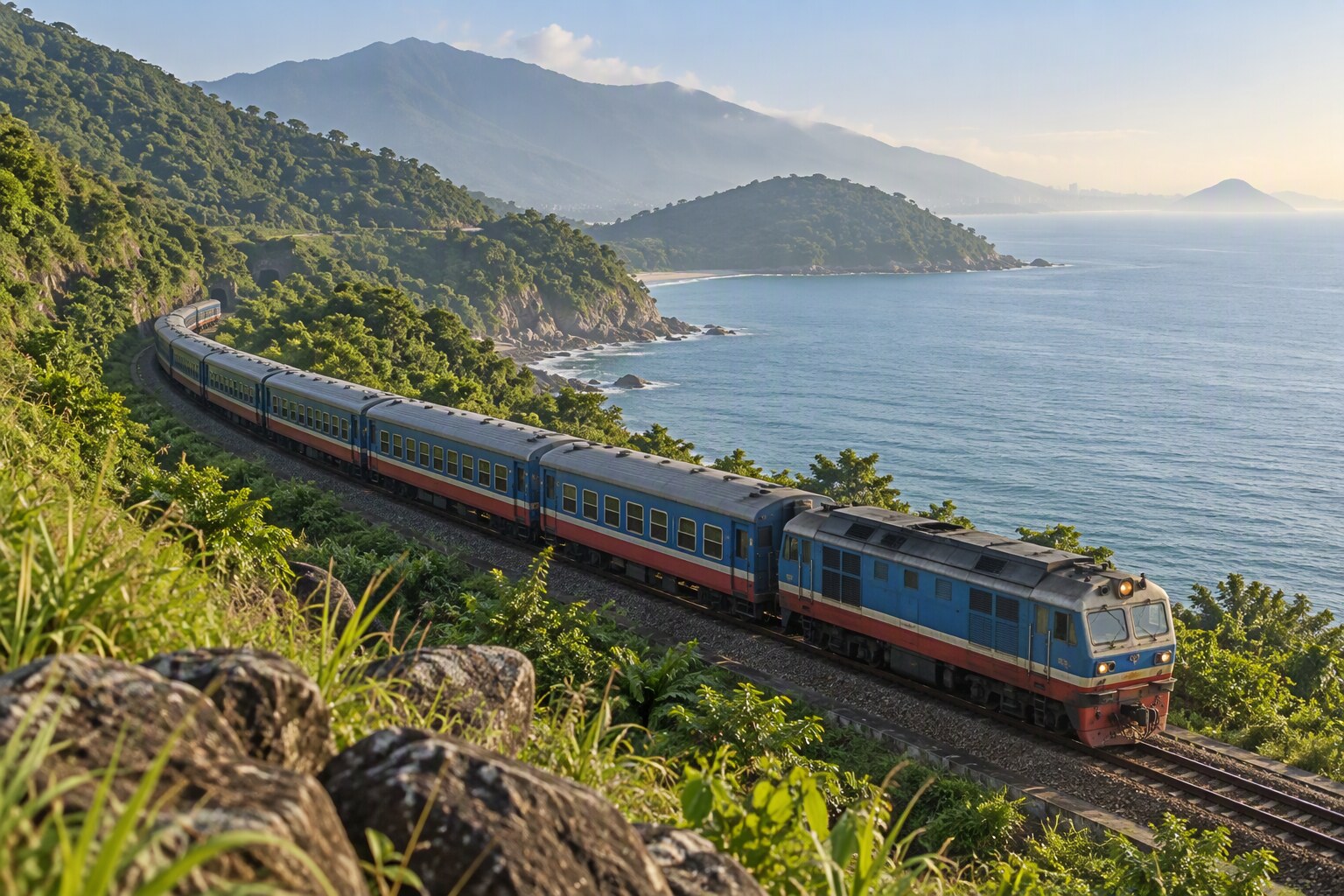
The railway between Hue and Da Nang crosses the Hai Van coastal landscape. This is a strong reason to choose rail. However, scenery only helps if your train reaches that section in daylight. Check the scheduled passage through Hue alongside the final Da Nang arrival.
If the overnight timetable does not suit, stop in Hue first. Afterwards, take a separate daytime train to Da Nang. This splits the long journey and gives the coastal section its own space. It also avoids choosing an awkward arrival just for a possible view.
Da Nang station is not in Hoi An. Therefore, book an onward road transfer if Hoi An is your destination. Our central Vietnam itinerary guide helps arrange Hue, Da Nang and Hoi An without unnecessary backtracking.
Understand four-berth and six-berth cabins
A standard four-berth soft sleeper generally has two lower and two upper beds. It offers a practical starting point for most overnight visitors. However, your ticket normally reserves a berth, not exclusive use of the compartment. Other passengers can occupy the remaining beds.
A six-berth compartment adds another level of bunks. As a result, it usually offers less headroom and more shared activity. Check the exact carriage description before deciding. A cheaper fare may not suit someone who struggles with ladders or needs more space to sit upright.
For couples seeking privacy, ask about a confirmed two-person cabin or exclusive compartment booking. Do not assume that buying two tickets creates a private room. Also request actual carriage details. Marketing labels such as deluxe and VIP do not define a consistent standard across operators.
Lower berth, upper berth and accessibility
A lower berth reduces climbing and makes access to your bag easier. Therefore, request one early if you have knee problems or limited balance. Availability depends on the service and booking date. Do not leave this requirement as an informal preference if it affects your ability to travel.
An upper berth may feel more separate from corridor activity, but reaching it requires climbing. Meanwhile, boarding steps and narrow passages can create difficulties before you reach the cabin. Discuss those obstacles with your planner rather than judging accessibility from a photograph of the bed.
Ask for precise information about assistance, step height and toilet access when mobility needs matter. A ground-floor hotel room does not solve a difficult train transfer. For wheelchair users or travellers needing substantial assistance, another transport option may be more workable. Confirm suitability before making a non-refundable booking.
What to check before paying for Vietnam sleeper trains
Search the official Vietnam Railways booking system at dsvn.vn for the current station pair and date. Then compare the service number, carriage class and berth position. If using an agent or private carriage operator, check what their confirmation includes. A reservation message may not be your final boarding document.
Request the complete price, including booking fees and any transfers. Also confirm change and cancellation terms for that specific ticket. Private carriage rules can differ from standard railway conditions. Children, luggage and special requests likewise need booking-specific answers rather than a blanket promise.
For a broader route overview, read the Vietnam train travel guide from C Vietnam Tours. However, confirm current fares and facilities with your chosen operator. General guides cannot guarantee which cabin or amenities your actual train will provide.
Boarding documents and station transfers
Check that passenger details match the identification required for your booking. Carry your passport and booking confirmation where you can reach them easily. Furthermore, save a copy offline. Weak mobile reception or an empty battery should not prevent you from finding your service details.
Follow your operator’s arrival instructions rather than a universal station rule. Chapa recommends reaching the station 45 minutes to one hour before departure. Busy holiday periods may need more planning. Your transfer should allow for traffic and any ticket collection before platform access.
Once at the station, confirm both carriage number and berth number with staff. Private tourist carriages may form part of a scheduled railway service. Therefore, the carriage brand alone may not identify the correct platform. Keep the operator’s contact number available until you board.
Pack one small overnight bag
Keep your overnight essentials separate from your main suitcase. Bring a light layer, toothbrush, tissues, drinking water and any regular medicines. Also pack earplugs and an eye mask if noise or light disrupts your sleep. Comfortable clothes make more sense than treating the cabin like a hotel lounge.
Choose luggage you can manage through station passages and onto the carriage. Chapa states that passengers carry their own bags when boarding. Meanwhile, storage space varies with the cabin. Ask about oversized items before booking rather than assuming the train accepts anything without an extra charge.
For a wider seasonal checklist, use our guide to what to pack for Vietnam. Keep valuables close to your berth, not in an unattended corridor bag. Finally, put your arrival essentials near the top so you can leave without unpacking everything.
Food, toilets and sleep: set practical expectations
Have dinner before boarding when the departure time allows. Then bring simple snacks and water for the journey. Food availability and included refreshments depend on the service. If you have a strict dietary requirement, arrange suitable food yourself unless the operator confirms support.
Do not assume a private bathroom comes with a premium label. For example, Chapa describes communal toilets and wash basins rather than bathrooms inside individual cabins. Ask the same question for your chosen carriage. Furthermore, pack basic toiletries without expecting a shower before arrival.
Respect shared space once other passengers settle down. Use headphones, keep conversations low and avoid strong-smelling meals in the compartment. Meanwhile, secure your valuables and use the door lock where appropriate. Train movement and station noise remain part of the experience, even in upgraded accommodation.
Build a backup for delays and bad weather
Never place an important flight directly after an overnight train arrival. Delays can affect your station pickup and the rest of the day. Therefore, leave a generous buffer or a separate night before a crucial flight. The right margin depends on the journey and the consequences of missing your connection.
In central Vietnam, heavy rain can disrupt travel plans and sightseeing. Mountain weather can also complicate the road transfer to Sapa. Ask your planner how they will handle a changed arrival or an unavailable activity. A clear contact chain matters more than a tightly packed spreadsheet.
Keep insurance documents and operator contacts accessible offline. Our guide to travel insurance for Vietnam explains the coverage questions worth asking. However, only your insurer can confirm whether a particular delay or missed connection qualifies under your policy.
Plan a workable rail journey with CTour
Tell CTour which part matters most: a Sapa arrival, overnight privacy or the Hai Van coastal scenery. Also share your travel dates, passenger ages and any mobility needs. We can then assess the train alongside transfers and hotel timing, rather than treating each booking as a separate task.
For Vietnam sleeper trains, the useful proposal is specific. It should identify the intended service, requested cabin arrangement and arrival plan. However, availability remains subject to confirmation. A realistic backup is especially important when you need lower berths, exclusive use or a fixed onward connection.
We would rather recommend a flight or daytime journey than force rail into the wrong holiday. Conversely, a well-placed overnight train can add a memorable change of pace. Start with the route you want to experience, then build enough space around it to enjoy the following day.
Frequently asked questions
Do Vietnam sleeper trains go directly to Sapa?
No. The usual rail gateway is Lao Cai, followed by a road transfer to Sapa. Therefore, confirm your pickup and hotel arrival plan before boarding in Hanoi.
Which cabin should I choose for a first overnight journey?
A four-berth soft sleeper is a sensible starting point. However, it normally means sharing unless you confirm exclusive use. Choose a lower berth if climbing is difficult.
Can a couple book a private cabin?
Private options depend on the operator and service. Ask for a confirmed two-person arrangement or exclusive compartment. Buying two ordinary berths does not automatically reserve the whole room.
How much does a sleeper train ticket cost?
The fare depends on route, date, carriage and berth. Therefore, request a current total quote with fees and transfers itemised. Avoid budgeting from an undated headline price.
Will the Hanoi to Da Nang train cross Hai Van Pass in daylight?
That depends on your chosen service and its running time. Check the scheduled Hue passage before booking. Alternatively, stop in Hue and take a separate daytime train south.
Are there showers or private toilets in sleeper cabins?
Do not assume either facility. Standard arrangements commonly use shared toilets, while private operators vary. For example, Chapa confirms communal wash basins and toilets rather than in-cabin bathrooms.
Are overnight trains suitable for families?
They can suit families who accept movement, noise and compact space. However, confirm child-ticket rules and berth arrangements with the operator. Keep the following morning gentle rather than planning immediate sightseeing.
Can I take a flight immediately after arriving by train?
A tight connection is a poor planning choice. Leave sufficient time for delays, station exit and airport procedures. For an important flight, consider arriving the previous day instead.
CTour DMC Vietnam — planning team
We are a licensed Destination Management Company based in Vietnam, designing private journeys across Vietnam, Cambodia and Laos. This guide was written by the planners and local guides who run these trips on the ground, and is reviewed against current conditions before publication. More about our team · Ask us a question
Published 18 October 2026 · 2,309 words · 10 min read