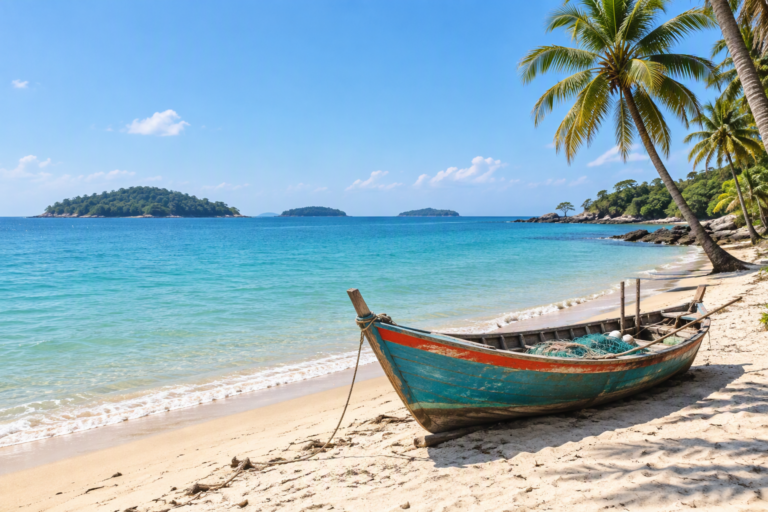
The short answer
- Yes, Vietnam is worth visiting if you want a holiday with variety: memorable food, distinctive towns, dramatic scenery and time to meet the people behind them.
- You do not need to be a backpacker. Comfortable hotels, guided sightseeing and private transfers can sit alongside local markets and small neighbourhood restaurants.
- Choose the experiences first, then the route. A few well-paced stops are more rewarding than trying to see the whole country.
- Plan around your travel month. Beach conditions and mountain weather vary by region; there is no single season that guarantees everything.
- Start with your dates, party size and three things you love. That is enough to begin a conversation about a private trip.
You might be considering Vietnam because of a photograph: green water between limestone islands, lanterns reflected in a river, or a breakfast stall with steam rising into the street. The useful question is not whether those places exist. They do. It is whether the holiday around them will feel right for you.
For travellers who enjoy a mix of scenery, food and everyday life, Vietnam offers something a single-purpose beach holiday cannot: a change of rhythm every few days. One morning you are walking through a busy city; another, you are listening to an oar move through quiet water. You can make that journey adventurous, comfortable, or a little of both.
This guide is for anyone still deciding whether to come. We are CTour, a licensed Vietnamese tour operator based in Ho Chi Minh City. Rather than list every attraction, we will show you the experiences worth building a first trip around, the compromises to consider, and how to turn the ideas you like into a route.
What makes Vietnam worth visiting?
The appeal is contrast. Vietnam combines cities that are full of movement with countryside that invites you to slow down. The food changes as you travel. A historic trading town feels different from a capital, and a river journey feels different again.
That variety is especially useful for couples and families who do not all want the same holiday. Someone can have the food walk, someone the boat journey, someone an afternoon by a pool. You do not have to choose between seeing the country and having a rest, provided the itinerary allows for both.
What Vietnam does not offer is effortless silence everywhere. Cities are busy, popular sites attract crowds, and the climate can be hot and humid. A good trip does not pretend those things away. It chooses when to visit, where to stay and how much to attempt in a day.
Start in Hanoi: a first evening you can taste
Imagine putting your bag down, freshening up, and heading out for a short walk rather than a full sightseeing programme. You stop for a bowl of noodles, learn which herbs to add, and watch the street carry on around you. Coffee comes later, perhaps in a courtyard away from the traffic.
That is a better introduction to Hanoi than ticking off five landmarks while jet-lagged. Food gives you a reason to stop and look. A guide can explain the dishes, help you choose a place that suits your preferences, and make the first few unfamiliar interactions feel easier.
Hanoi rewards unhurried exploration: a lake walk, a market, an old house, a small cafe. You do not need to become an expert in Vietnamese history to enjoy it, but a little context helps the city make sense. Our Hanoi street-food guide is a useful starting point if eating well is part of your reason to travel.
Best for: curious eaters, culture lovers and travellers who enjoy walking. If crowds or uneven pavements are a concern, tell your planner so the route and breaks can be adjusted.
Ninh Binh: the moment the trip slows down
After the city, a change of pace matters. Around Ninh Binh, limestone hills rise above waterways and countryside. On a rowing-boat excursion, the landscape passes slowly enough for you to notice it: reflections, rock faces, the shade near a cave entrance.
Trang An and Tam Coc are both popular boat-tour areas, but they are not interchangeable. The route, duration, surroundings and conditions differ. Pick the experience that fits your interests rather than adding both simply because they appear on a list.
You can combine a boat trip with a gentle countryside walk, a temple visit or time at your hotel. Cycling is an option, not a requirement. Equally, you do not have to climb every viewpoint to have seen Ninh Binh; some involve steep steps and are better treated as a choice.
For the place-by-place detail, our sister site’s Ninh Binh travel guide explains the main sights. For a first holiday, our recommendation is simpler: leave room to enjoy the landscape instead of filling the day with transfers between photo stops.
A bay cruise: make the time on the water count
An overnight cruise can be the most restful part of a northern Vietnam trip. The attraction is not just the photograph of limestone islands. It is the time between activities: sitting on deck, watching the light change, having dinner without another road journey afterwards.
But the boat matters. So do the sailing area, cabin location, included activities and the balance between organised stops and free time. A cheaper headline rate can describe a different experience, not simply the same holiday at a discount.
Ha Long Bay and Lan Ha Bay each have routes worth considering. Neither is a promise of complete solitude, and weather can change a programme. Kayaking or a small-boat excursion may be appealing, but check how boarding works and whether an alternative is available if you would rather stay aboard.
Our comparison of Ha Long Bay and Lan Ha Bay cruises helps you choose based on the trip you want. Ask about the specific vessel and itinerary before paying, not just whether the brochure calls it luxury.
Hoi An: keep one evening free
Hoi An is an easy place to imagine yourself on holiday: yellow-walled streets, old trading houses, lanterns and dinner near the river. Its UNESCO-listed Ancient Town is part of the attraction, but it is not the only reason to stay.
A few nights give you room for different versions of the town. You could take a guided heritage walk one morning, visit the countryside another day, and leave a beach or pool afternoon unplanned. A cooking experience can work well for people who would rather learn something together than visit another monument.
The old town is popular, particularly in the evening. If you want a quieter stay, hotel location deserves thought: being in the centre, near the beach or among the rice fields produces a different daily rhythm. A pretty room far from where you want to spend your time is not always the best choice.
Most importantly, do not organise every evening. Part of Hoi An’s pleasure is deciding where to eat when you are ready, taking a walk, or returning early after a long day. The Hoi An travel guide covers the town in more detail if this is the stop you are already picturing.
The south: city energy and a river-country finish
Ho Chi Minh City brings a different energy from Hanoi. It can add contemporary city life, museums, coffee stops and a final good dinner to your trip. How much time to spend there depends on your interests, not on the assumption that every itinerary must include the same landmarks.
Nearby, the Mekong Delta offers a different kind of day. Small waterways, orchards, village paths and local food can be more rewarding than a rushed circuit of shopping stops. A day excursion is possible; an overnight stay gives you more time away from the busiest routes.
Be careful with expectations around floating markets. Activity depends on the specific market, the time of day and changing local trading patterns. Choose a delta trip for the wider river-country experience, not a guarantee of one dramatic photograph.
Our sister site’s Mekong Delta guide explains the destinations. If your time is limited, decide whether the south genuinely adds something you want, or whether you would rather keep the whole holiday in the north and centre.
Who is Vietnam a good fit for?
Couples can combine shared experiences with time to do nothing: a boat journey, a cooking class, a quieter hotel and evenings without a fixed programme. Vietnam does not have to be a continuous sightseeing schedule.
Families often benefit from shorter guided visits and more varied days. Boats, food and countryside can break up the history, while a pool and a sensible start time may matter more than another attraction. Discuss children’s ages and interests when planning.
Older travellers can have a rewarding trip without strenuous trekking. The important details are walking distances, steps, boarding boats, transfer length and how close the hotel is to daily activities. A private car does not remove every physical challenge, but good planning avoids unnecessary ones.
Independent travellers can organise much of Vietnam themselves. A private tour makes most sense when you value having the connections, hotel choices and guided experiences coordinated around your dates, or when your party has different needs. It is a convenience and support decision, not a test of whether you are adventurous enough.
Our guide to private versus group tours in Vietnam sets out the trade-offs. Choose the format that helps you enjoy the holiday rather than the one that sounds most impressive.
How long should your first trip be?
With around a week, choose one region. A northern trip might combine Hanoi, Ninh Binh and a bay cruise. Alternatively, a central stay could focus on Hoi An and nearby cultural or beach experiences. The goal is not to use every airport; it is to have full days where you have chosen to go.
With roughly ten days, two regions can work. Hanoi and the bay followed by Hoi An is one example. Whether Ninh Binh also fits depends on the pace you enjoy and how your international flights line up.
With two weeks, a north-to-south journey becomes more realistic. You might combine Hanoi, a countryside stop, a bay cruise, Hoi An, Ho Chi Minh City and time in the delta. That is an outline to discuss, not a fixed departure or a promise that every combination fits comfortably.
Transfers consume holiday time, and flight schedules affect the sequence. If you also want several beach nights, something else may need to come out. Our guide to how many days you need in Vietnam helps you make that decision before the itinerary becomes too crowded.
Weather, budget and comfort: settle these before booking
Start with your month. Northern weather, central-coast rain and southern beach conditions do not follow the same calendar. A route that works beautifully for one travel month may need changes in another. Use our month-by-month Vietnam weather guide instead of choosing a country-wide best season from a single sentence.
Then decide what comfort means to you. A central hotel, fewer early starts, private transfers or a better cruise cabin may matter more than a star rating. Tell your planner where you want to spend more and where you are happy to keep things simple.
Compare inclusions, not just totals. A quote should make clear which hotels and rooms are proposed, which transfers and guides are included, how meals work, and which activities or domestic flights cost extra. Our Vietnam trip-cost guide is a starting point; an actual quotation needs your dates, group size and preferences.
Vietnam is not ideal if you want absolutely no humidity, no crowds and no changes to plans. But those are reasons to shape the trip carefully, not reasons to assume the country is only for backpackers. For practical concerns about traffic, petty theft and common tourist annoyances, read our Vietnam safety guide.
Tell us the holiday you want, not a finished itinerary
You do not need to choose every stop before contacting us. If all you know is that you want good food, a beautiful boat journey and a few quiet nights, that is a useful brief.
CTour is a licensed Vietnamese tour operator based in Ho Chi Minh City, with international tour licence 79-1613/2023TCDL-GP LHQT. We plan private journeys around your dates and interests. You can browse our Vietnam tours for ideas, then ask which parts fit your own holiday.
Send these five details:
- Your travel month or approximate dates.
- How many nights you have in Vietnam.
- Your party size, including children’s ages where relevant.
- Three priorities: for example food, scenery and a relaxed pace.
- A rough hotel preference or budget, and anything you want to avoid.
An enquiry can be as simple as: “We are two people visiting Vietnam for the first time, with about twelve nights in March. We love food and countryside, want comfortable hotels, and would prefer fewer hotel changes. What route would you suggest?”
Ask CTour to plan your first Vietnam trip, or start the conversation on WhatsApp. You can also email info@ctour.com.vn. Tell us what caught your imagination, and we can discuss a route, realistic pacing and a personalised quotation before you decide.
Further reading: destination information from Vietnam Tourism on Ninh Binh boat tours and its Hoi An destination guide. The route suggestions above are planning recommendations, not fixed tour inclusions.
Ready to turn those ideas into a route? Explore our 10-day and 2-week Vietnam itineraries, with realistic pacing and time for transfers.
Frequently asked questions
Is Vietnam worth visiting for a first trip to Southeast Asia?
Yes, particularly if you want a mix of local food, culture and scenery rather than only a beach stay. Cities can feel busy at first, so start gently and avoid packing the itinerary with too many stops. Guided visits or a private itinerary can make the unfamiliar parts easier without removing local experiences.
Can I visit Vietnam comfortably without backpacking?
Yes. You can stay in comfortable hotels, use private transfers and have guided activities while still visiting local markets and restaurants. Discuss walking distances, hotel locations and boat access when planning; comfort depends on these details as well as room quality.
Where should I go on my first Vietnam trip?
Choose a few stops around your interests. Hanoi, Ninh Binh, a Ha Long or Lan Ha Bay cruise and Hoi An are useful starting ideas. With more time, Ho Chi Minh City and the Mekong Delta can add a southern chapter. Your travel month and flight arrangements should influence the final route.
Is one week enough to visit Vietnam?
One week can be rewarding if you stay in one region. Trying to cover the north, centre and south in that time usually leaves too much of the holiday in transit. Around ten days can suit two regions; two weeks offers more flexibility for a longer journey.
Should I visit Ninh Binh or take a bay cruise?
They offer different experiences. Ninh Binh combines inland limestone scenery, rowing-boat trips and countryside. A bay cruise gives you time among limestone islands, often with an overnight stay on the water. You can include both if your schedule allows, but neither should be squeezed in at the expense of comfortable pacing.
When is the best time for a first Vietnam holiday?
It depends on the regions and activities you want. Northern winters can be cool, central Vietnam has its own rainy period, and southern beach conditions follow a different pattern. Choose your route with your travel month in mind rather than assuming one season suits the whole country.
How much does a private Vietnam trip cost?
The price depends on your dates, party size, hotels, cruise choice, transport and included activities. Compare itemised quotations that state the proposed accommodation and services. Send your approximate budget and preferences so a planner can suggest where to spend more and where to simplify.
What should I send CTour to start planning?
Send your dates or travel month, number of nights, party size, main interests and a rough hotel preference or budget. Mention walking or dietary needs and whether you prefer a relaxed or active pace. You do not need a finished itinerary; contact CTour by the enquiry page, WhatsApp or email to discuss the options.
CTour DMC Vietnam — planning team
We are a licensed Destination Management Company based in Vietnam, designing private journeys across Vietnam, Cambodia and Laos. This guide was written by the planners and local guides who run these trips on the ground, and is reviewed against current conditions before publication. More about our team · Ask us a question
Published 6 October 2026 · last reviewed 7 October 2026 · 2,713 words · 12 min read