Da Nang food deserves more attention than a quick bánh mì between the beach and a day trip. This coastal city has springy fish cakes, rich mì Quảng noodles and pork rolls that you assemble yourself. Start with a few local dishes, then leave enough appetite to enjoy them properly.
This guide is for international visitors who want to eat beyond the hotel buffet without turning every meal into a challenge. It explains what to order, how the dishes work and where to begin looking. There is no compulsory chilli test and no promise that every crowded stall is automatically safe.
Da Nang draws on the cooking of the wider central region, so some favourites also belong to neighbouring places. That is part of the pleasure, not a reason to dismiss them. Think of your meals as an introduction to the city and its connections, rather than a competition to finish a list.
- Start with mì Quảng: Wide rice noodles, a little rich broth and contrasting herbs and crunch make a memorable first meal.
- Try bún chả cá: Da Nang’s fish-cake noodle soup is not Hanoi’s grilled-pork bún chả.
- Learn one wrapping dish: Pork rice-paper rolls or bánh xèo are easier once someone demonstrates the first roll.
- Confirm seafood prices: Agree the species, weight, cooking method and charges before ordering.
- Eat at your own pace: Three meals and one snack beat a dozen dishes you can barely taste.
1. Start your Da Nang food exploration with mì Quảng
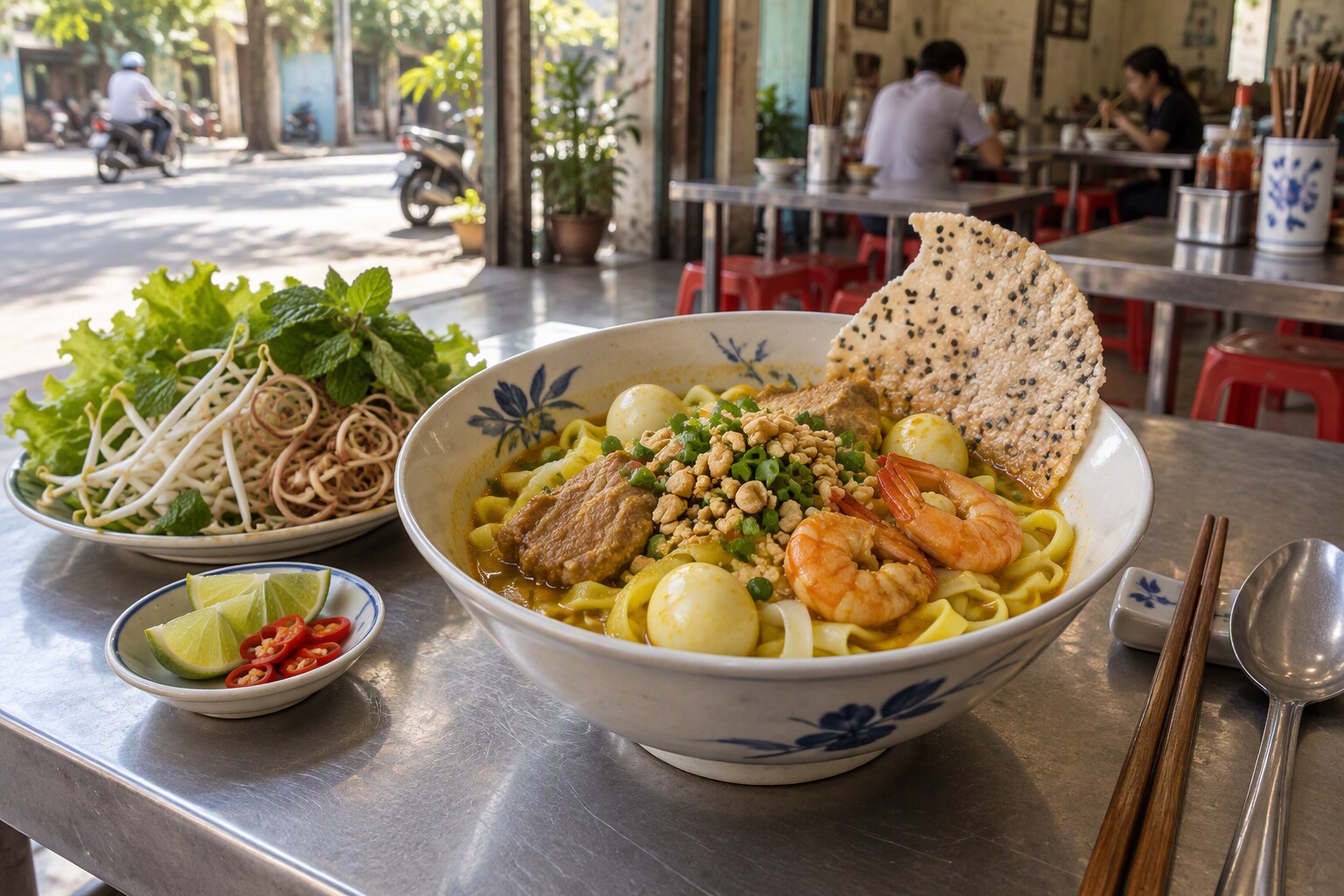
Mì Quảng is a defining dish of the Quang region, closely associated with Da Nang and neighbouring Quang Nam. The noodles are broad and flat, often white or yellowish. Unlike a large bowl of phở, this dish comes with relatively little broth. The flavour is concentrated rather than diluted across a deep soup.
Common versions include pork, shrimp or chicken, but the topping depends on the kitchen. Herbs, roasted peanuts and crisp rice crackers bring contrasting textures. Ask which version the restaurant serves instead of assuming that every bowl contains the same ingredients. Quail eggs may appear too, although they are not a universal requirement.
First taste the noodles and broth together. Then add herbs and a little lime if you like; eat the cracker alongside or crumble some into the bowl. Go slowly with the fresh chilli. A bowl does not need extra broth just because it looks different from noodle soups you already know.
2. Meet bún chả cá, the coastal noodle bowl
Bún chả cá combines round rice vermicelli with fish cakes and broth. In Da Nang, the broth often includes tomato, pineapple or other vegetables alongside a fish-based stock. Recipes vary, and some kitchens also use meat bones. The fish cakes can be steamed or fried, giving different textures in the same meal.
This is not the grilled-pork bún chả associated with Hanoi. Keep the full name on your phone so your order is clear. Ask whether the bowl contains fish cakes, fish slices or additional toppings. A “special” bowl is the kitchen’s own combination, not a standard recipe that every shop follows.
Try the broth before adding anything from the condiment tray. Lime, pickled shallots and chilli can change the balance quickly. Fermented shrimp paste is an optional addition at some places, not a test of authenticity. For another introduction to the dish, read this bún chả cá guide from C Vietnam Tours, then confirm the actual menu when you arrive.
3. Build your own pork rice-paper rolls
Bánh tráng cuốn thịt heo arrives as ingredients rather than a finished sandwich. Expect sliced cooked pork, rice paper, fresh vegetables and herbs. Some servings include soft rice-noodle sheets as well. The accompanying mắm nêm is a fermented fish sauce, often mixed with ingredients such as pineapple, garlic and chilli.
Ask the server to show you one roll. Depending on the rice paper, preparation may differ, so avoid soaking it automatically. Put a modest amount of pork and vegetables inside, fold and roll. Your first attempt can be untidy. The objective is lunch, not a perfect cylinder for a photograph.
Try a small amount of sauce before committing to a large dip. Its fermented flavour is stronger than a mild dressing, and the heat varies. If you need an alternative, ask what the kitchen can provide. However, another sauce may still contain fish or other allergens, so do not judge its ingredients by colour.
4. Wrap crispy bánh xèo instead of treating it as an omelette
Bánh xèo is a savoury pancake, often yellow from turmeric, rather than an egg omelette. Da Nang versions commonly contain pork, shrimp and bean sprouts. The crisp edges are a large part of the appeal. Order it freshly cooked, and give it a moment to cool before taking your first bite.
At many local places, you break off a piece and wrap it with herbs in rice paper. Some kitchens also offer nem lụi, grilled minced-meat skewers that work well in a shared meal. Follow the serving style at your table rather than assuming that every restaurant expects exactly the same assembly.
The thick dipping sauce deserves a question of its own. Depending on the recipe, it can contain peanuts, fish sauce and pork liver. It is not automatically vegetarian because it looks like a nut sauce. Start with a manageable shared order, then add more if everyone still wants another round.
5. Try the little cakes without confusing their textures
Bánh bèo, bánh nậm and bánh bột lọc are strongly associated with Hue, but they also appear in Da Nang. They make a good shared tasting because each has a different texture. Bánh bèo is usually a small steamed rice cake. Meanwhile, bánh nậm is soft and flat, often wrapped in a leaf.
Bánh bột lọc is the chewier one, made with tapioca starch rather than the same rice-flour mixture. Fillings and toppings often include shrimp or pork. Ask what is inside each item, especially if dietary needs matter. A leaf wrapper tells you about presentation, not whether the filling is suitable.
Order a small mixed plate if one is available and taste the types separately. Add the accompanying sauce gradually. If these dishes make you curious about their neighbouring food culture, our Hue one-or-two-day guide helps you leave time for that city instead of rushing through it between meals.
6. Enjoy seafood with the price settled first
A seafood dinner suits Da Nang’s coastal setting, but the ordering system can surprise first-time visitors. Some restaurants sell seafood by weight, including selections from live tanks. Others offer fixed-price dishes. Establish which system applies before pointing at the largest crab and assuming it represents one affordable serving.
Confirm the species, price unit and weight, then agree how you want it cooked. Ask whether preparation charges are separate. A price per kilogram is not the total bill for whatever animal you select. If communication feels unclear, choose a menu item with an agreed price or eat elsewhere.
Simple options can be rewarding: clams with lemongrass, steamed seafood or grilled shellfish, depending on the menu. Specify thoroughly cooked food if that is what you need. Meanwhile, ask about sauces and garnishes if you have allergies. A live tank does not establish safe handling, and a sea view does not explain the bill.
7. Leave room for coffee, chè or avocado ice cream
Not every stop needs to be another main course. A café break gives you shade, a seat and time to digest. If you want Vietnamese filter coffee, look for phin brewing. Ask whether your drink includes condensed milk and how sweet it is. Strong coffee is best enjoyed at a pace that suits you.
Chè covers a wide family of sweet dishes rather than one fixed recipe. A serving may combine beans, jelly, fruit or other ingredients, with coconut milk or ice depending on the version. Ask what the shop’s mixed bowl contains. You can also choose a simpler variety if a large mixture feels overwhelming.
Kem bơ, an avocado-based dessert often paired with ice cream, is another popular option. Bắc Mỹ An Market is a known place to look for it, but check the current stall and opening arrangements. Confirm dairy and other ingredients rather than assuming that a green dessert is plant-based. One shared portion may be plenty.
8. Look beyond your nearest tourist menu
The city-side streets west of the Han River and the neighbourhoods towards the beach offer different dining settings. You can find local dishes in either area, but not at every restaurant. Search by the Vietnamese dish name, then check recent information. A place advertising twenty international cuisines may not be your best noodle specialist.
Han Market and Con Market can provide an introduction to ingredients and food stalls. However, inspect the actual cooking area before deciding to eat. Keep aisles clear and ask permission before photographing a vendor closely. A market is a workplace first, even when it makes an interesting holiday stop.
Do not confuse the evening atmosphere of a night market with a guarantee of the city’s best cooking. A specialist shop may be the better choice for a particular dish. Our Vietnam morning markets guide explains how to browse and eat respectfully without getting in the way.
9. Order clearly and keep the bill straightforward
Keep the dish name written on your phone, ideally with Vietnamese accents. Pointing at a menu can work better than guessing pronunciation. “Một phần” means one portion, while “không cay” asks for non-spicy food. Even so, a sauce or prepared base may already contain chilli, so explain your needs before ordering.
Confirm how many portions your group wants. For shared dishes, ask about serving size rather than ordering one of everything immediately. If the menu has no visible prices, agree the amount first. Photographs are useful for choosing food, but they are not evidence that the pictured platter represents the smallest order.
Keep some smaller đồng notes for simple meals. Cards may work at larger restaurants, while small stalls can need cash. Check the total calmly and ask about anything unexpected. Our Vietnam cash, cards and tipping guide covers payment decisions without turning every meal into a negotiation.
10. Take dietary needs beyond “no visible meat”
Fish sauce, fermented fish or shrimp paste, meat stock and peanut-based sauces appear across these dishes. A bowl without obvious meat may still contain animal ingredients. For vegetarian food, look for a suitable specialist restaurant and explain your requirements. Removing the pork topping does not necessarily make mì Quảng vegetarian.
For serious allergies, carry a clear, reliable written translation describing the ingredients you must avoid. Discuss shared pans, utensils and preparation areas as well as toppings. A busy stall may not be able to prevent cross-contact. If the answer is uncertain, choose another meal rather than hoping that a small amount will be harmless.
Do not assume rice noodles prove that the complete dish is gluten-free; sauces and other ingredients still need checking. Likewise, desserts may contain dairy despite their fruit or coconut base. If you are arranging a guided outing, share these needs before booking. Last-minute improvisation is not an allergy-management plan.
11. Use food-safety judgement without becoming afraid of lunch
Look for food cooked to order, clean utensils and sensible handling of raw and cooked ingredients. Customer turnover is helpful context, but popularity does not guarantee hygiene. If food has been sitting exposed in the heat or the preparation concerns you, move on. There are other meals to enjoy.
Use sealed bottled water or a reliably treated supply. Ask about ice if its source is uncertain, and be cautious with raw seafood. Lime juice or a strongly flavoured sauce does not make raw fish safe. You do not need to try every regional speciality to have a worthwhile food experience.
Wash or sanitise your hands before eating, especially when you are making rolls. If you feel unwell, stop the tasting plan and seek appropriate advice. Our Vietnam safety guide provides broader travel context. Enjoying local food and making careful choices belong together; neither requires dramatic “fearless traveller” claims.
12. Plan one satisfying food day, not twelve consecutive stops
For a first day, choose either bún chả cá or mì Quảng for breakfast. Have coffee afterwards if you want it, then spend part of the morning exploring the city. Check your chosen shop’s hours rather than assuming every noodle place operates throughout the day. Keep an alternative nearby in case it is closed.
At lunch, try pork rice-paper rolls or another light shared meal. In the afternoon, leave room for rest and perhaps a small dessert. Then choose either bánh xèo or seafood for dinner. This is a flexible menu of ideas, not a route that sends you across the river between every bite.
If you stay longer, spread the remaining dishes over another day. Plan around your hotel, weather and sightseeing rather than chasing several famous names. Our central Vietnam itinerary guide helps you connect Da Nang with neighbouring destinations without sacrificing every relaxed meal to another transfer.
13. Ask CTour for a food-focused Da Nang plan
If you prefer some help with unfamiliar menus, ask CTour about a food-focused opening to your Da Nang stay. Share your dates, hotel location, group size and interests. Mention whether you want a market introduction, a few specialist dishes or a comfortable restaurant meal with explanations.
Discuss allergies, dietary restrictions, walking tolerance and transport needs before agreeing a route. Ask which tastings are included, how large the portions are and what happens if a venue is unavailable. Also confirm drinks, transfers and any extra purchases. A useful proposal should make the practical details clear, not simply promise “hidden gems”.
The best Da Nang food day leaves you with a few dishes you understand and would happily order again. You do not need to finish every sauce, tolerate every chilli or photograph every plate. Start with curiosity, ask sensible questions and keep enough room for the meal that surprises you most.
Frequently asked questions
What should I eat first in Da Nang?
Mì Quảng or bún chả cá makes a good starting point. Choose a version whose ingredients suit you, and taste it before adding condiments. Neither needs to become a very spicy meal unless you want one.
Is Da Nang bún chả cá the same as Hanoi bún chả?
No. Bún chả cá is fish-cake noodle soup, while Hanoi-style bún chả features grilled pork with noodles and a dipping broth. Use the full dish name when searching or ordering to avoid confusion.
Why does mì Quảng have so little broth?
That is part of the dish’s character. The smaller amount of rich broth coats the noodles and works with herbs, toppings and rice crackers. It is not meant to look like a deep bowl of phở.
Do I have to eat fermented fish or shrimp sauces?
No. Taste a little if you are interested and can eat the ingredients safely. Ask about alternatives if needed, but check those ingredients too. Skipping a condiment does not make your meal less worthwhile.
Can vegetarians enjoy Da Nang food?
Yes, but choose suitable kitchens and ask about stock, sauces and preparation. Many familiar local dishes contain fish or meat ingredients beyond their visible toppings. A vegetarian specialist can be more straightforward than adapting a seafood-heavy menu.
How do I avoid a surprise seafood bill?
Agree the species, price unit, weight, cooking method and any preparation charges before ordering. Check whether the quoted amount is per kilogram or per dish. If the explanation is unclear, choose a fixed-price option or another restaurant.
Are markets always the best places to eat?
Markets offer atmosphere and variety, but quality and handling differ between stalls. Inspect the place where your food is prepared. For one particular dish, a specialist restaurant may suit you better than a general market food area.
Should I book a food tour or explore independently?
Independent dining works well when you enjoy choosing places and reading menus. Guided support can help with unfamiliar dishes and explanations. Before booking, confirm the route, inclusions and whether your dietary or mobility needs can be accommodated.
CTour DMC Vietnam — planning team
We are a licensed Destination Management Company based in Vietnam, designing private journeys across Vietnam, Cambodia and Laos. This guide was written by the planners and local guides who run these trips on the ground, and is reviewed against current conditions before publication. More about our team · Ask us a question
Published 24 October 2026 · 2,748 words · 12 min read