Ho Chi Minh City food makes more sense when you begin with ordinary meals, not a race between famous addresses. A plate of cơm tấm, a well-filled bánh mì and a bowl of hủ tiếu offer three different introductions to Saigon. You can enjoy all three without ordering everything on the same afternoon.
This guide is for international visitors who want to understand what arrives at the table. It covers the main dishes, useful menu words and the small choices that make ordering easier. There is room for curiosity, but no requirement to love offal, eat raw seafood or prove your tolerance for chilli.
The city brings together cooking from southern Vietnam and much further afield. Different kitchens make different versions, even when the sign outside uses the same dish name. Learn a few basics, ask about the rest and leave enough time to sit down. That is a better starting point than a rigid ranking.
- Begin with cơm tấm: Broken rice and grilled pork make a satisfying first meal; choose the extra toppings individually.
- Specify your bánh mì filling: A mixed sandwich may include several meats, pâté and sauces.
- Choose hủ tiếu soup or dry: The dry version usually comes with broth separately, not without broth altogether.
- Keep one evening flexible: Shared rolls or cooked shellfish can be more enjoyable than another oversized main course.
- Ask before adding: Sauces, side dishes and “special” combinations are not identical at every shop.
1. Start with cơm tấm, a Saigon everyday favourite
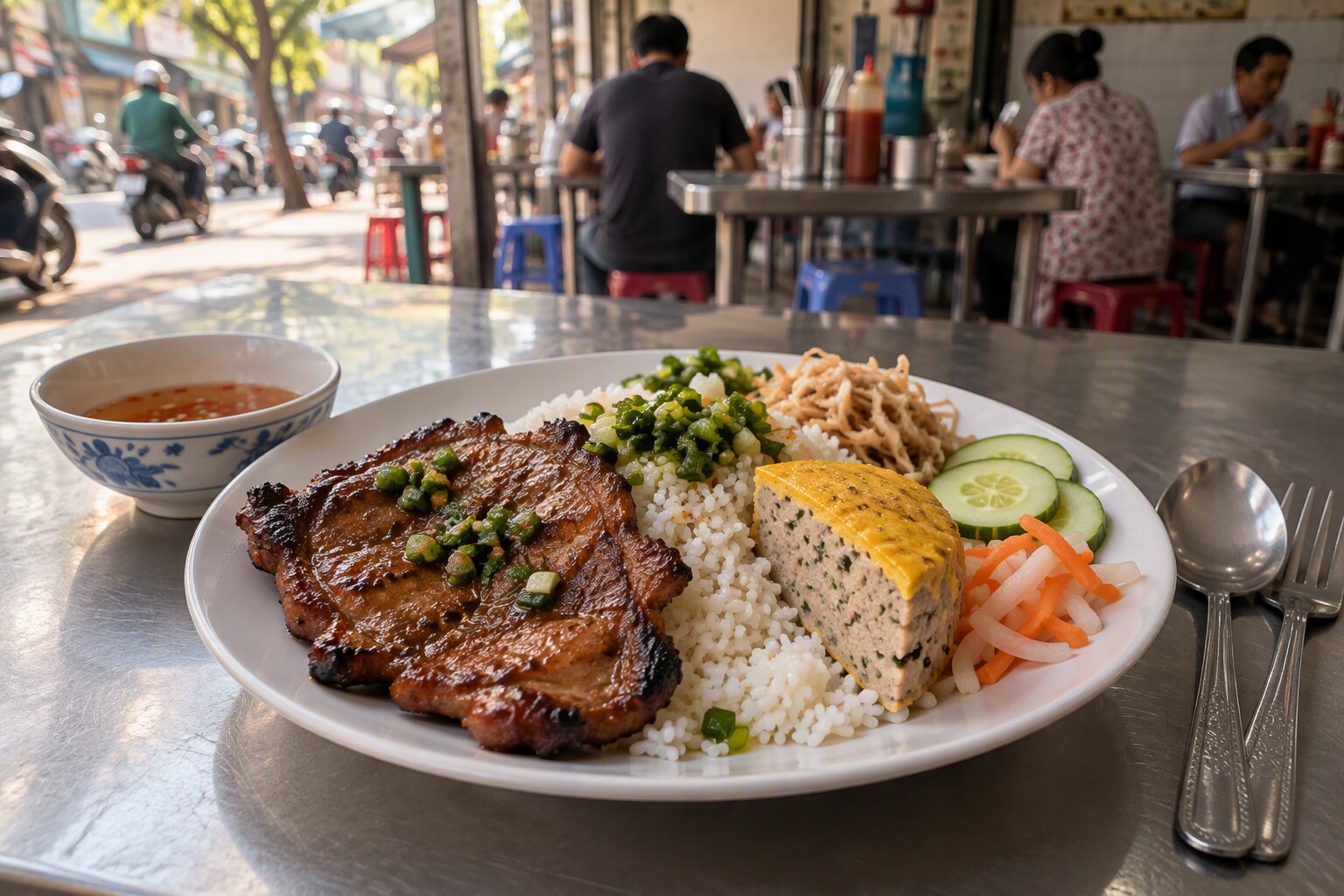
Cơm tấm means broken rice: smaller rice grains rather than rice that has been fried or mashed. In Ho Chi Minh City, a familiar serving pairs it with marinated grilled pork. Spring onion oil, pickled vegetables and a prepared fish-sauce dressing often complete the plate. However, the actual accompaniments depend on the kitchen.
The rice has its own texture, so taste some before mixing everything together. Cut a little pork, add vegetables and then try a small amount of sauce. The dressing may be sweeter than you expect, and it can contain chilli. Pouring the entire bowl over your lunch is a choice, not a rule.
This is a substantial meal, whether you eat it for breakfast or later. Look for a place cooking and serving steadily, then check its menu and food handling. The smell of a grill can be inviting, but it does not tell you the portion size or hygiene standards. Begin with a simple plate.
2. Decode sườn, bì and chả before choosing your plate
Cơm tấm menus become easier when you recognise the toppings. Sườn usually refers to the grilled pork chop in this setting. Bì is a shredded pork-and-pork-skin mixture, often combined with toasted rice powder. Chả commonly means the steamed pork-and-egg meatloaf served with broken rice, not whichever sausage you remember from another meal.
For a straightforward order, point to cơm tấm sườn. If you want to compare textures, ask about the sườn bì chả combination. An egg may be another optional topping. Check whether extras come with the listed plate or add to the price. A photograph of a fully loaded meal does not answer that question.
There is nothing wrong with skipping a texture you do not enjoy. Likewise, explain if you need an egg cooked through rather than assuming its preparation. A useful first encounter with Ho Chi Minh City food leaves you knowing what you liked. It need not leave you with five unfamiliar toppings and no room for dinner.
3. Choose your bánh mì instead of treating it as one recipe
Bánh mì is a bread roll filled with contrasting savoury ingredients, fresh vegetables and sauces. In Saigon, mixed versions can include cold cuts, pork sausage, roast pork and pâté. Other shops specialise in eggs, grilled meat or different fillings. The bread should be part of the pleasure, not merely packaging for an enormous pile of meat.
Ask what the advertised sandwich contains. A thập cẩm order generally means a mixed combination, but the mix is specific to the shop. If you want a smaller, simpler lunch, choose one clearly described filling. Saying “no pork slices” may still leave pork pâté or sausage inside, so explain dietary restrictions fully.
Request less or no chilli before assembly. However, a prepared sauce or marinade may already have heat, so ask about that too. Eat the sandwich soon rather than carrying a meat-and-pâté filling through a long hot afternoon. Finally, find a safe place to stop; balancing lunch while crossing a busy road adds nothing useful.
4. Understand hủ tiếu before deciding between soup and dry
Hủ tiếu is a family of noodle dishes shaped by several culinary traditions, rather than one fixed bowl. Nam Vang is a familiar version associated with Phnom Penh. Sa Đéc offers another regional connection. The noodles, toppings and seasoning can differ, so read the full menu name rather than assuming every shop serves your last bowl again.
A Nam Vang-style serving often includes pork, shrimp and other toppings such as quail eggs or offal. Broth may use pork bones and dried seafood. Tell the server if you do not want liver or other offal, but distinguish preference from allergy. Removing one visible topping does not remove its ingredients from the stock.
Choose hủ tiếu nước for the soup version or hủ tiếu khô for dry noodles. With the dry version, seasoned noodles and toppings usually arrive with a separate bowl of broth. Taste them first, then mix the noodles gently. You do not need to pour all the soup into them and recreate the other option.
5. Add another noodle dish only when you want a different meal
Bún thịt nướng offers a useful contrast to hot noodle soup. It combines rice vermicelli, grilled pork, vegetables and herbs, often with peanuts and a prepared fish-sauce dressing. Fried spring rolls may appear as an addition. Ask what the standard serving includes before assuming everything in the menu photograph comes together.
Southern-style phở is another option, often accompanied by herbs, bean sprouts and sauces. Taste the broth before changing it. If you want beef cooked through, request that explicitly rather than ordering rare beef and relying on the temperature at the table. A familiar name still deserves a little attention.
You may also see regional dishes such as bún bò Huế across the city. Their presence reflects Saigon’s varied food scene, not a claim that they originated here. Try another bowl on another day if it appeals. Three noodle soups in succession mostly teach you how full a traveller can become.
6. Make rolls and pancakes part of a shared meal
Gỏi cuốn are fresh rice-paper rolls, commonly filled with herbs, rice noodles, cooked pork and shrimp. Their dipping sauces vary and can contain peanuts, fermented ingredients or fish sauce. “Fresh” describes the serving style, not a promise that the entire dish is vegetarian or suitable for every allergy.
Southern-style bánh xèo is a savoury pancake with a crisp rice-based batter, commonly filled with shrimp, pork and bean sprouts. Some versions include mung beans. Break off a manageable piece and follow the restaurant’s wrapping style with leaves or herbs. Ask for a demonstration if the plate arrives with more components than you expected.
Sharing helps you try these without turning each into an additional full meal. If you also visit the central coast, our Da Nang food guide explains that city’s pancakes and wrapping dishes. Compare the preparations with interest, rather than deciding that one city must have the only correct version.
7. Approach an ốc meal as a conversation, not a dare
Ốc places are part of Saigon’s social evening dining scene. Despite the name, their menus may offer several snails, shellfish and other seafood. Common preparations include garlic, coconut or chilli-based sauces. Vĩnh Khánh is a known area for this kind of dining, but choose the actual restaurant carefully rather than trusting a street’s reputation.
Ask which species is on the menu, how it is cooked and how the serving is priced. A small shared order is easier than pointing at several unfamiliar trays. If you need thoroughly cooked seafood, make that clear. Avoid raw or undercooked options simply presented as an essential local experience.
Do not force yourself to order snails if the idea does not appeal. Ask what else is available, or choose another meal. If you want a nightlife detour afterwards, this Bùi Viện guide from C Vietnam Tours gives background on the tourist nightlife area. It is a separate choice, not the centre of every Saigon food day.
8. Use a drink or dessert stop to slow down
A café break can be the most sensible stop on a warm day. Cà phê sữa đá is iced coffee with condensed milk; cà phê đen is black coffee. Ask about sweetness and serving style if you are particular. Black coffee does not necessarily mean no sugar, and a large glass does not always mean a mild drink.
If caffeine does not suit you, choose another drink rather than making coffee compulsory. Fruit drinks and sugarcane juice can be appealing, but pay attention to handling and the water or ice used. A reliably treated supply matters more than whether the drink looks fresh. Also keep safe drinking water available between stops.
For dessert, chè covers many sweet preparations rather than one standard bowl. Beans, jelly, fruit, coconut milk and other ingredients may appear in different combinations. Ask what the mixed version contains, including dairy or nuts where relevant. A small serving or a shared dessert can provide a pleasant finish without replacing dinner.
9. Find Ho Chi Minh City food beyond the first tourist street
Begin near your hotel or a neighbourhood you already plan to visit. Search for a particular dish, not just “best food”, and check recent information. A small specialist with a short menu can be easier to understand than a restaurant offering everything. Nevertheless, a modest appearance is not proof of quality.
Hồ Thị Kỷ is known for its flower-market surroundings and nearby food stalls. Central markets can also offer a first look at ingredients and ready-to-eat dishes. Choose a stall based on the actual menu and handling, not a promise that every market meal is a bargain. Ask prices and keep busy aisles clear.
Our Vietnam morning markets guide covers respectful browsing and breakfast routines. Check current openings before making a special trip, and save one nearby alternative. Meanwhile, avoid crossing the city for every snack. A good neighbourhood meal often fits your day better than a famous queue reached by a long transfer.
10. Make the order and the payment easy to follow
Keep the Vietnamese dish name on your phone and point to the menu when needed. “Một phần” asks for one portion; “không cay” asks for non-spicy food. These phrases help, but they cannot explain every restriction. Show a clear written request if a prepared sauce or hidden ingredient matters.
Confirm the number of portions and any extras before ordering. A special bowl, additional egg or side plate may carry another charge. If prices are not visible, ask first. For shared meals, request a sensible starting quantity and add more later. Being hungry does not require ordering the whole table at once.
Carry some smaller đồng notes for casual places, and check whether a larger restaurant accepts your card. Review the total calmly and ask about unclear items. Our Vietnam cash, cards and tipping guide explains the wider payment choices. Clear questions are more useful than bargaining over a price you never confirmed.
11. Keep dietary needs and food safety in the plan
Several dishes here can contain pork, shrimp, fish sauce, peanuts or eggs in less obvious forms. Hủ tiếu stock may contain seafood; bánh mì spreads may contain meat. Vegetarian or gluten-free dining needs more than removing a topping. Ask about the complete preparation, and consider a suitable specialist kitchen if adaptation is uncertain.
For serious allergies, carry a reliable translated explanation and discuss cross-contact from shared pans, utensils and work areas. A friendly assurance is not enough if staff do not understand the ingredient. If the kitchen cannot accommodate your needs confidently, choose another meal. No particular sandwich or noodle bowl is worth an avoidable medical emergency.
Look for clean utensils, safe handling and food cooked as needed. Customer turnover is useful context, not a hygiene guarantee. Our Vietnam safety guide adds broader travel advice. Wash your hands, drink safe water and seek appropriate medical help if you become unwell rather than continuing a tasting schedule.
12. Build a food day that fits the rest of Saigon
For a first morning, choose cơm tấm or hủ tiếu at a place near your accommodation. Follow it with a café break if you want one, then explore a manageable area. Check the shop’s current hours rather than assuming every dish is available all day. Keep the morning simple enough to change if needed.
At lunch, choose a bánh mì or another modest meal. Spend the afternoon sightseeing or resting, with dessert only if you still want it. In the evening, share rolls, bánh xèo or a cooked-shellfish meal. This is a flexible selection of meals, not an instruction to finish every highlighted dish before bedtime.
Spread other tastes across your stay. If Ho Chi Minh City food is the beginning of a longer southern journey, our southern Vietnam itinerary guide helps you connect the city with the Mekong Delta and beyond. Leave enough time for the places between meals as well as the meals themselves.
13. Ask CTour for a food-focused Saigon introduction
If you want help reading menus and understanding the dishes, ask CTour about a food-focused city introduction. Share your hotel, dates, group size and the foods you are curious about. Explain whether you prefer seated meals, short walks or a market visit with a few carefully chosen tastings.
Discuss dietary needs and mobility before agreeing a route. Ask how many stops and portions are included, whether drinks and transport cost extra, and how the plan changes if a venue closes. A useful proposal should describe the practical arrangements. “Local secrets” alone does not tell you what you are booking.
The best introduction to Ho Chi Minh City food gives you confidence for the next independent meal. You should know which cơm tấm toppings you liked, how you prefer hủ tiếu and what goes in your sandwich. Start with those discoveries. There will still be plenty to taste when you return.
Frequently asked questions
What should I eat first in Ho Chi Minh City?
Cơm tấm, bánh mì or hủ tiếu is a useful starting point. Choose according to your appetite and dietary needs. Begin with a clearly described version, then explore extra toppings once you understand the basic dish.
What does cơm tấm sườn bì chả mean?
In this setting, it usually means broken rice with grilled pork chop, a shredded pork-and-skin mixture, and steamed pork-and-egg meatloaf. Recipes and extras vary. Check the shop’s menu rather than assuming a fried egg is included too.
Does dry hủ tiếu come without soup?
Usually not. Hủ tiếu khô generally has seasoned noodles and toppings with broth served separately. Hủ tiếu nước is the soup version. Ask about the exact serving if the menu uses another regional name.
Can I order bánh mì without chilli?
Yes, request it before assembly, but ask about sauces and marinades that may already contain chilli. If you have an allergy or strict restriction, explain that separately. A simple spice preference is not the same as an allergy request.
Do I need to eat snails to enjoy Saigon food?
No. Snail and shellfish meals are one part of the city’s dining scene, not a requirement. Choose foods you enjoy and can eat safely. There are plenty of rice dishes, noodles, rolls and other alternatives.
Is local food easy for vegetarians to order?
It depends on the kitchen. Broth, pâté, fish sauce and other ingredients can remain after visible meat is removed. A vegetarian specialist may be simpler. Explain your needs and confirm preparation rather than relying on the dish’s appearance.
Should I book a motorbike food tour?
Consider whether that transport suits you and what your insurance covers. Before booking, ask about helmets, arrangements and dietary needs. A walking or car-based plan may be preferable if you want a quieter outing or different mobility support.
How many food stops should I plan in one day?
Three meals and an optional small snack are a sensible starting point, depending on portions and appetite. For a tasting outing, ask how large each serving is. Enjoying a few dishes properly is better than feeling obliged to finish many.
CTour DMC Vietnam — planning team
We are a licensed Destination Management Company based in Vietnam, designing private journeys across Vietnam, Cambodia and Laos. This guide was written by the planners and local guides who run these trips on the ground, and is reviewed against current conditions before publication. More about our team · Ask us a question
Published 24 October 2026 · 2,857 words · 13 min read