A food tour in Vietnam can be one of the best things you do in a city, or an expensive way to walk past the same three stalls. The difference usually comes down to who runs the tour, where it goes, how much you eat and what you are told about the food.
This guide is for first-time visitors who are thinking about a food tour in Hanoi, Hoi An, Da Nang or Ho Chi Minh City, and who want to know what to expect, what to pay and how to choose. It explains the main formats, what a good tour includes, what to ask before booking and how to get the most from the day. For the dishes themselves, see our regional food guide.
- Choose a walking food tour for a first day in a city. It is the simplest way to learn the local food.
- Ask how many stops and how much food. Eight to ten tastings over three hours is a good sign.
- Check the guide’s knowledge. A good guide explains the dish, the region and how to eat it.
- Confirm what is included. Drinks, tips and cooking classes are often extra.
1. Know the three main types of food tour
Most food tours in Vietnam fall into three types. A walking food tour moves through a neighbourhood on foot or by small motorbike, stopping at several stalls and restaurants. A cyclo or scooter food tour covers more ground and suits a group that wants to see a wider area. A cooking class or market tour starts with the ingredients, then you cook a few dishes yourself.
Each suits a different traveller. Walking tours are the most popular and the easiest to join. Scooter tours are fun but tiring in heat. Cooking classes are best if you want to take a skill home, though they take longer and cost more.
2. Understand what a food tour usually costs
Prices vary by city, group size and how private the tour is. Shared walking tours in Hanoi and Saigon are generally the least expensive option, and private tours cost more per person. Cooking classes often cost more than a walking tour because they include ingredients and a full meal. Premium or private tours can cost several times a shared walk.
Rather than comparing the headline price alone, check what is included. A tour that covers food, drinks and tips is a different product from one that charges extra for each stop. Ask for the full cost in writing before you book. Our guide to what a Vietnam trip costs gives a wider sense of budget.
3. Look at how many stops and how much food
A useful food tour gives you enough food to understand the city without leaving you full for the rest of the day. Eight to ten tastings over three hours is common for a walking tour. Fewer stops with larger portions can also work, especially if the tour includes a sit-down meal.
Be wary of tours that promise a long list of stops but spend most of the time walking between them. The best tours spend more time at each stall, explaining the dish and letting you eat slowly.
4. Check the guide, not just the route
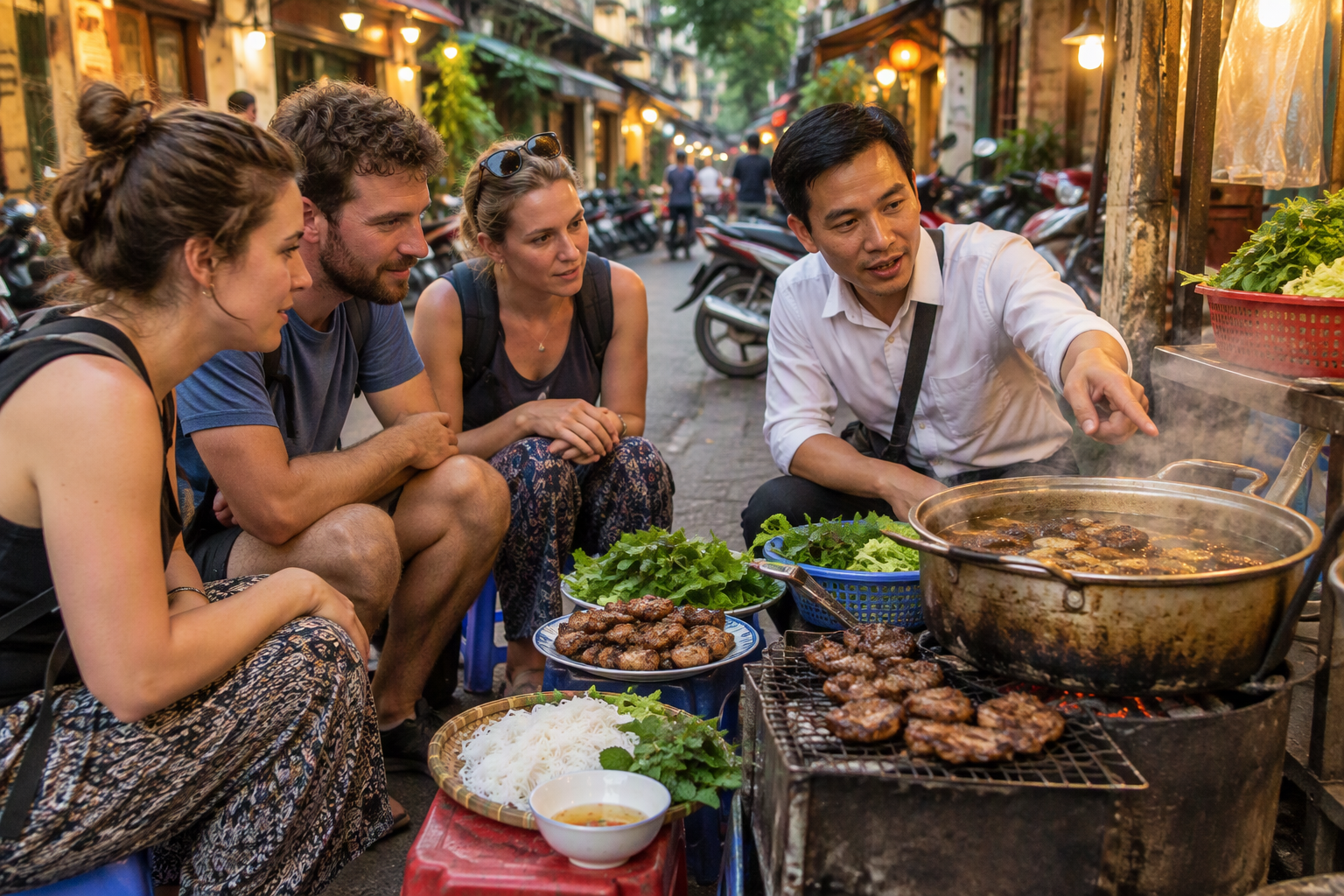
The guide makes the tour. A good guide explains what you are eating, where the dish comes from, how it is usually eaten and how to order it at other stalls. They also manage the group, handle payment and keep the pace right. Ask who will guide you and whether they speak your language well enough to answer questions.
Ask whether the guide has a background in food, local culture or tourism, and whether they are licensed. Licensing rules vary, so ask what the operator does to train its guides rather than relying on a single certificate.
5. Decide whether a private tour is worth it
A private food tour lets you set the pace, ask more questions and adjust for dietary needs. It is worth the extra cost if you have a particular interest, such as vegetarian food or a specific dish, or if you are travelling with children or older relatives who need more rest. Shared tours are better if you want to meet other travellers and keep costs down.
For more on how private and group formats compare in general, see our private or group tour comparison.
6. Compare the food by city
Each city has its own strengths. Hanoi tours focus on street food, phở, bún chả and egg coffee, and often include the Old Quarter at night. Hoi An tours lean towards cao lầu, mì Quảng and seafood from the riverside. Da Nang tours often feature mì Quảng and seafood, and Saigon tours cover cơm tấm, hủ tiếu and the markets. Pick the city where the food matches what you most want to try.
For Hanoi, our street food guide shows you the timing and the stalls. For Saigon, the food guide for first-timers explains how to read a menu. For Da Nang, see the Da Nang food guide.
7. Look for a tour that stops at the right places
A strong tour mixes stalls, a market and a sit-down meal. Stalls give you the authentic street experience. A market shows you the ingredients. A restaurant gives you a chance to eat a larger dish in comfort. Be cautious of tours that stop only at places with a commission arrangement, since they may favour quantity over quality.
Ask the operator where the stops are and whether they change by season. Some stalls close or move, and a good operator plans around that.
8. Plan the timing around the day
Most food tours run in the morning or evening. Morning tours suit breakfast dishes like bánh cuốn and phở, and let you finish before the heat of midday. Evening tours are popular in Hanoi and Saigon, when the streets are busy and the stalls are lit. Avoid booking a food tour right after a long travel day, since you will not enjoy the food as much.
9. Know what to bring and what to wear
Wear comfortable shoes, since you will walk on uneven pavements and sometimes low stools. Bring some small notes for tips and extra drinks, and a bottle of water. Dress for the weather and the heat, and bring a light layer for air-conditioned restaurants. If you have a cold or a stomach condition, tell the operator in advance so they can plan the stops.
10. Ask about dietary needs and food safety
Many traditional dishes use fish sauce, shrimp paste or meat stock, so vegetarian and vegan travellers need to plan carefully. Tell the operator about any allergies or restrictions when you book, not on the day. Ask how food is prepared and whether the tour uses bottled water and ice made from filtered water.
Food safety on a tour is usually good, since operators choose busy stalls with a high turnover. If you are unsure, skip the raw herbs or the ice in drinks, and ask the guide for a safe alternative.
11. Tip the guide and the stalls fairly
Tipping is not compulsory but is appreciated. For a shared walking tour, a tip to the guide in the range of a small percentage of the tour price is common. Check whether the price already includes tips before you pay extra. Our guide to money in Vietnam explains cash, cards and tipping in more detail.
12. Book with an operator that answers questions clearly
Before you pay, ask five things: what is included, how many stops, whether the guide is private or shared, what the cancellation policy is, and how the group size is kept small. Clear answers are a good sign. Vague answers, or pressure to pay on the spot, are not.
If you want a food tour built into a wider trip, tell us which cities you are visiting, how many days you have and what you most want to eat. We can suggest a tour format and fit it around your route. Our northern itinerary and central itinerary show where food tours fit into a longer plan.
Frequently asked questions
How long is a typical food tour in Vietnam?
Most walking food tours last about three hours. Cooking classes and market tours often take half a day. Private tours can be longer if you want to add stops.
Is a food tour worth it for a first-time visitor?
Yes, especially on your first day in a city. A guide helps you understand the dishes, order confidently and find stalls you might miss on your own.
Can I join a food tour alone?
Yes. Shared walking tours are popular with solo travellers, and you will usually meet other people on the tour. Check whether there is a single supplement for a private tour.
What if I do not like spicy food?
Tell the operator when you book. Most guides will ask stalls to reduce the chili, and you can add your own at the table.
Do food tours include drinks?
It depends on the operator. Some include soft drinks or beer, and others charge extra. Ask before you book so you know what the final cost will be.
CTour DMC Vietnam — planning team
We are a licensed Destination Management Company based in Vietnam, designing private journeys across Vietnam, Cambodia and Laos. This guide was written by the planners and local guides who run these trips on the ground, and is reviewed against current conditions before publication. More about our team · Ask us a question
Published 29 October 2026 · 1,542 words · 7 min read